The first mild afternoon in Ottawa has a way of making a vehicle's winter history impossible to ignore. Sunlight reaches the dusty dashboard, the mats show pale edges and the boot still holds the collection of gloves, scrapers and bags that helped everyone through February. Spring is a good opportunity to reset the car, provided the plan matches what is actually there.
A useful spring refresh is more than a long list of cleaning tasks. It separates removable winter debris from wear, cosmetic work from maintenance and immediate priorities from jobs that can wait. That keeps the appointment manageable and leaves you with a vehicle ready for the way you will use it over the next few months.
Make a daylight assessment
Choose a time when the vehicle is parked and you can walk around it without rushing. Look through the cabin, open the cargo area and examine the exterior from a normal viewing distance. Write down the concerns you notice before deciding how to address them.
Be specific about location and condition. Salt beside the driver's mat, sand behind the rear seats and a streak on the inside of the windscreen are different requests. A general statement that the car needs everything cleaned does not help you distinguish a straightforward refresh from work requiring extra time.
Take a few photographs for the booking conversation. Include broad views as well as close details, and mention anything the pictures cannot show, such as an odour or dampness. The aim is to create an accurate brief, not a dramatic before picture. Good context makes the provider's recommendation more useful.
Empty the winter collection deliberately
Remove the belongings that accumulated over the season. Sort them into items staying in the vehicle, items returning to the house and items that need their own cleaning or disposal. This is easier than moving everything into one bag and putting the same bag back after the detail.
Give wet textiles and sports equipment particular attention as separate household items. A clean cargo area should not immediately receive an unaddressed bag of damp gear. Follow the care instructions for those items and plan when they can return if they are still needed.
Keep equipment appropriate to current conditions and your travel plans. Spring weather can vary, so this is an organisation decision rather than a command to remove every winter item on a particular date. The purpose is to make the car's contents intentional and to give the detailer access to the surfaces you want cleaned.
Separate winter deposits from material wear
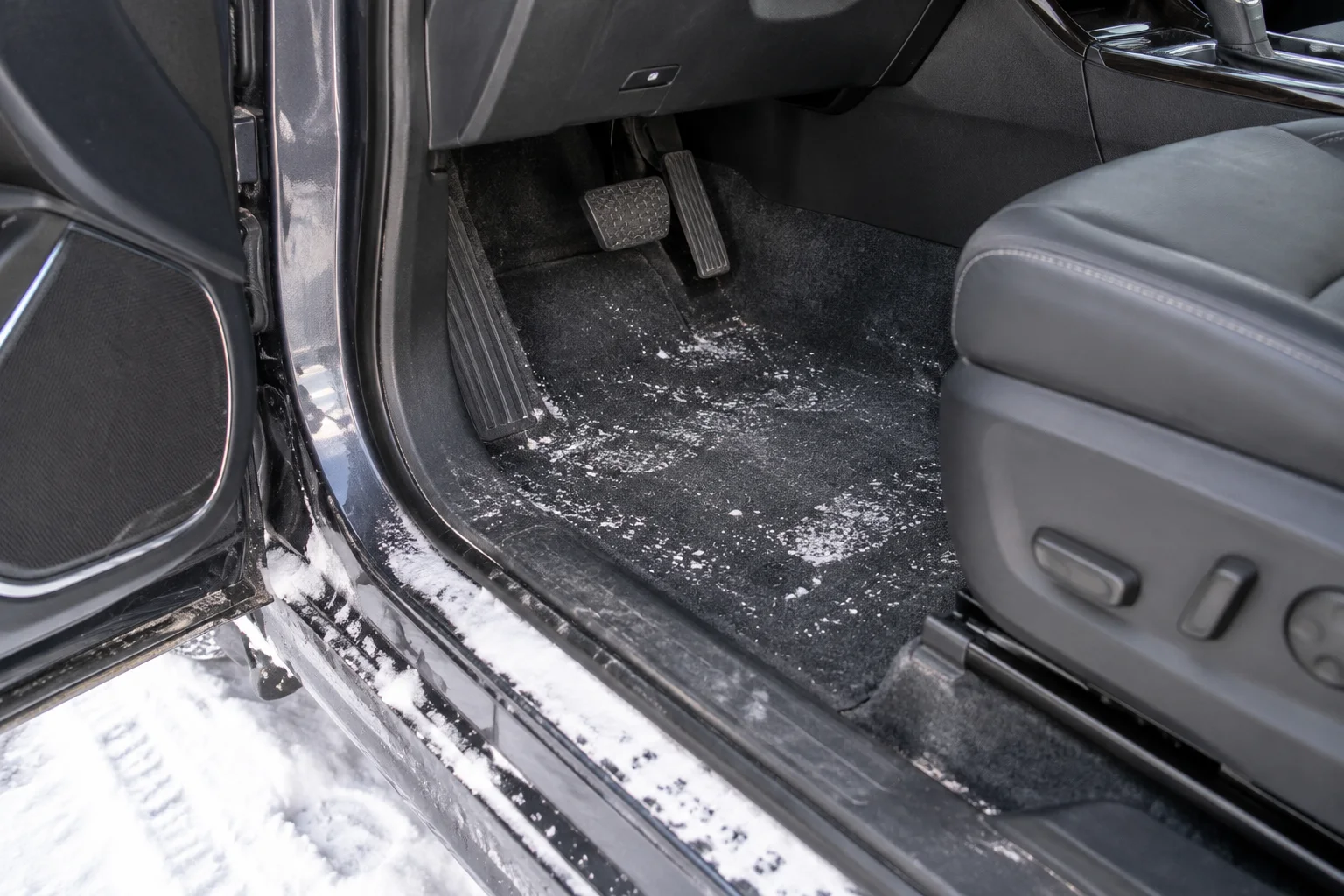
Toyota Canada's winter-road guidance notes that salt and grit can be brought into the cabin on snowy footwear. That supports giving floors and mats attention after the season, but it does not establish that every pale patch or rough area will disappear with cleaning.
Look for differences between loose debris, deposits, staining and physical wear. You do not have to identify each perfectly. Describe what you see and ask the provider which concerns can be assessed before work and which will become clearer afterwards.
Our winter salt guide explains how removable liners and fitted carpet create different jobs. Spring is a useful time to revisit that distinction. An old heel patch may remain visibly worn even when clean, while a removable mat may show a much more dramatic improvement. Both can be reasonable outcomes within an honest scope.
Decide whether the whole cabin needs equal attention
The vehicle's winter use probably was not evenly distributed. The driver's area may have daily boot traffic, the rear seats may have carried children and the cargo area may have held sports equipment. Other areas could need only a light refresh.
Choose the concerns that affect your everyday experience most. If a clean rear seat matters because you will soon carry relatives, say so. If the boot will become gardening transport, its usability may matter more than chasing every minor cosmetic mark.
Ask which available service covers those priorities and what would be additional. A full interior package may be sensible, but it should be chosen because of the condition and your goals. The word spring does not automatically make the most extensive service necessary for every vehicle.
Give exterior observations their own list
Walk around the exterior after making the interior notes. Record areas that look unusually marked, scratched or dull, and tell the provider about any wrap, coating or recent repair. This helps keep the exterior discussion separate from the cabin work.
Do not assume that an exterior wash includes correction of every mark. Some concerns may be removable surface material, some may remain after cleaning and others may need a repair assessment. Ask what can be determined from photographs and what requires an in-person look.
If a particular defect is the main concern, make it prominent in the request. A provider can then explain whether it is within their scope instead of discovering at handover that you expected an ordinary wash to solve a separate paint problem. The scratch guide offers useful questions for that conversation.
Keep underbody and mechanical care distinct
A clean interior and shiny exterior do not establish the condition underneath the vehicle or replace seasonal mechanical care. If you want an underbody service, inspection or attention to a vehicle problem, identify that as a separate request and confirm the appropriate provider.
Toyota Canada's spring maintenance guidance treats cleaning alongside other seasonal service considerations. For an owner, the practical lesson is to maintain separate lists. One covers appearance and cabin comfort; another covers the vehicle's maintenance schedule and any operational concerns.
This prevents an attractive result from creating a false sense that every spring task has been completed. It also makes household coordination easier. The person arranging detailing can clearly explain what is included, while whoever handles servicing knows which questions still belong with the vehicle professional.
Investigate recurring dampness before repeating cleaning
Spring can make a wet patch easier to notice after months of snow and slush. Tell the detailer whether the moisture appears to follow passengers, rain or periods when the vehicle is unused. A short history helps distinguish an ordinary cleaning concern from something that needs assessment elsewhere.
Do not remove fitted carpet or trim simply to provide a more convincing description. Accessible observations are enough for the initial conversation. The provider can explain whether the work should proceed or whether a vehicle repair professional should investigate first.
If an odour accompanies the dampness, describe it without guessing at a diagnosis. Our odour discussion guide explains how timing, location and previous treatments can help. Addressing the underlying uncertainty is more useful than repeatedly refreshing the same area while the reason it becomes wet remains unresolved.
Choose a date with room for drying
Spring appointments often coincide with a busy return to outdoor activities. Tell the provider when you need the vehicle for school pickup, work or a weekend trip. If the scope includes wet cleaning, ask when the relevant surfaces can be used and covered again.
The active service time may not be identical to the full period needed before normal use. Ask for advice based on the method and conditions rather than borrowing a drying estimate from another vehicle. The drying-time guide can help you organise that discussion.
Consider where the car will sit afterwards and whether the recommended aftercare is practical there. A secure parking arrangement and a little schedule flexibility can make the appointment much easier. If the forecast or location does not suit the work, discuss alternatives before the day becomes a scramble.
Coordinate seasonal mats and accessories
If you change mats or cargo accessories seasonally, make that part of the plan. Identify which items will be cleaned, which will be stored and which will return to the vehicle. Follow their manufacturer instructions and confirm that replacements fit correctly.
Do not put a clean seasonal mat over a dirty one to avoid dealing with the original. The relevant installation instructions should guide the arrangement. Likewise, do not return an accessory that still needs drying simply because the rest of the car is ready.
Label stored items by vehicle if your household has more than one. A liner that appears similar may belong to a different footwell or car. A little organisation during the spring reset makes the next seasonal change easier and reduces the temptation to improvise when you cannot find the correct item.
Think about the next season's use
A spring refresh is an opportunity to prepare for different activities. Perhaps the car will carry camping equipment, nursery plants, bicycles on an approved carrier or a dog heading to muddy trails. Consider what will make those journeys easier to manage without filling the vehicle with unnecessary accessories.
Choose one or two practical habits. You might keep a suitable container for dirty footwear, remove sports bags after each trip or set aside a place indoors for travel blankets. The habit should fit your actual routine rather than an ideal version of your household.
For longer journeys, the family road-trip guide connects cleaning with packing and return-trip planning. A vehicle stays more enjoyable when the fresh start has a purpose beyond looking good on the afternoon of the appointment.
Decide whether protection belongs in this visit
If an exterior protection service is offered, ask what product is proposed, which surfaces it covers and what aftercare it requires. Do not assume spring automatically calls for a particular wax, sealant or coating. The right choice depends on the finish and the routine you can maintain.
Find out what preparation is included and whether appearance correction is a separate option. A product intended to protect a surface should not be mistaken for a repair of existing damage. The protection buying guide provides a framework for comparing the actual service rather than the category name.
You can reasonably decide to focus on cleaning now and revisit protection later. Equally, combining suitable work may fit your plans. Make the choice because you understand the benefit and commitment, not because the season makes every optional treatment sound compulsory.
Prepare the space as well as the car
For mobile service, confirm parking access and any site requirements with the provider. Explain restrictions at a condo, shared driveway or workplace before booking. A vehicle may be easy to reach while the surrounding location is unsuitable for the proposed work.
Move unrelated objects away from the immediate work area and decide how household vehicles will be positioned. Keep keys available and arrange who can answer scope questions if you will be occupied elsewhere. These small steps reduce interruptions without requiring you to supervise the appointment continuously.
Our first mobile detail guide covers the booking basics. In spring, it is especially useful to confirm how weather changes are handled. A clear rescheduling arrangement lets both parties adapt without treating an ordinary forecast change as a crisis.
Review the result before returning everything
Inspect the cleaned areas while they are still visible. Ask about remaining stains, wear or marks, and compare them with the priorities in your original request. Confirm drying and aftercare before reinstalling liners, covers or cargo accessories.
Take a few ordinary photographs if they will help you remember the condition. You do not need a complete photographic record of every panel. A useful set focuses on the areas that concerned you and any issue that remains for another provider.
Then return only the belongings you intentionally chose to keep in the vehicle. This is where the spring reset becomes lasting organisation rather than a temporary rearrangement. The clean cabin is easier to maintain when every item has a reason to be there and can be removed without a lengthy search.
Compare priorities with the other drivers
If the vehicle is shared, ask the other regular driver what they notice before finalising the scope. They may use a seating position or storage area that you rarely see. A rear passenger's concern about a sticky armrest can be easy to miss when the initial list was made entirely from the driver's door.
Agree on the main priorities together, then send one clear request to the provider. This prevents different household members expecting different versions of a spring detail. It also gives you a shared reference at handover, when the appointment should be reviewed against what was actually agreed rather than a new list of wishes.
Make the next step fit what remains
After the appointment, update the separate lists for cleaning and maintenance. Mark completed work accurately and keep any unresolved concern visible. If the detail revealed wear or a possible repair issue, decide who will assess it rather than assuming another cleaning visit is the answer.
For current options, visit Cody Mobile auto detailing. Detailing is bookable in Ottawa and the surrounding service area; other areas are on the waitlist. Share the vehicle details, winter condition and your next-season priorities when requesting service.
A good spring refresh need not erase the evidence that the car has carried you through a Canadian winter. It should remove what can appropriately be cleaned, make remaining concerns easier to understand and give the vehicle a more useful starting point for the months ahead. That is a satisfying result you can feel on the next ordinary drive.