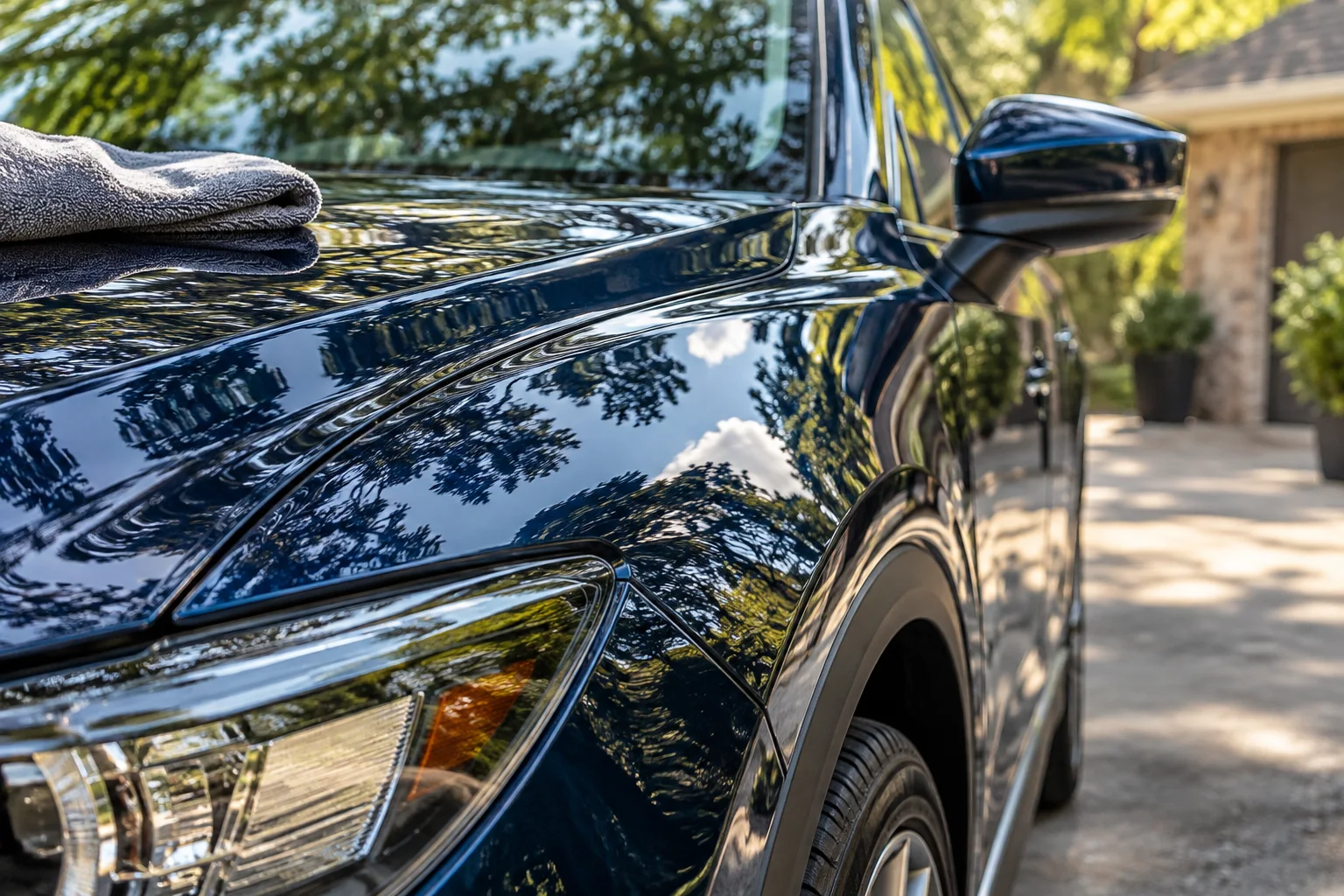
A scratch can become the first thing you see every time you approach your car. It might be a faint line visible only in afternoon sun, a scuff beside a door handle or a conspicuous mark left by a parking mishap. Before paying for a solution, it helps to know which question you are asking: can the area be cleaned, can its appearance be improved, or does it need repair?
Those are related questions, but they are not interchangeable. Detailing can improve some surface defects, while other damage belongs with a paint or body repair professional. A useful assessment explains the difference on your vehicle and makes room for a sensible stopping point. You do not need to become a paint specialist to have that conversation well.
Start with an accurate description
Photograph the mark from a little distance and then closer up. Include enough of the panel to show its location. A picture of a pale line with no surrounding context makes it hard to judge whether it is on painted metal, plastic trim or another surface altogether.
Describe when you first noticed it and anything you know about its cause. If you do not know, say so. Mention previous repairs, films, wraps or coatings if you are aware of them. The provider can then decide what needs inspecting rather than assuming the panel is an untouched factory finish.
Avoid rubbing, scraping or testing the mark with an improvised abrasive before the assessment. You may make the original concern harder to evaluate. If you have already used a product, share that information too. The goal is to give the person assessing the vehicle a clear starting point, not to prove that you have tried hard enough first.
Different surfaces need different answers
A glossy painted door, textured bumper trim and a matte finish can all show a mark that an owner calls a scratch. They should not automatically receive the same treatment. Product suitability depends on the actual surface, its finish and its condition.
Meguiar's describes ScratchX as intended for minor defects on glossy paint and clear-coat finishes. Its Australian product guidance explicitly excludes matte and satin finishes. That narrow scope is a useful example of why a familiar scratch-remover label is not universal permission to polish any marked part of a vehicle.
Tell the provider where the defect is and ask them to identify the surface before discussing the method. If there is uncertainty about a wrap, film or repainted area, the answer may require additional information. A pause for identification is productive. It can prevent a cosmetic concern from becoming a larger repair because the wrong assumption was made at the beginning.
Cleaning is an assessment step
A dirty surface can make a mark difficult to interpret. Material sitting on the finish may look different once the area is properly cleaned. Conversely, cleaning may make existing damage easier to see. Neither outcome should be treated as surprising or dishonest when the initial condition obscured the surface.
Ask whether the quote includes cleaning and inspection before the final correction decision. This gives both parties a chance to confirm what is actually there. A provider may be able to discuss likely options from photographs while still reserving a firm judgement until the panel is clean and visible.
Be cautious about asking for a definite percentage of improvement from a phone picture. The photograph may not capture depth, previous work or the full extent of a defect. A more useful question is which outcomes seem plausible, what remains uncertain and how you will decide whether to proceed after inspection.
Improvement and removal are different promises
A mark can become less noticeable without disappearing completely. That may be a worthwhile result, particularly on a daily driver where the concern is how the car looks at a normal viewing distance. It should be described honestly before you agree to the work.
Ask the detailer to use plain language. Will they attempt to remove a shallow defect, reduce its visibility, clean transferred material or simply improve the surrounding finish? If the answer is conditional, ask what condition would change the plan. This is more informative than a broad promise to make the car look new.
The distinction also matters when comparing quotes. One provider may propose a modest enhancement with some marks remaining; another may be discussing extensive correction or a repair referral. The prices cannot be interpreted sensibly until the outcomes and methods are clear. You are comparing different jobs if the promised results differ substantially.
Ask about the test area
For a suitable surface and service, a small test area can help the provider demonstrate the likely outcome. Ask whether that is part of the assessment and how you will review it. The purpose is to see the practical result before expanding the work, not to establish an obligation to pursue every remaining mark.
Look at the test from normal viewing distance as well as close up. A defect that remains visible under a focused inspection light may no longer bother you in everyday use. Conversely, a slight change that looks impressive in a close photograph may not address the mark you notice across the driveway.
Agree on a stopping point. If the provider advises that further work is inappropriate or unlikely to justify the risk, understand why. A responsible service can finish with a visible imperfection when preserving the existing finish is the better outcome. Progress should be judged against the agreed objective, not against an endless search for absolute perfection.
Make the whole panel part of the conversation
A single scratch attracts attention, but its surroundings influence the result. Ask whether the proposed service addresses only the local mark or a broader panel. A small isolated treatment and a larger appearance improvement can require different preparation and time.
This does not mean every small defect should become a full-vehicle project. It means the provider should explain the visual scope. You may decide that one area is enough, or that a consistent overall refresh better suits your goal. Make that decision deliberately rather than discovering later that each person imagined a different finish.
Consider the vehicle's ordinary use. A work truck, a cherished weekend car and a family hatchback can justify different priorities. None is the wrong kind of vehicle to care about. The sensible choice is the one that matches your expectations, budget and willingness to maintain the result.
Know when repair is the relevant discussion
If material is missing, a panel is dented or the finish is visibly damaged beyond a superficial mark, ask whether a repair assessment is more appropriate. Detailing is not a substitute for replacing missing paint or fixing a deformed component. Cleaning and repair may be complementary stages rather than competing options.
A detailer can explain the limits of the service they offer without becoming the person who quotes every repair. You may need a body shop or another specialist to assess the next step. Keep the findings and photographs so you can communicate the concern consistently.
Do not let a small visible defect force a rushed decision. Once the nature of the issue is understood, you can decide whether to repair it now, accept it or seek another assessment. The important point is that the choice rests on the actual condition rather than a product claim promising that all scratches can be erased.
Separate correction from protection
A protection product is not automatically a scratch-repair product. Ask what each part of a proposed service is intended to do. Surface preparation, appearance correction and a finishing protection layer are separate considerations even when sold together.
Meguiar's Hybrid Ceramic Liquid Wax, for example, is described by its manufacturer as a protective, water-beading layer. That description does not establish that it will repair a particular scratch. A product can add a useful finish while leaving the underlying defect unchanged or still visible.
If a provider proposes protection after correction, ask about the product, suitable surfaces and aftercare. Also ask whether that step is optional within the available service. You should be able to understand what you are purchasing without assuming that every bottle used in the process performs the same job.
Be clear about temporary appearance changes
Ask how the result will be assessed after the work and whether any finishing product affects the way defects look. This is a fair question, especially when your main concern is whether a mark has been changed or merely become harder to see under the current conditions.
You do not need to challenge the provider with specialist terminology. Say that you want to understand what improvement to expect after ordinary washing and use. A clear explanation should connect the proposed work to that practical question.
Avoid judging results from wet paintwork or dramatically different lighting in before-and-after photographs. Compare similar views where possible. The most useful evidence is the actual vehicle, clean and ready for inspection, viewed in conditions that reveal the concern you originally raised. Photographs can document that assessment, but they should support it rather than replace it.
Plan around access and time
Tell the provider where the vehicle will be parked and whether the proposed work requires a particular environment. Mobile work has practical constraints, and not every correction process is available or appropriate in every driveway. Let the provider explain what can be offered at your location.
Give an honest deadline. If you need the car for an appointment later that day, mention it before booking. Ask whether any finishing product has aftercare requirements affecting driving, washing or exposure. Those instructions should come from the product and provider, not from a general rule about all waxes or coatings.
The mobile detailing planning guide is useful for organising access and the initial request. It is also worth confirming that scratch assessment or correction is an offered service before assuming it is included in an ordinary exterior detail. A clean car and corrected paint are not identical scopes.
Spend according to what matters to you
Before approving work, consider why the mark bothers you. Are you preparing the vehicle for sale? Hoping to improve a favourite car? Trying to maintain a respectable work vehicle? The reason helps you decide how much improvement is enough.
For a sale, a straightforward cleanup and honest condition photographs may matter more than chasing every minor defect. For a long-term keeper, a carefully chosen improvement may be worthwhile even when it does not change resale value. Avoid treating an appearance decision as a guaranteed financial return.
Ask for options that differ clearly in scope. A focused assessment, a limited enhancement and a referral for repair can be easier to compare than three vague levels of shine. Choose the option whose expected result you understand and would be satisfied to receive, including its stated limitations.
Review the outcome without moving the goalposts
Return to the original photographs and the agreed concern. Examine the work in reasonable light, ask about any remaining marks and confirm what was intentionally left alone. If the test area established the target, use that same target at handover rather than introducing a new expectation after the work is complete.
A remaining scratch does not automatically mean the service failed. It may be the agreed result of a conservative approach. Equally, if the agreed improvement has not been achieved, raise that clearly while the details are fresh. Specific observations are more constructive than a general statement that the car still has scratches.
Keep the aftercare instructions and any record of the product used. This helps the next provider understand the finish's recent history. It also gives you a sensible basis for routine maintenance without repeatedly experimenting on the same area whenever the light catches it.
Keep expectations consistent between owners
If someone else shares the vehicle, include them in the decision about the target result. One person may be content with a subtle improvement while another expects the mark to vanish. Discovering that difference before booking is easier than debating it after the work is complete.
Choose a single set of priorities to give the provider. Note any defect that is particularly important and agree which imperfections you are comfortable leaving. This small household conversation makes the service easier to assess and prevents a reasonable outcome from being judged against two incompatible expectations.
Make the next request easy to assess
A useful message includes the vehicle, the panel, photographs, known previous treatments and your preferred outcome. You can say that you want to know whether the mark can be improved safely before choosing a service. That leaves room for a professional assessment and an honest answer.
Visit Cody Mobile auto detailing for current service options and ask directly about the concern. Detailing is bookable in Ottawa and the surrounding service area; other areas are on the waitlist. Do not assume specialist correction or repair is part of a package without confirmation.
The aim is not to win a contest against every line in the paint. It is to understand the surface, choose appropriate work and leave with a result that makes sense for your vehicle. When the limits are clear, even a modest improvement can be satisfying because you know exactly what was accomplished and why the process stopped where it did.