The best part of a family road trip is usually somewhere beyond the packing list. It might be the first glimpse of the lake, a stop at a familiar bakery or the moment everybody finally settles into the drive. A vehicle prepared with some care makes those moments easier to reach. You can find the things you need, passengers have usable space and yesterday's crumbs are not competing with today's snacks.
Detailing belongs in that preparation, but it has a specific role. It can refresh the cabin and exterior within an agreed scope. It does not replace vehicle maintenance, a child-restraint check or thoughtful packing. Separating those jobs lets you make a practical plan without expecting one appointment to solve every departure-day problem.
Start with the journey rather than the package
Picture the trip in ordinary terms. How many people are travelling? How long will they be in the vehicle between stops? Will you carry a dog, a stroller, camping equipment or food for several days? The answers reveal which parts of the car need to be ready first.
A family visiting grandparents may mainly need clean rear seating and room for overnight bags. A camping trip may put more emphasis on an empty cargo floor and a plan for dirty equipment on the return. Neither requires the same priorities as a vehicle being prepared for a wedding or sale.
Write down the three things that would make departure calmer. Perhaps everyone needs a clean cup holder, the cargo area must be cleared, and the windscreen has distracting smears. Share those priorities with the detailer, then ask which available service fits them. A familiar package name is less useful than a clear description of the result you need.
Book backwards from departure
Treat your departure time as the final point in the schedule. Before it comes packing; before packing comes any cleaning that needs the cargo area empty; before normal use comes the required drying period. This sequence is simple, but it is often lost when a detail is squeezed into the last available afternoon.
Ask the provider how the proposed work affects when seats, carpets and mats can be used or covered again. If wet cleaning is involved, build in flexibility. A vehicle that looks ready may still need time before you put luggage on a carpeted area or reinstall an accessory.
An appointment several days before departure may be easier to manage than one immediately before loading, depending on the work and conditions. That is a planning preference, not a guaranteed drying rule. Tell the provider the actual travel deadline and let them advise on a scope and timing that can realistically fit.
Empty the car with a sorting plan
Removing everything is easier when you decide where it will go. Use a place for items that belong at home, another for things returning to the car and a separate pile for travel equipment not yet packed. This avoids the familiar cycle of moving a cluttered boot into the hallway and then loading the same clutter back in.
Check door pockets, seat-back pockets and the spaces around the console. Small items often occupy the places you will want during the journey. Remove personal documents, valuables and devices yourself. If the detailer is expected to clean a storage compartment, clarify whether it should be emptied beforehand.
Do not turn preparation into an all-day organisation project unless that is useful to you. A quick, deliberate sort can be enough. The essential outcome is that the provider can access the agreed surfaces and you know which belongings will return. Everything else can be handled as a separate household task.
Give child restraints a separate timetable
A child restraint is its own product with its own cleaning and installation instructions. It should not be treated as an ordinary upholstered seat. Decide who will remove it, whether it needs cleaning and who will reinstall it correctly before travel. Make those decisions before the detailing appointment begins.
Britax's cleaning guidance directs owners to the specific user guide and fabric label, because covers can have different washing and drying requirements. It also treats the buckle, harness and shell separately. The practical lesson is to find the instructions for the exact restraint instead of applying a general car-interior method to every component.
If you are uncertain about reassembly or installation, arrange appropriate help with enough time to resolve questions. Avoid scheduling the first attempt for the moment everyone is standing beside packed bags. Detailing can provide access to the vehicle seat beneath a restraint, but that does not make the detailer responsible for the restraint's installation unless a suitable, explicit arrangement exists.
Prioritise the spaces passengers will use
Sit briefly in each seating position while the vehicle is parked. This is a useful way to notice the sticky cup holder that the driver never sees, the sandy rear floor and the fingerprints beside a child's window. It also reminds you that a pleasant cabin is experienced locally, one seat at a time.
List the surfaces that matter to each passenger. A clean armrest, a clear pocket and an unobstructed place for feet may be more meaningful than an extensive treatment on a rarely touched panel. Ask which of these surfaces are included in the proposed service rather than assuming every small compartment is part of a standard interior clean.
Keep cleaning separate from storage decisions. The provider can clean an agreed cup holder; your household decides whether it will hold water, a small rubbish container or nothing at all. Making that decision afterwards helps preserve the fresh start and reduces competition for the same useful spaces during the drive.
Include glass without improvising products
Clear glass makes the vehicle feel more open, and smears become especially noticeable when the light changes. Tell the provider about film, coatings or known damage before cleaning. If the concern appears between layers of glass or involves a damaged surface, ordinary cleaning may not resolve it.
Consult the vehicle manual for interior glass care. Tesla's Model S guidance, for example, warns against abrasive treatment of glass and mirrors because of potential damage to surfaces and rear-window heating elements. That is a useful reminder to use appropriate methods rather than regard every window as an ordinary household pane.
At handover, view the glass from the driver's seat and a rear seat if practical. Lighting can reveal marks that are difficult to see from outside. Explain any concern calmly while the provider is present, and distinguish an accessible smear from a defect that needs another kind of assessment.
Keep maintenance on a different list
A clean vehicle can create a strong feeling of readiness. Do not let that feeling replace the maintenance preparations appropriate to your trip. Use the vehicle's service guidance and qualified help for mechanical concerns. Detailers may notice visible issues, but a cosmetic appointment is not a roadworthiness inspection.
Keep separate reminders for cleaning, vehicle servicing and travel equipment. That makes responsibilities clear within a household. One person can arrange the detail while another checks the maintenance schedule, and neither has to assume the other task was somehow included.
If something unusual is present, such as recurring dampness or an unexplained odour, mention it before booking. The cleaning provider may need to adjust the plan or suggest assessment elsewhere. Addressing an unresolved problem before departure is more useful than disguising it for a clean-looking start.
Design packing around access
After cleaning and drying are complete, think about what you need during the journey and what can remain packed until arrival. An item that is easy to reach at home may become inaccessible beneath a full load of luggage. A small amount of planning avoids unloading half the boot at the first rest stop.
Use the vehicle's instructions for load placement and securing items. Do not add organisers or covers that interfere with restraints, controls, airbags or other systems. The right arrangement is not necessarily the one with the most compartments; it is the one that fits the vehicle and the trip safely and predictably.
Keep everyday travel items together so they can be checked quickly at each stop. Give rubbish and used textiles a designated place. Those choices make it easier to remove the day's mess when you arrive, which can matter more than maintaining a perfectly tidy appearance while everyone is still travelling.
Prepare for the return journey too
The outward trip starts with clean clothes and neatly packed equipment. The return often includes sandy towels, wet footwear, snack wrappers and a bag nobody wants to open. Plan for that version of the vehicle as well. It is usually the more demanding cleaning scenario.
Bring appropriate containers or bags for separating dirty items, and make sure they can be handled without spreading their contents through the cabin. Do not leave wet textiles in the car indefinitely when you get home. Include unloading in the end-of-trip plan, even if the larger laundry task waits until the next day.
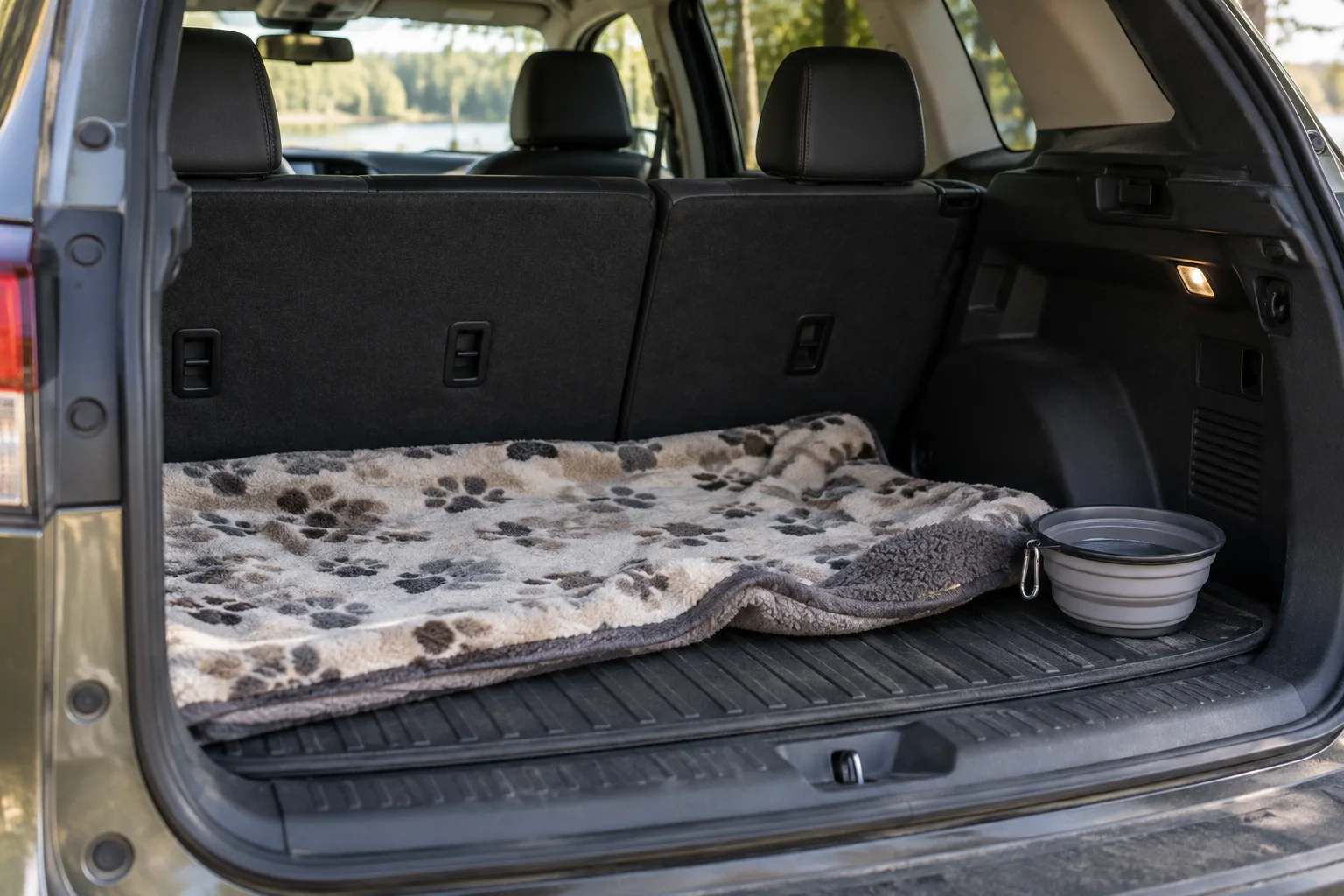
If the destination involves especially messy equipment, ask yourself which removable accessories are compatible with the vehicle and easy to care for. A practical cargo arrangement can simplify the return without requiring the whole interior to be treated as disposable. Check the accessory instructions and keep functional vehicle components accessible.
Set a modest maintenance routine while away
You do not need to spend holiday evenings detailing the car. A short reset at a convenient stop can be enough: remove rubbish, take food indoors and return useful items to their agreed places. The goal is to keep the cabin usable, not to recreate the appointment every day.
Deal with a spill according to the relevant material guidance and tell a future cleaner what happened if it leaves a problem. Avoid layering several unfamiliar products onto the same stain in the hope that one will work. A clear history is more helpful than a mystery patch treated with everything available at the campsite.
Give children age-appropriate, simple roles if that works for your family. One person can check for their belongings before leaving the car, while another carries the rubbish bag. Keep the routine brief enough that it remains realistic when everyone is tired. Consistency comes more easily when the task has an obvious ending.
Choose finishing preferences deliberately
Tell the detailer if you prefer minimal fragrance or have a concern about a particular finishing product. Ask what can be accommodated before the visit. A fresh vehicle need not have a strong scent, and individual preferences are easier to address when they are explicit.
Also discuss the appearance you want. Many drivers prefer surfaces that look clean and natural rather than noticeably dressed. Product suitability remains the provider's responsibility within manufacturer guidance, but your preferences can help shape the final result where options exist.
Do not buy an additional treatment simply because the trip feels like an occasion that deserves everything. Ask what it adds, which surface it is intended for and whether any aftercare affects your departure. A smaller, well-timed scope can be more valuable than an elaborate service that complicates packing or creates expectations you do not need.
Leave a useful note for next time
When the trip is over, spend a moment noticing what worked. Was the rubbish easy to remove? Did the cargo arrangement keep wet equipment together? Was a particular storage pocket useful, or did it become a place where things disappeared? These small observations can improve the next departure more than a long new shopping list.
Record any cleaning concern while you still remember its cause. A note that juice spilled beside the rear passenger seat on the second day is more useful than discovering an unexplained stain weeks later. Include what you used to clean it, if anything, so a provider can assess the history accurately.
Keep the successful parts of the plan and simplify the rest. A family vehicle is a working space, and a good routine should adapt to the people using it. The aim is a repeatable preparation process that leaves you with more attention for the trip and less for the state of the boot.
Make the handover part of the preparation
Review the agreed priorities while the vehicle is still empty. Look at the passenger areas, cargo floor and glass, then ask about any remaining stains or wear. Confirm drying and aftercare instructions before reinstalling accessories or loading luggage. This is your opportunity to turn a finished cleaning job into a usable travel plan.
The first mobile detailing appointment guide covers access and booking questions that are helpful when coordinating a visit at home. For current service options, see Cody Mobile auto detailing. Booking is available in Ottawa and the surrounding service area, with a waitlist for other areas.
Once the cabin is ready, resist the urge to fill every available space. Leave room for the ordinary movement of a journey: a coat taken off, a snack brought back from a stop, a favourite book retrieved from a bag. A clean, thoughtfully prepared vehicle gives the family a comfortable starting point. The trip itself can supply the adventure.