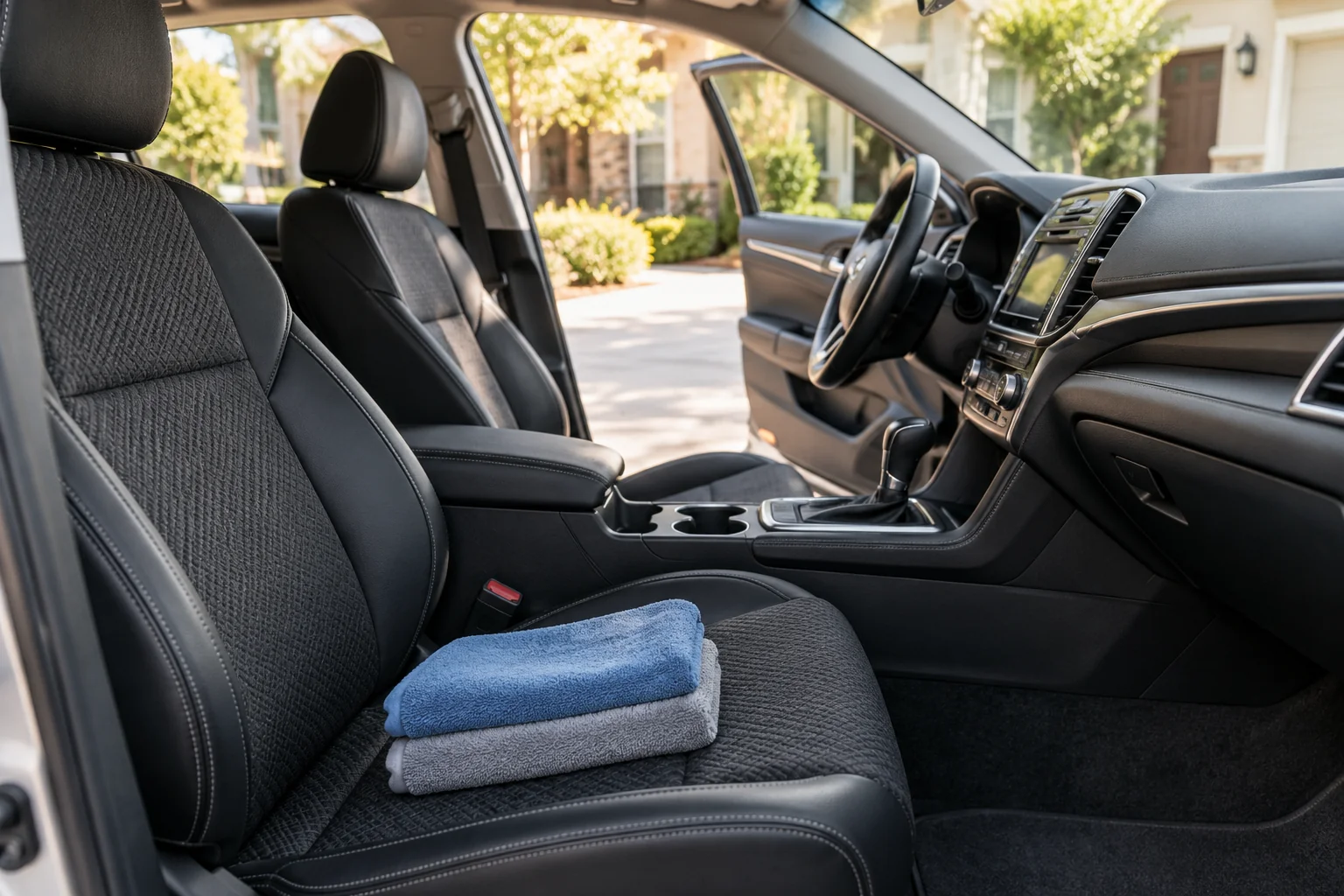
The moment a detailing appointment finishes can be surprisingly rushed. The car looks better, the provider is packing up and you are thinking about the next errand. A brief, thoughtful review helps you understand the work while there is still an easy opportunity to ask questions. It also makes aftercare clearer and gives you a fair basis for any later concern.
A useful review is neither a search for microscopic flaws nor a quick glance followed by an automatic approval. It compares the actual result with the agreed scope, recognises the difference between cleanliness and wear, and confirms how the vehicle should be used afterwards. You can do that calmly without becoming an expert inspector.
Begin with what you agreed to buy
Have the quote or confirmation available. Identify the selected service, priority areas and any limitations discussed before work. This is the fairest reference for review because it reflects the job both parties understood, rather than an impression created by a package name.
If the scope changed after inspection, use the updated agreement. A stain treatment discussed as an option but not selected should not be treated as an omitted task. Equally, a specific area that was agreed deserves a clear answer if it appears untouched.
The quote guide explains what makes that record useful. A good handover begins much earlier, when the service is defined. If the original agreement was vague, ask the provider to describe what was completed before trying to judge it against assumptions neither person made explicit.
Give yourself a few unhurried minutes
Plan enough time to look at the vehicle before filling it with belongings or driving away. Tell the provider if you need a particular handover time, but avoid making the review so rushed that questions are deferred simply because you are already late.
Walk through the areas in a consistent order. You might start with the driver's position, move to the rear seating and cargo area, then review the exterior. The exact order is less important than looking at the parts relevant to the service.
You do not need to inspect every hidden cavity. Focus on the agreed accessible surfaces and the concerns that led to the booking. A structured, proportionate review is easier for both parties than wandering around the car while trying to remember what you originally wanted addressed.
Revisit the original priorities first
If salt in the driver's footwell was the main concern, look there before admiring the clean dashboard. If you booked because of pet hair in the cargo carpet, review that area while it remains uncovered. The overall improvement can be pleasing without answering the specific question that mattered most.
Use any before photographs as context. Compare similar views and reasonable lighting where possible. A close-up taken before and a distant photograph taken after do not provide the same information as looking at the actual surface.
Ask the provider to explain the result in the priority areas. What improved? What remains? Was an area treated differently because of its material or condition? These questions turn the handover into a useful account of the work rather than a simple exchange of approval and thanks.
Separate dirt from wear
A clean surface may still show scratches, colour loss, creasing, pulled fibres or other signs of use. Ask what a remaining mark represents before assuming the cleaning was incomplete. A worn area can become more visible when surrounding soil has been removed.
The upholstery materials guide explains why material and condition matter. Cleaning aims at appropriate improvement within the actual surface's limits; it does not necessarily restore damaged material to its original appearance.
If a concern is physical damage, discuss whether a separate repair assessment makes sense. Do not ask for increasingly aggressive cleaning simply because a mark remains. A responsible stopping point can be part of a successful service when further work would not be appropriate for the finish.
Review glass from a normal viewing position
Look through the windscreen and other agreed glass areas from inside the parked vehicle. Then view them from outside if useful. A smear can be easier to see from one angle than another, so a brief change of position can help you describe a concern accurately.
Tell the provider which surface and side appear affected. If you are unsure whether the mark is inside or outside, say so. Avoid assuming every visible line is cleaning residue; damage, film concerns or another condition may require assessment.
The glass care guide covers the distinction between cleaning and additional treatments. At handover, confirm what was actually done. A clear-looking surface and an applied protection product are different aspects of the service and may have different aftercare implications.
Check the areas beneath removable items
Review mats, cargo liners and other accessories before returning them to their usual places, where the scope and instructions allow. These items can quickly cover the surfaces you wanted cleaned. It is easier to ask a question while the area remains visible.
Make sure each item belongs to the vehicle and is installed according to its instructions. If the provider has left something out for drying, ask when it should be returned. Do not interpret an uncovered floor as an unfinished job without understanding the aftercare plan.
Child restraints and other safety-related equipment require their own correct installation and checks. Confirm who is responsible for them. A detailing review should not blur that responsibility or imply that a general interior service certifies the installation of equipment it was not engaged to assess.
Ask about drying in specific areas
If wet cleaning was part of the service, ask which surfaces are ready for normal use and which need more time. A general statement that the car is finished may not answer when a carpet can be covered or a seat can be used comfortably.
The drying-time guide explains why the method, material and conditions matter. At handover, move from the original estimate to the actual vehicle. Ask what you should do next and what observation would justify a follow-up call.
Share the instructions with anyone else who will drive or load the car. A carefully explained plan can be lost if another household member replaces every cover without hearing the discussion. A short written note is often enough to keep the practical steps consistent.
Understand the finish that was applied
If the service included a wax, sealant, coating or other treatment, ask for the exact product and relevant care instructions. Confirm the surfaces treated and any immediate restrictions. These details are useful long after the freshly cleaned appearance stops feeling new.
Gtechniq's coating-care guidance, for example, includes ongoing washing and drying as part of maintenance. That manufacturer example reinforces why a protection service should end with a care plan rather than the assumption that maintenance is no longer necessary.
Do not judge the whole service solely by water beading, gloss or a product scent. Those observations may be noticeable, but the agreed work and product-specific expectations are the relevant standards. If performance is a concern, ask the provider how the actual treatment should be assessed over time.
Raise a concern with a clear observation
A specific question is easier to answer than a broad judgement. Say that debris remains in an agreed pocket or that a smear is visible on the passenger-side glass. Identify the location and connect it to the scope if appropriate.
Give the provider a chance to look and explain. The concern may be an oversight, a permanent mark or an area intentionally excluded. You do not have to accept an unclear answer, but the first step is to understand what both people are seeing.
Keep the tone factual. A calm review is not a favour you owe the provider or a confrontation you must avoid. It is a normal part of receiving a service. Clear observations make it easier to resolve a genuine issue while the vehicle, tools and recent work are still available for discussion.
Do not introduce a different job at the finish
Handover may reveal another area you would like improved. Distinguish that new request from a concern about the agreed work. It is reasonable to ask about an additional service, but it should not be treated as an automatic correction if it was outside the scope.
For example, noticing a scratch after an exterior wash does not establish that scratch correction was included. The scratch guide explains why cleaning, improvement and repair are different jobs.
Ask what the next step would involve and decide separately. This keeps the review fair and avoids turning a completed appointment into an undefined extension. A clear boundary also helps you judge whether the original service delivered what you selected.
Record unresolved issues accurately
If something remains to be assessed, make a brief note while the details are fresh. Include the location, the provider's explanation and the agreed next step. A photograph may help show the concern, though not every condition can be captured visually.
Avoid writing a diagnosis that neither party established. For example, a note that the rear carpet remains damp is more accurate than naming an unconfirmed cause. Good records describe observations and decisions rather than filling uncertainty with a confident label.
If another professional is needed, keep the relevant history and scope available. They can then distinguish what was cleaned from what was inspected or repaired. This prevents a later conversation from overstating the role of the detailing appointment.
Know how to follow up after leaving
Ask how the provider prefers to receive a concern discovered later and whether there is a stated process or timeframe. Keep the contact information and service record together. Do not assume a policy from another business applies to this appointment.
If a concern appears, report it promptly with the location, timing and relevant conditions. Explain whether you have used the vehicle, replaced accessories or applied any products since the detail. Those facts help the provider understand the situation.
Avoid attempting several new treatments before making contact. That can complicate the assessment and make it harder to distinguish the original result from subsequent changes. A clear, timely report gives the provider the best opportunity to respond usefully.
Reassess odours under the agreed conditions
If odour work was part of the scope, ask when and how the provider recommends reassessing it. The immediate handover may occur after the doors have been open and products recently used. Agree on a practical follow-up approach rather than demanding that one moment answer every question.
The odour guide explains why location, timing and source history matter. Keep the original concern as the reference and distinguish it from a new product scent or an unrelated item returned to the car.
Do not infer a health or disinfection outcome from a pleasant smell. Review the actual service that was agreed. If the original concern remains, describe it clearly and discuss whether more cleaning, further assessment or another kind of service is the appropriate next step.
Return belongings thoughtfully
Once the review and any required drying are complete, put back the items that belong in the vehicle. Keep unwashed blankets, muddy equipment and unnecessary clutter out until you have dealt with them separately. This helps preserve the practical benefit of the appointment.
Use the moment to simplify one recurring problem. Perhaps the console needs fewer loose items or the boot needs a designated place for sports gear. You do not need a complete new organisation system to make the fresh start useful.
The small habits guide offers manageable ideas. A detail is easier to appreciate when the vehicle remains functional for ordinary life, rather than being refilled immediately with every object removed during preparation.
Let the review inform the next booking
Note which parts of the service mattered most and which concerns need a different approach next time. This can make future appointments more targeted. You may learn that glass and floors are your main priorities or that a particular accessory needs separate care before every visit.
For current options, visit Cody Mobile auto detailing. Booking is available in Ottawa and the surrounding service area; other areas are on the waitlist. Share the previous scope and current condition instead of assuming every future appointment should be identical.
A good review leaves you with three useful things: an understanding of the result, clear aftercare and a sensible route for any unresolved question. It respects both the vehicle's real condition and the work you agreed to purchase. That is a better ending to a detail than either a hurried glance or an impossible demand that a used car stop showing its history.