Vehicle glass can look clean in the driveway and reveal a surprising collection of smears when the light changes. A fingerprint beside the rear seat, a film on the inside of the windscreen or a mark on a mirror can become much more noticeable at a particular angle. That makes glass care a small task with a large effect on how pleasant the cabin feels.
The useful approach is to identify the surface, choose suitable care and distinguish dirt from a problem that cleaning cannot resolve. You do not need an elaborate product collection. You need a modest routine, clean tools and enough information about films, coatings and the vehicle's instructions to avoid treating every transparent or reflective surface alike.
Work out which side needs attention
While the vehicle is parked, look through the glass from inside and outside. Notice whether the mark changes as your viewpoint changes and whether you can identify it on an accessible surface. Do not assume every haze belongs to the exterior simply because that is the side most exposed to weather.
Interior fingerprints, everyday residue and exterior road debris are different cleaning situations. A mark that appears to be within a glazing assembly or part of a damaged surface may need another assessment. Describe what you can see rather than promising yourself that a stronger cleaner will solve it.
When requesting professional help, name the window and side if known. A request to address a smear on the inside of the windscreen is more actionable than saying the glass is bad. Photographs taken from more than one angle can help, though they may not capture the concern as clearly as an in-person view.
Check for film and existing treatments
Tell the provider about window film, aftermarket tint or a known glass treatment. If it was recently installed, share the installer's instructions and date. These details can affect which products and methods are appropriate and when cleaning should take place.
3M's automotive film care guidance specifies soft cleaning tools and non-abrasive products for its window tint. It also includes an initial waiting period after installation. The important point is to follow the exact film's instructions, not to assume that every product sold for glass is suitable for a film applied to it.
Ask the installer for clarification if the written care instructions are missing or unclear.
Keep the installer information with the vehicle records. It can be useful long after the appointment, especially if another provider works on the car or a concern develops at an edge. Accurate product identification is more helpful than the general statement that the windows are tinted.
Separate cleaners from additional treatments
A glass cleaner, water-repellent product and anti-fog treatment serve different intended purposes. Ask what a product is meant to do before applying it or approving it as part of a service. A cleaner cabin does not automatically require all three.
Rain-X Canada's guidance specifically says its Anti-Fog Treatment is not for tinted windows. That is a narrow product instruction, but it illustrates why a familiar brand name cannot substitute for reading the directions for the exact bottle and surface.
Also consult the vehicle manual for restrictions on window treatments. If you are uncertain, keep the request focused on appropriate cleaning and ask the provider for guidance. An optional treatment should be a deliberate, compatible choice rather than something added simply because the glass is already being worked on.
Use a small, dedicated care kit
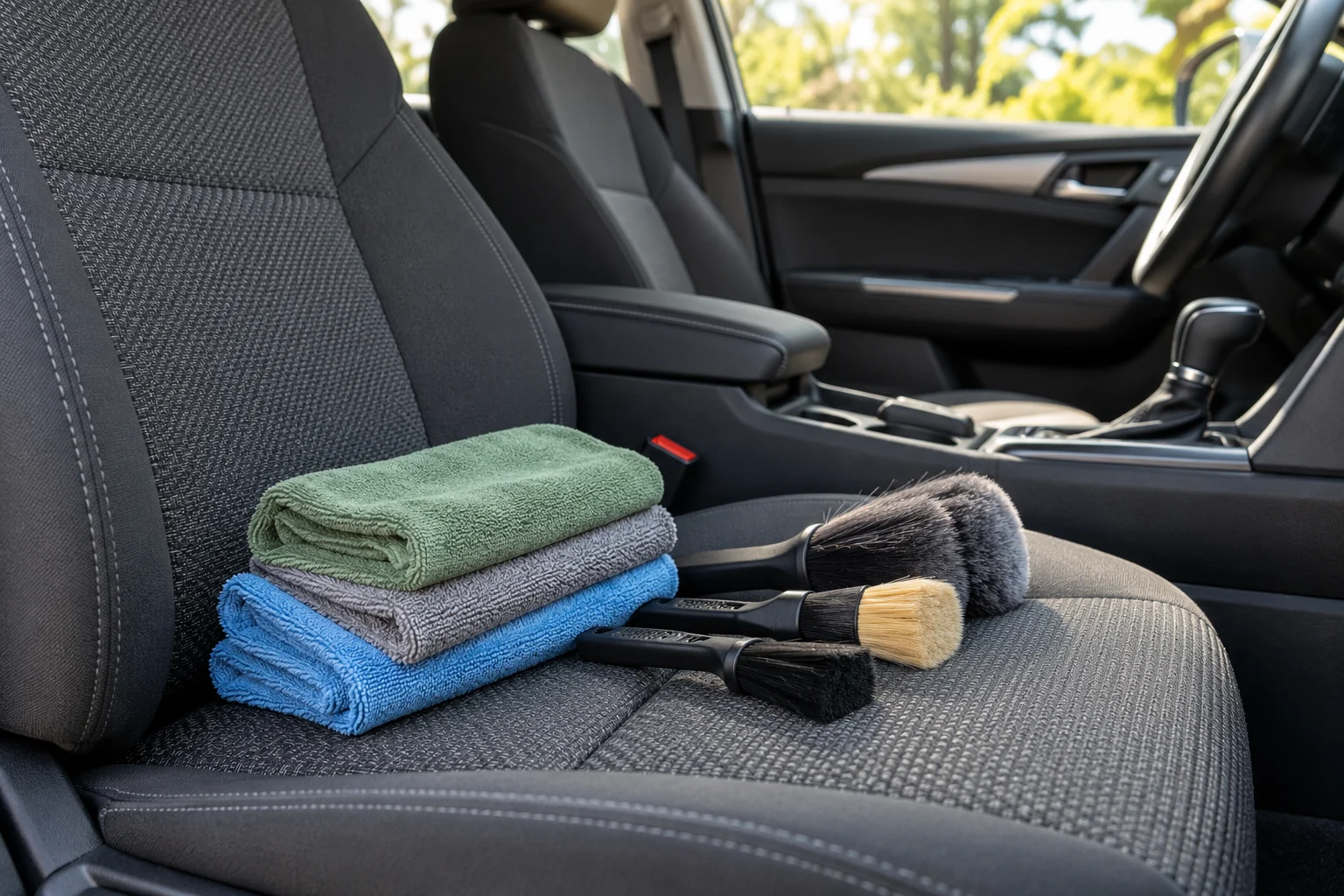
A useful kit begins with suitable clean cloths stored where they will not collect grit. Keep glass-care items separate from cloths used on wheels, muddy trim or other dirty surfaces. Follow the product and vehicle instructions for anything you use.
Do not leave an assortment of unlabelled bottles in the boot. If a product is decanted where its instructions allow, preserve the information needed to identify and use it correctly. Better still, keep the routine simple enough that you know which item belongs to which task.
The kit should support a modest habit while the vehicle is parked, not encourage cleaning while driving or hurriedly reaching across controls. Choose a time and place where you can work calmly. If the glass is difficult to reach, professional help may be more appropriate than an awkward improvised tool arrangement.
Treat mirrors as their own surfaces
Exterior and interior mirrors can include coatings, heating features or other components. Consult the vehicle instructions and avoid assuming they can tolerate the same treatment as an ordinary household mirror. A reflective surface deserves careful product selection.
Tell the detailer if a mirror is damaged, loose or not operating normally. Cleaning does not resolve an adjustment or electrical issue, and the provider should know about an existing concern before working around it.
At review, look from the normal seating position while parked and confirm that the agreed accessible surfaces have been addressed. If a mark remains, ask whether it is surface contamination or damage. Repeated rubbing is not an informed response to a defect that has not been identified.
Keep screens out of the glass routine
A dashboard display may resemble a pane of glass, but it has its own care requirements. Do not automatically use the window-cleaning product on it. The same caution applies to instrument displays and other electronic surfaces within the cabin.
Ford's display-care guidance, for example, excludes detergents and solvents on the touchscreen. This model-specific instruction reinforces the need to distinguish a screen from surrounding glass. A clean-looking result should not come at the expense of using an unsuitable method.
When booking a detail, ask which interior surfaces are included and how the provider accounts for their instructions. You can identify fingerprints as a priority without prescribing a product. The provider should select an appropriate approach for the actual vehicle rather than treating the entire dashboard as one material.
Do not turn a stubborn mark into a scraping experiment
If an ordinary, appropriate cleaning attempt does not resolve a mark, pause and identify what remains. It may require professional assessment, or it may not be removable dirt at all. Avoid escalating to a blade, abrasive pad or unfamiliar chemical simply because the mark is frustrating.
Describe any previous attempt when asking for help. Include the product and tool if known, plus whether the appearance changed. This information is useful even when the attempt was unsuccessful. It gives the provider a more complete history of the surface.
A detailer should be able to explain the limits of the proposed work and whether another specialist is appropriate. Glass damage, film issues and ordinary smears should not be bundled into a promise that every transparent surface will become perfect through cleaning alone.
Include the edges without forcing access
Visible window areas are only part of what an owner notices. Edges and surrounding trim may collect debris, but access should follow the vehicle instructions and the provider's scope. Do not force a window, remove trim or disturb a film edge to reach a mark.
If a window does not operate normally, disclose that before the appointment. The provider can then decide how it affects cleaning. An operational issue belongs in a separate repair conversation rather than becoming an obstacle discovered while somebody is trying to reach the glass.
Ask whether the agreed service includes accessible edges and surrounding surfaces. This is a straightforward scope question. It avoids assuming that a package includes every hidden channel or that the cleaner will dismantle components to satisfy the word thorough.
Recognise when the issue is more than cleaning
A chip, crack, damaged film or persistent problem affecting the view needs suitable assessment. Cleaning can make the surface easier to inspect, but it does not repair every defect or establish the condition of related vehicle systems.
Likewise, wiper operation and washer-system concerns should be handled according to the vehicle's maintenance guidance. A freshly cleaned windscreen is not a substitute for addressing a component that does not work properly. Keep those tasks distinct in your preparation list.
Tell the detailer what you already know and ask which part they can address. A useful service can be limited to appropriate cleaning while you arrange another professional for the remaining issue. Clarity about that boundary prevents repeated disappointment and unnecessary product experiments.
Build the habit around actual use
A car carrying young children may collect fingerprints in the rear; a vehicle used for outdoor work may show a different pattern. Notice where marks recur and choose a manageable moment to address them. You do not need to clean every window equally often.
For example, a brief inspection when removing rubbish can reveal the rear-side smears that the driver rarely sees. A check before a longer journey can help you identify concerns that need attention while there is still time to arrange it.
Keep the routine proportionate. A small mark that is easy to address appropriately should not become a reason to purchase an entire new detailing system. The value comes from suitable, consistent care and from knowing when the concern has moved beyond a simple maintenance task.
Plan professional glass work as part of the right scope
If the glass is your main frustration, say so when asking about detailing. Confirm whether interior and exterior sides are included, along with mirrors and any glass roof. Large vehicles may have more surfaces than a basic description suggests.
Tell the provider about access around child restraints, cargo and other belongings. Remove items that block the agreed work where appropriate, handling restraints and accessories according to their own instructions. This lets the appointment focus on cleaning rather than sorting the cabin.
The interior cleaning guide can help you decide whether the rest of the cabin also needs attention. You may want a broader refresh, or you may mainly need the surfaces that affect your daily view. Choose the service around the actual priorities.
Review under more than one reasonable angle
At handover, look from the driver's seat and from outside where practical. Ask about any mark that remains in the area you originally identified. A change in angle can reveal a smear without requiring an unrealistic inspection under every possible lighting condition.
Keep the comparison fair. A mark visible only because the sun moved may still deserve attention, but describe it clearly rather than assuming the entire job was poor. Specific observations give the provider a chance to assess and respond.
If you discover a concern later, contact the provider with the location, a photograph if useful and the conditions in which you see it. Avoid adding several products before asking. That makes the follow-up easier to interpret and preserves the clearest possible record of the result.
Keep aftercare linked to the actual product
If a treatment was applied, save its name and instructions. Ask when routine cleaning can resume and whether any methods should be avoided. Do not use an aftercare rule from a different product simply because both are described as glass protection.
For film or coating work installed elsewhere, share that information with future detailers. A short record can prevent an unnecessary guessing exercise each time the vehicle receives care. Include any installer advice about a concern rather than asking a cleaner to reinterpret it from memory.
If no additional treatment was applied, keep the maintenance plan simple. Suitable cleaning and observation may be all you need. There is no requirement to turn every clear surface into a separate product project when the existing result already meets your needs.
Coordinate glass care with accessory changes
Tell the provider if a dash camera, permit holder or another fitted accessory limits access to a patch of glass. Decide whether it should remain in place and how the surrounding area will be handled. Do not assume the cleaner will remove or reposition equipment without an explicit arrangement.
If you plan to replace a sticker or move a mount, ask the relevant installer or manufacturer about the appropriate process. Adhesive removal is a separate question from routine glass cleaning, particularly where film or another treatment is present. A little advance coordination can prevent a simple cleaning request from becoming an unexpected accessory project.
Afterwards, check that your normal view and the intended arrangement remain satisfactory while the vehicle is parked. Keep any installation or operational concern separate from the cleaning review. The aim is a clear, usable surface with responsibilities understood, not a rushed decision about equipment placement at the end of an appointment.
Make the next request precise
A helpful request names the vehicle, the glass or mirror involved, the side where the mark appears and any film or treatment. Describe previous attempts and whether you suspect damage, without claiming a diagnosis you cannot confirm. This lets the provider decide what assessment is useful.
For current options, visit Cody Mobile auto detailing. Detailing is bookable in Ottawa and the surrounding service area; other areas are on the waitlist. The first appointment guide covers general access and preparation.
Clearer glass between details comes from a few well-chosen habits, not from treating every surface with the strongest available product. Identify what you are cleaning, follow the relevant instructions and pause when a mark needs assessment. That approach makes the next drive more pleasant while respecting the materials that make up your view.