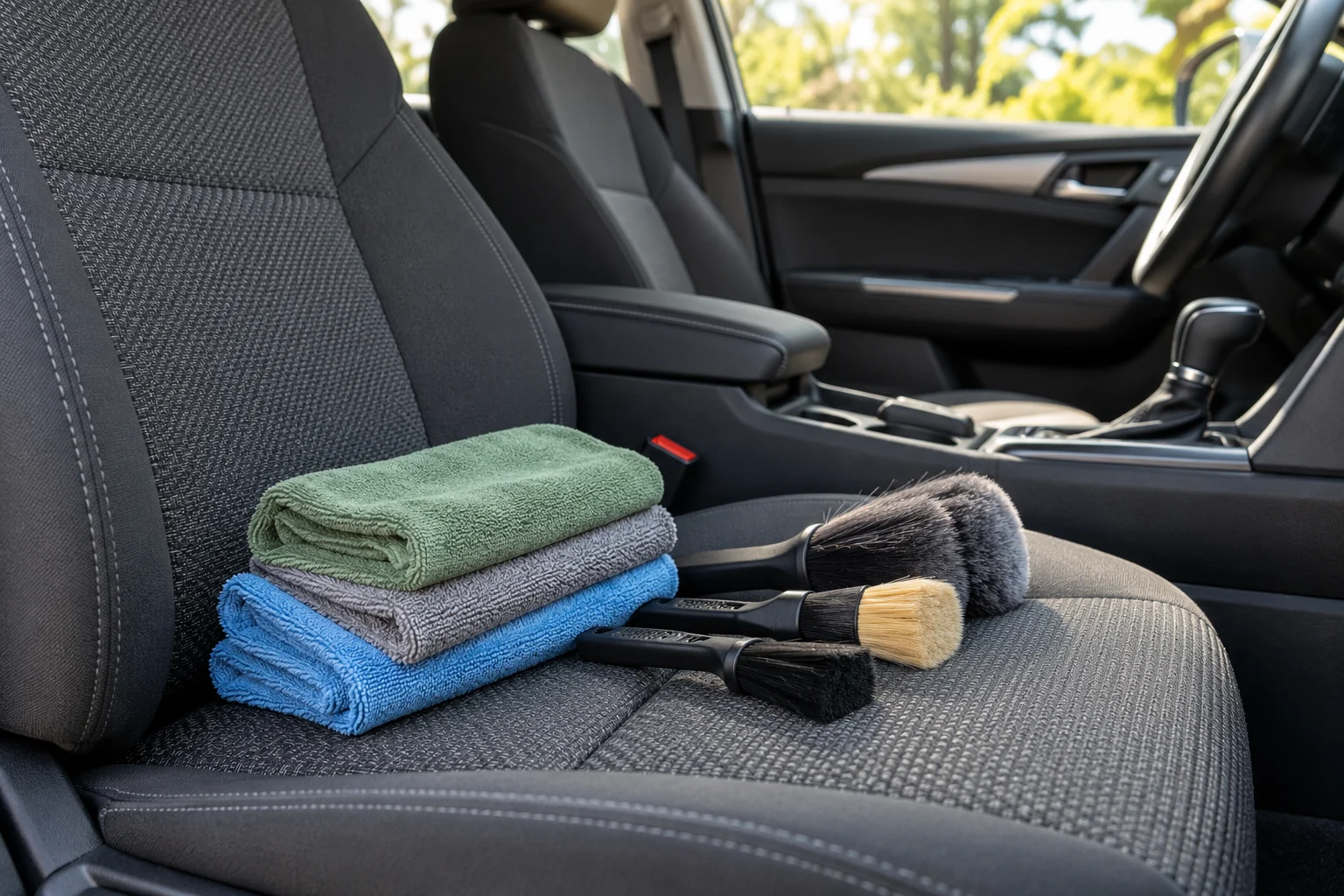
A work truck is often an office, lunch room, equipment store and transport between jobs. It may also become the family vehicle at the end of the day. Keeping it comfortable does not require pretending it lives an easy life. It requires a practical distinction between the mess that comes with the work and the accumulation that makes every journey harder.
A useful cleaning plan gives priority to the cab, recognises the materials and equipment involved, and fits around the working schedule. It also separates ordinary detailing from concerns involving hazardous materials or specialist cleanup. The result should be a truck that supports the day more comfortably, without creating another complicated maintenance programme for an already busy owner.
Start with the part where you spend time
Sit in the parked driver's seat and look around as though you are about to begin a long day. Which details are most irritating? Dust on the console, debris underfoot, a sticky cup holder or a passenger seat that has become storage may matter more than a small exterior mark.
Choose two or three priorities that would improve the working experience. A clear passenger seat can be useful when a colleague joins you. An organised centre console can save repeated searching for keys or a notebook. Clean glass can make the cabin feel less neglected.
Give those priorities to the detailer before discussing a package. A working vehicle often benefits from focused attention rather than an indiscriminate request to make everything perfect. The provider can recommend an appropriate scope when they know which parts of the result will actually be noticed during the next shift.
Describe the work the truck does
Explain the truck's ordinary use without assuming the provider knows what your trade involves. Does it carry landscaping tools, delivery boxes, sports equipment or paperwork? Do boots regularly bring in mud? Is the rear seat used by passengers or folded for storage?
Distinguish the cab from the bed or cargo area. A request to detail a truck can mean very different things depending on whether the owner expects equipment removal, bed cleaning, interior work or an exterior refresh. Name each area you want assessed.
If the vehicle carries materials that need specialist handling, disclose that before booking. Ordinary auto detailing should not be treated as an unannounced hazardous-material cleanup. The provider needs enough information to decide whether the work is suitable, what exclusions apply and whether another service should be involved.
Give tools and supplies a temporary home
Remove work equipment from the agreed cleaning areas before the appointment. Decide where it will go so the truck is not emptied into an unstable pile beside the driveway. Keep items that need to stay together organised, and separate anything you do not want handled by the provider.
Check the console, under-seat storage and door pockets for small tools, fasteners and personal documents. A cleaner should not have to decide whether a loose part is rubbish or an essential component. The same applies to receipts, customer notes and access cards.
You do not have to reorganise the entire business before a detail. The immediate goal is access and clear responsibility for belongings. If equipment cannot be removed, say so in advance and ask how that changes the scope. An accurate limitation is easier to plan around than a surprise obstruction halfway through the appointment.
Keep lunch and work storage distinct
A simple separation between food items and work supplies can make the cab easier to reset. It does not need to involve an expensive organiser. It needs to be a system that the driver can use while parked and clear at the end of the day.
Choose a designated place for used food containers and take them indoors when the shift ends. Give reusable bottles and lunch bags their own care routine. Otherwise, the detail may clean the truck while an unaddressed item immediately reintroduces the same unpleasantness.
Look at the places where clutter repeatedly gathers. If the passenger footwell becomes the default rubbish area, a suitable, securely placed container may help. If the console overflows with paperwork, a separate document holder outside the work surfaces may be more useful than repeatedly asking a cleaner to work around the pile.
Assess floors without treating every mark alike
Mud, grit, winter deposits and physical wear can overlap in a work truck. Tell the provider where the material collects and whether the problem is on removable mats or fitted flooring. A rubber-looking surface should still be identified rather than assumed suitable for any strong cleaner.
Describe any stubborn patch and previous treatment. An old stain beneath the accelerator may be different from loose soil across the rear floor. The winter salt guide explains why removable liners and fixed carpet should be listed separately in a request.
At the end of the work, judge cleanliness separately from wear. A floor can be appropriately cleaned and still show the history of heavy use. If a damaged area affects function or you want it restored cosmetically, ask about a repair assessment rather than expecting more aggressive cleaning to recreate missing material.
Respect graphics and specialised exterior finishes
Work trucks may have business graphics, wraps, decals, bed coatings and aftermarket accessories. Tell the provider what is fitted and share any care instructions you have. These surfaces should not be treated as interchangeable with an unmodified painted panel.
Ford's exterior-care guidance for a relevant truck configuration warns against using a high-pressure wand on bed-side graphics and their edges. That is a specific example of why the vehicle and accessory instructions matter. It is not a universal cleaning recipe for every commercial graphic.
If lettering is lifting, a coating is damaged or a panel has been repaired, photograph and disclose it before the appointment. The detailer can then explain what can be cleaned appropriately and what belongs with the installer or repair provider. Preserving the actual finish is more important than applying one method to the whole exterior.
Leave screens and controls out of improvised routines
A truck's working role can make the dashboard look like another hardwearing tool. It still contains surfaces with specific care requirements. Ask for appropriate cleaning around screens, switches and controls rather than assuming the product used on a door sill belongs everywhere.
Ford's touchscreen guidance, for example, restricts detergents and solvents on the display. The useful takeaway is to consult the correct manual and avoid transferring a household cleaning habit to an electronic surface. A clear-looking screen should not require an aggressive approach.
Tell the detailer about any existing control fault or damaged trim before work begins. That helps keep the record accurate and allows the provider to decide whether the issue affects access. A detailing appointment is not a diagnosis of an electrical problem merely because cleaning happens nearby.
Plan the appointment around the working day
The cost of taking a work truck out of use is not only the service price. It can affect tools, appointments and transport for the next job. Explain when the truck must be available and which areas need to be usable at that time.
If wet cleaning is proposed, ask about drying before committing to a narrow gap between jobs. A finished cleaning stage may not mean every textile is ready for equipment or passengers. The drying-time guide can help frame the scheduling questions.
Consider whether a quieter day, a weekend or a staged approach works better. A limited cabin refresh now and more involved work later may be sensible if the provider offers that arrangement. Choose deliberately rather than authorising a broad service and hoping the timetable will somehow accommodate it.
Make workplace access clear
If the detail will happen at a worksite, confirm that the location is suitable and that you have the necessary permission. Explain restrictions on vehicle movement, parking, water access or working hours. The provider should know the practical setting before arriving with an assumed driveway arrangement.
Avoid scheduling the service in an active area where equipment or vehicles must repeatedly move around the truck. Discuss an appropriate alternative location if needed. The work should be planned around a stable, accessible space rather than fitted into whatever gap happens to be available that morning.
Decide who can answer questions and approve a scope change while you are working. Give the provider a clear contact arrangement without authorising open-ended additions. This allows the appointment to progress while keeping you informed about anything that materially changes the agreed work.
Build an end-of-shift reset that has an ending
A useful routine is short enough to survive a tiring day. Remove food waste, take important documents indoors and return loose items to their intended places. Stop when those defined tasks are finished rather than turning each evening into a complete cleaning session.
Choose a separate regular moment to inspect the mats and passenger areas. It might be before the weekly supply run or when fuel receipts are organised. Linking the check to an existing habit can be easier than creating another reminder that is ignored when the schedule gets busy.
The routine should reflect the truck's real use. A delivery vehicle and a landscaping truck will not accumulate the same mess. Keep what works, change what repeatedly fails and ask the detailer which simple maintenance methods are appropriate for the materials in your cab.
Prepare for the switch to family use
If the truck carries children or other passengers after work, make the transition explicit. Remove loose work items from passenger areas and follow the vehicle instructions for securing anything that remains. Cleaning alone does not make an unsuitable load arrangement appropriate for passengers.
Check that the seats and footwells needed for the journey are available. If child restraints are used, handle them according to their own installation and care instructions. Do not treat their removal or reinstallation as an automatic part of a general detail.
A clean, accessible rear seat can make the truck more flexible without erasing its working identity. The aim is to avoid asking passengers to negotiate a workday's collection of belongings every time they climb in. That is as much an organisation decision as a cleaning one.
Address odours with facts
Tell the provider if an odour is part of the concern. Describe when it appears, where it seems strongest and any known incident or removable item involved. A cab that carries food, wet clothing and equipment can have several overlapping histories.
Do not assume a stronger scent will create a better working environment. Ask what source-focused cleaning is available and whether a concern may require another assessment. The odour guide helps organise the information without asking you to diagnose the cause.
If you prefer minimal fragrance, make that part of the request. A work truck is a space you may occupy for long periods, and a finishing preference can matter to daily comfort. The provider can explain what they can accommodate before the service is chosen.
Review the result against the truck's purpose
At handover, inspect the priorities you identified at the beginning. Is the passenger area usable? Are the agreed floor surfaces cleaned? Can you understand what remains because of staining or wear? Confirm any drying or aftercare before returning equipment.
Rebuild the cab thoughtfully. Put back the items needed for the next day, then decide where the rest belongs. A detail loses much of its practical benefit if every loose object returns to the same place without consideration.
Keep a brief note of the work and anything requiring separate attention. This makes the next booking easier and gives you a clearer basis for choosing a maintenance interval. The correct interval is the one that reflects condition and use, not an arbitrary calendar rule borrowed from a truck with a different working life.
Choose a service that supports the work
For current options, visit Cody Mobile auto detailing. Detailing is bookable in Ottawa and the surrounding service area; other areas are on the waitlist. Include the cab layout, typical cargo, access location and any specialist contamination concern when requesting an assessment.
The mobile appointment guide can help with the practical booking details. Confirm exactly which areas are included, especially if you also want attention to the bed, graphics or equipment-adjacent spaces.
A comfortable work truck does not have to look unused. It should give you a clean place to sit, useful room for the people and items it carries, and a manageable routine between professional visits. That kind of care respects the vehicle's job while making the hours you spend in it a little easier.