Moving creates two kinds of household projects at once: the old home needs attention before you leave, and the new one needs to work before the boxes are unpacked. It is easy to mix them into one urgent list. The result can be a carefully repaired wall in one place while the bed, privacy coverings and essential storage remain unresolved in the other.
A better plan separates departure obligations, arrival essentials and improvements that can wait. Then it puts assembly and repairs in an order that respects access, permissions and product requirements. The goal is not a perfectly finished home on the first evening. It is a home that can be used comfortably while the remaining work proceeds without constant rearranging.
Make separate lists for the old and new addresses
Label every task with the property where it belongs. This sounds obvious until the same provider is asked to remove a television, patch its old wall and remount it across town. Each stage has different conditions, access and possible materials. Treat the move between them as part of the plan.
For the old home, identify what you are actually responsible for under the relevant agreement. Do not assume every mark must be repaired in a particular way, or that a quick touch-up will satisfy another party. Clarify expectations with the landlord, purchaser or appropriate adviser before authorizing work based on guesswork.
For the new home, distinguish existing defects from changes you want to make. Photograph visible conditions at arrival where appropriate, and follow the relevant reporting process. A repair request should not accidentally erase useful evidence before a responsibility question has been resolved.
Keep documents and photographs organized by address. Product instructions may travel with you, while repair records may belong with the old property. A simple folder structure prevents confusion when you are tired and several people are asking which wall or cabinet you mean.
Decide what the first night requires
Think through ordinary activities: sleeping, changing clothes, using the bathroom, preparing a simple meal and moving safely between rooms. Identify which repairs or assembly tasks directly support them. A bed frame and essential privacy covering may matter more immediately than a decorative gallery wall.
Do not let a first-night deadline override required assembly or installation steps. If a product cannot be safely completed, use an appropriate alternative arrangement rather than treating partial assembly as ready for use. The manufacturer's instructions define what complete means for the item.
Consider the needs of children, older relatives and pets. They may need a quieter room, familiar belongings or a clear route that remains separate from unpacking. Decide which room will become usable first and protect it from becoming the general storage area for every unopened box.
Keep essential parts and tools supplied with products accessible, but do not assume that having them means the household should undertake unfamiliar work. The useful preparation is to know where instructions and components are when the appropriate provider arrives.
Plan disassembly before the moving truck arrives
Ask the mover and any assembly provider who handles each item. A moving service may have a specific scope for dismantling furniture, and an installer may need a separate appointment for wall mounted pieces. Do not discover that neither party is responsible when the truck is waiting.
Provide exact product details for large or complicated furniture. Canada's Office of Consumer Affairs notes that some furniture is intended to be assembled and remain in place, making moving a more delicate question than it first appears. Ask the manufacturer or a suitable professional whether disassembly and reassembly are appropriate for the actual item.
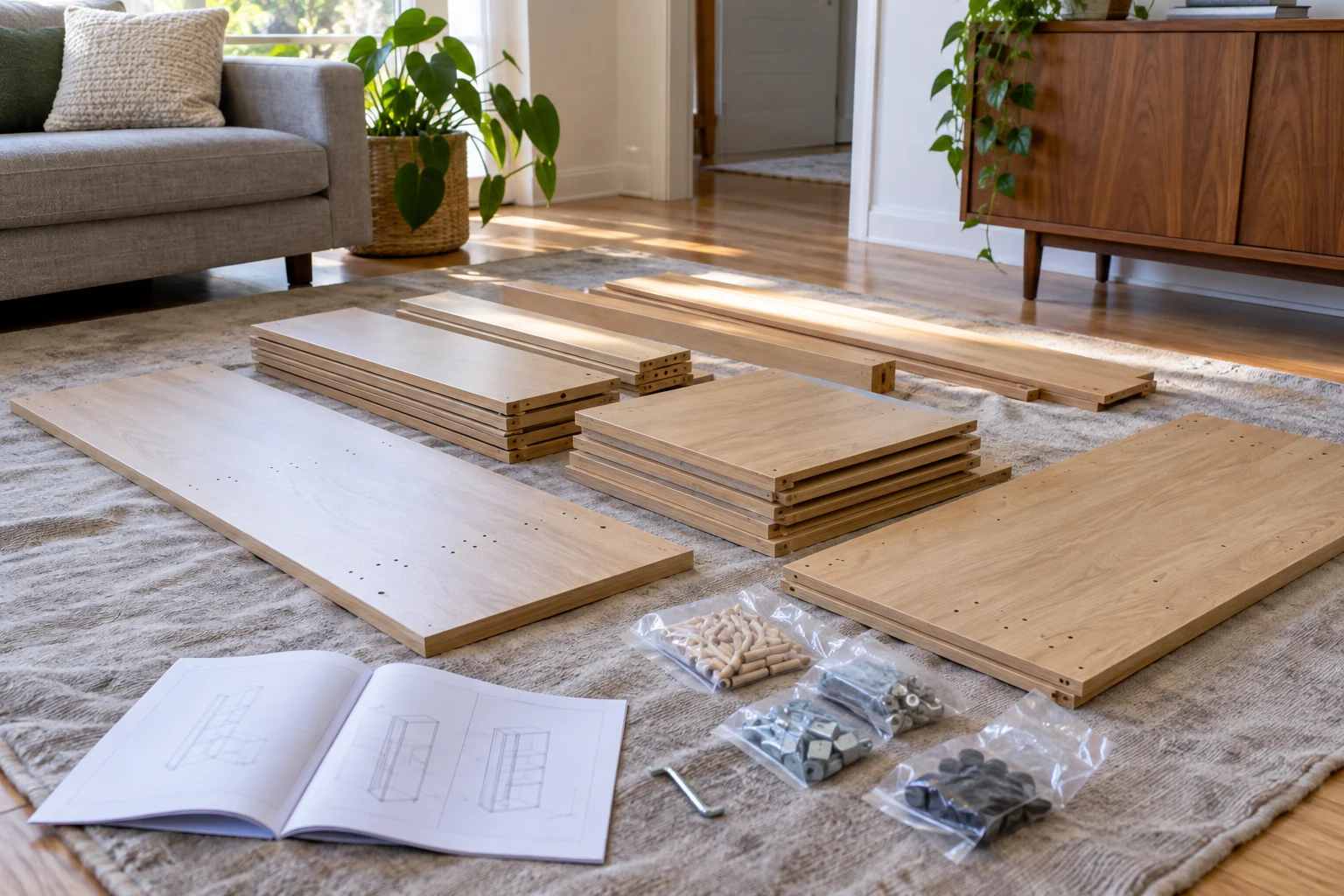
Keep hardware with the correct furniture, using clearly labelled containers. Photograph the product label and retain the instructions. Avoid putting all fasteners into one communal bag, even when several items look similar. Missing or mixed components can delay reassembly and encourage unsuitable substitutions.
For wall mounted furniture, televisions or heavy mirrors, arrange appropriate removal and handling. Do not assume they can be lifted off like a picture. The mounting system may have a specific release method, and the object may require more than one person. The wall mounting guide explains the information that makes this planning more useful.
Coordinate old-home repairs with access and handover
Repairs are often easier once furniture has moved, but the available window before handover may be short. Discuss that timing early. Patching and painting can require stages, and the elapsed time may extend beyond the hands-on work. A small mark does not guarantee a same-day invisible finish.
Agree on the finish boundary with whoever is responsible for approving the work. A spot touch-up may differ from the surrounding paint, while painting a full wall changes the scope. Keep any existing paint information available. The wall repair guide explains why patching and paint matching should be treated separately.
Do not undertake unauthorized alterations to satisfy an assumed standard. In a rental, seek clarification about the expected condition and approved repair process. In a sale, consult the relevant agreement or adviser for obligations. This guide helps organize work; it does not determine the legal responsibilities of a particular move.
Schedule a final review with enough time to address an agreed concern. If the provider finishes just as keys must be handed over, there may be no practical opportunity to inspect the result or understand care restrictions. A little calendar space can make the closing stage much calmer.
Measure the new home before committing to assembly
Confirm that large furniture fits the room and the carrying route. Doorways, turns, stairs and ceiling height can matter as much as the final floor area. Use accessible preliminary measurements, and ask the relevant provider to verify anything critical before work begins.
Choose the intended position before assembly where possible. A large wardrobe may be difficult to move after completion, particularly when manufacturer required wall fixing is involved. Consider opening doors and drawers, access to windows and the route around the bed or desk.
Do not assume a former layout transfers neatly to a new room. Receptacle locations, heating equipment and window movement may change what is practical. A few minutes of planning can prevent assembling a piece exactly where another essential function needs to be.
If a product is still being purchased, provide the room information to the supplier or installer before ordering. A returnable alternative may be easier to manage than a custom item based on an incomplete measurement. Keep delivery dates realistic and avoid booking final installation against an uncertain shipment.
Treat anchoring as part of readiness
Health Canada advises following furniture assembly instructions and using appropriate anti-tip measures. A move changes the wall and floor conditions, so an item that was secured in the old home needs a suitable installation in the new one. Carrying the old restraint hardware does not automatically establish compatibility.
Ask the provider to assess the actual mounting requirements and supporting construction. Do not choose anchors from a general weight claim or reuse parts without checking the product instructions. Required fixing should be included in the assembly scope before the furniture is loaded or put into normal use.
If wall fixing needs permission, obtain it early. A rental or condominium approval question should not remain unresolved while a tall cabinet stands in a child's room awaiting a later decision. Plan the product and location around what can be installed appropriately.
Keep children away from incomplete or unsecured furniture and unpacking areas. The first days in a new home can make ordinary supervision harder because rooms and routines are unfamiliar. A designated usable space helps keep partially completed projects from becoming everyday furniture by accident.
Make privacy and window access a considered early project
Privacy coverings can be an arrival priority, but rushed installation can create avoidable problems. Confirm the opening, mounting surface and product requirements before drilling. A covering that fit the old window may not suit the new one even if the nominal dimensions look similar.
Choose products with safe everyday operation. Health Canada's window covering guidance favours products without long accessible cords. Include that consideration when selecting temporary as well as permanent arrangements, especially where children live or visit.
Preserve normal window operation and any required escape or ventilation function. Do not use a makeshift covering that blocks a necessary route or interferes with heating equipment. If the permanent product cannot be installed immediately, choose an appropriate temporary arrangement with the relevant safety needs in mind.
The curtain and blind installation guide helps turn privacy needs into a complete brief. Deciding the final arrangement before furniture fills the room can also make access easier for the installer.
Separate cosmetic wishes from urgent defects
A new home often reveals many small imperfections once it is empty. Make a record, then decide which affect ordinary use and which can wait. You do not need to repaint every scuffed surface before you can begin living there.
Report urgent security, access, electrical, gas or active water concerns through the appropriate channels and seek qualified help. Those issues should not wait for a general moving-day task bundle. Explain the current condition clearly rather than describing everything as a small repair.
For uncertain problems, arrange assessment before selecting a solution. A stain, recurring crack or unstable component may need more than cosmetic attention. The pressure of moving does not make an unexplained condition suitable for a quick cover-up.
Create a later list for aesthetic improvements. Living in the room for a while may change where you want shelves, pictures or storage. Deferring those decisions can prevent unnecessary holes and purchases. Arrival essentials and long-term design deserve different timelines.
Build a schedule around people and space
Coordinate movers, cleaners and repair providers so they are not all trying to use the same doorway or room. A crowded schedule can look efficient while making each task slower. Identify which work requires an empty space and which can happen after belongings are placed.
Confirm building access arrangements at both addresses. Elevator bookings, parking and work hours can determine whether a planned sequence is possible. Share those constraints before confirming appointments, and keep contact details available for the day.
Allow for delayed deliveries and the time needed to find essential components. A provider cannot assemble a product that is still on the truck or buried behind a wall of boxes. Place the correct boxes in the intended room and keep the working area clear.
Use a simple priority brief:
- Old-home obligations and the agreed finish standard.
- First-night essentials at the new address.
- Items needing specialist removal, assembly or wall fixing.
- Product locations, instructions and confirmed delivery status.
- Access bookings and dependencies between providers.
- Cosmetic tasks that can move to a later visit.
Protect decisions from moving-day fatigue
Settle product choices and positions before the busiest day whenever possible. Keep a sketch or photographs of the agreed layout. If several people are helping, name one person who can answer routine questions and identify decisions that still require your approval.
Avoid authorizing broad additional work while distracted by the move. Ask for the proposed change and its implications in writing. A provider can often pause a nonessential decision until you have time to review it. The convenience of immediate action should not replace understanding the scope.
Keep payment and service arrangements accessible in one place. Check that invoices correspond to the agreed work and any approved changes. For moving contracts and disputes, consult current official consumer guidance rather than relying on assumptions about standard practice.
Plan a short review of completed assembly before the provider leaves. Confirm what is ready for use, what remains incomplete and whether any areas need to stay clear. Tired household members should not have to infer readiness from the fact that most of the furniture is standing.
Keep an assembly essentials box separate
Use one clearly marked container for manuals, labelled furniture hardware, product receipts and the room plan. Keep it accessible during transport rather than allowing it to become another anonymous box in storage. The contents should remain organized by item, so the container gathers information without mixing parts.
Assign someone to know where that box is at both addresses. If a provider arrives while unloading continues, they can begin by reviewing the correct instructions instead of waiting for a search through the truck. This small logistical decision is especially useful when several similar bed frames or shelving units are moving together.
Give the second week its own list
Once essentials are working, revisit the remaining repairs with the benefit of ordinary use. You may discover that a door problem matters more than a paint mark, or that the proposed shelf location interferes with a chair. Update the list before arranging another visit.
Keep manuals, spare parts and product labels together as you unpack. These records are easy to lose among packaging but useful for later adjustments and maintenance. Photograph labels before boxes are recycled, and retain any components the manufacturer says to keep.
Use the furniture assembly preparation guide for detailed product readiness and the handyman visit guide to organize the follow-up work. Cody's handyman service is currently a waitlist while a partner is recruited. Registering interest does not secure moving-day help, so arrange essential available services in good time. A successful move leaves the household with a usable home and a deliberate next list, rather than a collection of half-finished promises.