Leaving home should not mean wondering whether the new shrubs have been watered or whether the person helping can find the outside tap. A travel plan for the garden works best when it gives someone a small number of clear responsibilities, useful plant information and a way to respond when conditions change.
Begin with what genuinely needs attention during your absence. A few established beds, newly planted trees, containers and a recently seeded lawn may require very different arrangements. This guide helps you prepare a practical handover, test it before departure and return to a garden whose care has been understandable rather than improvised.
Match the plan to the length and timing of the trip
A weekend away and a month-long absence are different planning problems. Write down the dates when nobody in the household will be available, including travel days when you may be difficult to reach. Consider the season and the work already underway in the yard. The relevant question is what will need care during that particular window.
Look at your normal routine over a similar period. Which tasks cannot reasonably wait until you return? Which are mainly cosmetic? A bed that can tolerate a short pause in tidying should not receive the same attention as a new planting with an active establishment plan. Prioritisation keeps the handover manageable.
Build in a little flexibility around the return date. Travel delays are possible, and a helper should know whether they can continue briefly if needed. Agree on how you will confirm that you are home and taking responsibility again. This avoids either duplicate work or a gap caused by each person assuming the other has resumed care.
Make an inventory of plants needing particular attention
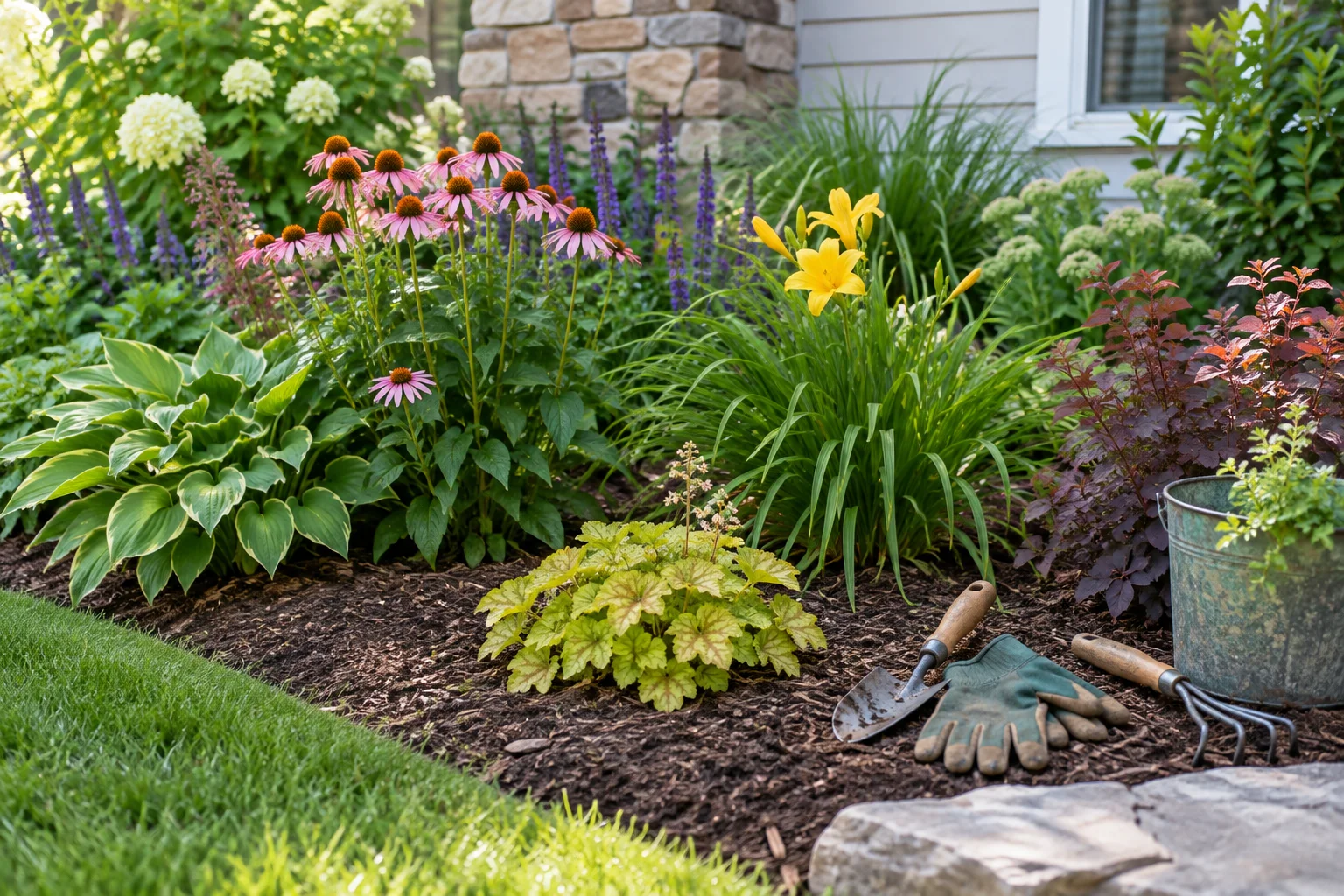
Walk the garden and identify recent planting, containers, hanging baskets and any area receiving special care. Mark them on a photograph or simple sketch. Use descriptions a helper can recognise, such as the two pots beside the side door, rather than relying entirely on botanical names.
University of Minnesota Extension emphasises watering care for newly planted trees and shrubs during establishment. The practical implication for travel is that new woody plants should have a specific handover, not be grouped casually with the established garden. Ask the person who supplied or planted them for site-appropriate instructions before you leave.
Do not make the inventory longer than necessary. Its purpose is to distinguish needs, not document every leaf. A short list with clear locations is easier to follow than an extensive plant catalogue that hides the few time-sensitive responsibilities among dozens of low-priority entries.
Separate essential care from appearance
Essential care concerns the agreed needs of living plants and any immediate practical issue. Appearance tasks might include deadheading, edging or a general tidy. Decide which matter during the trip and which can wait. The distinction helps a helper use limited time without feeling responsible for a picture-perfect garden every day.
If you want the entrance to remain presentable, say exactly what that means. It may involve moving fallen material from the path and keeping a few pots in order. Do not leave a broad instruction to make everything look nice, especially if the helper does not know which growth is intentional.
Likewise, identify work that should not happen without discussion. Pruning, removing uncertain plants, changing irrigation settings or applying products can have consequences beyond the absence. A simple instruction to photograph and ask before changing the plan gives the helper a confident response to uncertainty.
Write watering instructions around observation
Ask for a watering plan suited to the plants, containers and site. The instructions should explain what to check and what to do, not merely repeat the same amount every day regardless of conditions. If a helper is unfamiliar with the garden, demonstrate the checks in person and let them practise.
Established plants and new planting should not automatically share a schedule. University of Minnesota Extension also cautions that excessive watering can harm established woody plants. More attention is not always better care. Your handover should make room for recent rain and actual moisture conditions rather than equating effort with success.
Use clear units where quantities are genuinely part of professional instructions. Show the relevant watering can, hose setting or equipment so the helper does not need to translate an abstract direction into an unfamiliar tool. Record the source of the plan and whom to contact if observations no longer fit it.
Check water access before the last evening
Show the helper the correct tap, hose, fittings and storage location. Test the route to every priority area. A hose that technically reaches may still snag around a corner or cross a busy walkway. Resolve those practical issues while you are available to explain the property.
If equipment needs a key, code or connection procedure, share only what is necessary and confirm that it works. Avoid sending a complicated collection of access details at the airport. A brief rehearsal can reveal a missing connector, an awkward reel or a gate that cannot be opened from the expected side.
Make clear how equipment should be left after use. Agree on the appropriate shutoff and storage routine for the actual system, using manufacturer or installer instructions where relevant. The helper should not need to guess which valves, timers or controls are safe to adjust.
Test automated equipment while you are home
An irrigation timer can support a care plan, but it should be tested before it becomes the main source of care during an absence. Observe a complete cycle and check that the intended areas receive water. Verify the current settings with the installer or product instructions if you are uncertain.
Arrange human observation for the situations that matter. Equipment can be disconnected, blocked or affected by a power or water interruption. A helper who knows what normal operation looks like can report a problem more usefully than someone told only that the system takes care of everything.
Avoid installing an unfamiliar setup immediately before departure unless someone competent will manage it. The first days of use are when you learn how the equipment behaves on your property. A simpler arrangement that has been tested may be easier to hand over than a more sophisticated system nobody has yet observed properly.
Make containers easier to understand
Number or label groups of containers on your map. State which are part of the care arrangement and which contain plants with different requirements. Pots near the house, under an overhang and in an exposed corner may behave differently even when they look similar from a distance.
Do not move every container into one location without checking whether the new conditions suit the plants and whether the move is physically practical. Ask for advice if you want to consolidate them before travelling. The goal is to simplify access without creating a new light, drainage or handling problem.
If a container is especially valuable or recently planted, include a reference photograph. That can help a helper describe a change. Ask them to report a specific observation, such as leaves remaining wilted after the agreed check, rather than attempting an uncertain diagnosis or adding an unapproved product.
Keep lawn care consistent during the absence
Confirm mowing arrangements separately from garden watering. State the included areas, access instructions and whether there are recently seeded sections to avoid. A regular provider should know about changes since the previous visit, especially if furniture, play equipment or temporary barriers have moved.
Do not request an unusually severe cut simply to postpone the next mowing. Discuss a suitable schedule with the provider based on growth and conditions. The mowing schedule guide explains the questions that make recurring care clearer, including clippings, finishing work and weather delays.
If no mowing is needed during a short absence, record that decision so another helper does not improvise. Multiple well-intentioned people can create confusion when each sees a different part of the plan. One shared note should make it obvious who is responsible for the lawn and who is looking after planting.
Choose a helper whose role matches the task
A neighbour comfortable checking a few pots may not want responsibility for an unfamiliar irrigation system or a newly renovated lawn. Explain the work honestly before asking for help. The right arrangement depends on willingness, time and competence, not simply proximity to the house.
For a paid provider, confirm that travel care is part of the offered service and agree on the scope in writing. Ask how visits are recorded, how missed access is handled and what happens if unusual conditions require extra time. Do not assume ordinary weekly garden maintenance includes frequent establishment checks.
If more than one person will help, appoint a clear point of contact. Divide responsibilities by area or task and avoid overlapping instructions. A simple record of completed visits can prevent duplicate watering and make it easier to see whether an expected check was missed.
Define what deserves a message
You probably do not need a photograph of every routine watering. Decide which updates would actually help: confirmation of the first visit, a weekly summary or a message when something departs from the plan. Too much reporting can become another task that makes the arrangement harder to sustain.
Identify situations requiring prompt contact, such as a leak, fallen branch blocking access or a priority plant changing noticeably. The helper should describe what they see, provide a photograph and avoid entering an unsafe area. Garden care does not make them responsible for emergency repairs or tree assessment.
State what decisions they may make without reaching you. That might include a limited additional visit or moving lightweight equipment to clear a path. Keep broader changes outside the routine authority. Clear boundaries allow sensible action while preserving your control over costly or irreversible decisions.
Agree on expenses before leaving
If payment is involved, confirm the rate structure and what is included. Distinguish scheduled care from additional visits, supplies and specialist assistance. Ask how an extra charge will be approved if you cannot respond immediately. A modest, explicit boundary is easier for everyone than an open-ended promise to sort it out later.
For an informal arrangement, offer the supplies needed to perform the agreed task. Do not leave a helper searching for suitable bags, connectors or plant instructions at their own expense. Practical preparation is often more valuable than a complicated checklist that assumes all equipment will be available.
Keep receipts or visit records where relevant. They can help you understand what the arrangement actually required and plan future travel more accurately. The purpose is clarity, not surveillance of a trusted helper. A simple summary should be enough for a small garden and a short absence.
Avoid starting demanding work just before departure
Consider whether a new bed, major transplanting or overseeding project can wait until you return. These changes can introduce care needs and uncertainty precisely when you are least available. If the work must proceed, arrange a complete establishment plan with someone who has agreed to carry it out.
A pre-trip tidy should make existing care easier, not create a chain of new obligations. Clear access, identify priority plants and resolve equipment issues first. Decorative changes can wait if they would distract from the more useful preparation.
For longer absences, review whether the garden’s design suits your travel pattern. Repeated difficulty caring for many small containers or a demanding seasonal display may justify a future change. The low-maintenance planting guide can help you turn that experience into a more manageable routine.
Return with a short handover
Confirm that you are home and taking responsibility again. Ask what was done, what changed and which observations deserve follow-up. Review any priority plants with the helper’s notes before making adjustments. A change in appearance does not necessarily reveal its cause without the history of the preceding weeks.
Thank the helper with a clear close to the arrangement and settle agreed expenses promptly. Record what would make the next trip easier: better labels, a simpler hose route, a different visit pattern or fewer last-minute changes. Small improvements can turn future handovers into a familiar routine.
Cody Mobile’s planned lawn and garden care division is currently a waitlist while local partners are recruited; it is not operating yet. Your travel-care brief can still help you arrange suitable support now and explain your needs clearly to a future provider.