Fall leaf cleanup can feel endless when trees drop their leaves at different times and a windy afternoon undoes the previous day’s work. A manageable plan does not require the property to look untouched by autumn. It requires clear priorities, sensible timing and a destination for the material you collect.
Start by distinguishing the places where leaves interfere with use from the places where they can be part of the garden. Then decide whether you need several smaller visits, a later main cleanup or a combination. This guide will help you build a plan around your trees, your available time and your expectations for the finished yard.
Map where leaves actually accumulate
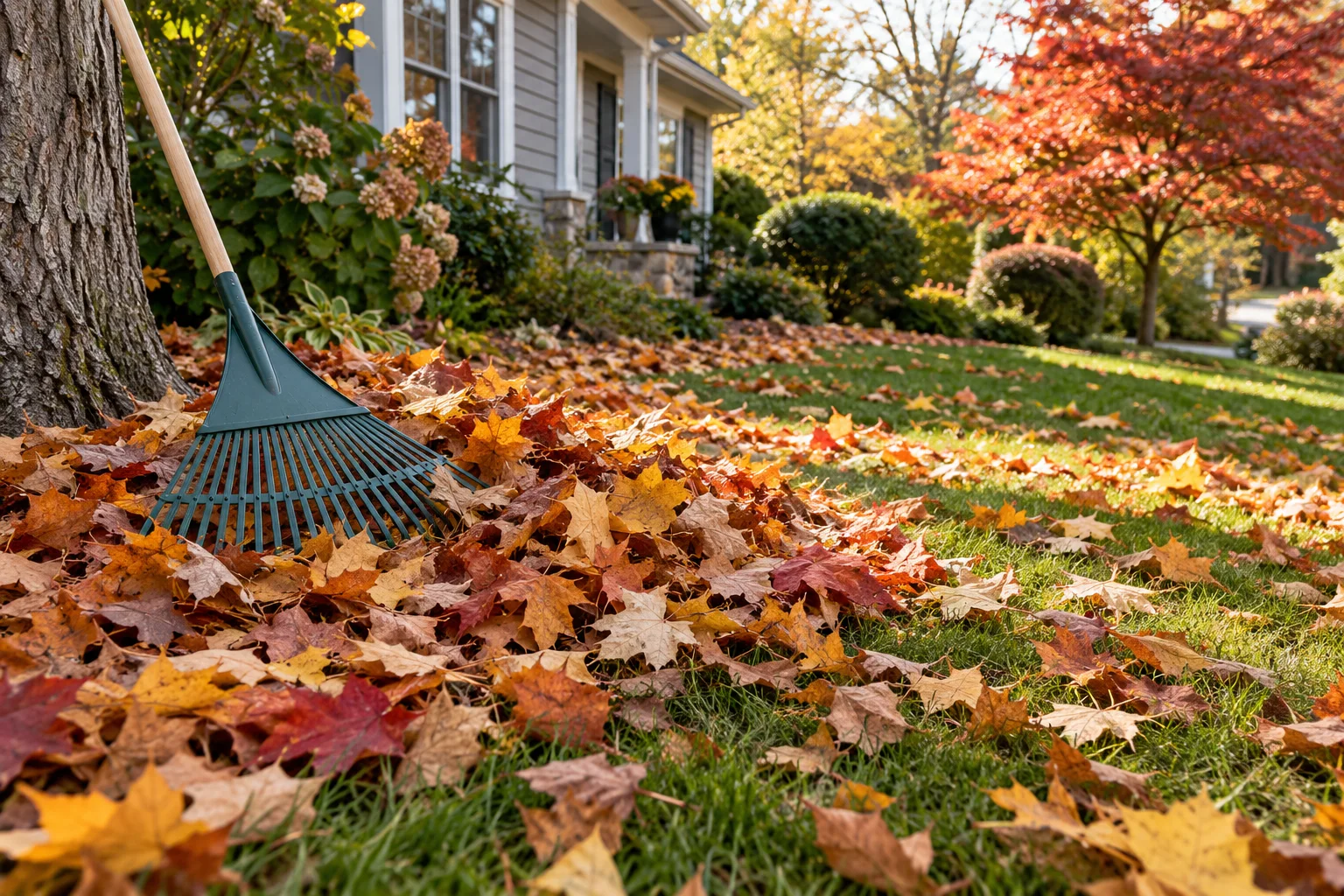
Walk the property after an ordinary breezy day. Notice the corners where leaves collect, the paths they cross and the beds where they settle naturally. The tree directly overhead may not be the only source. Fences, buildings and the shape of the ground can influence where material ends up.
Mark practical problem areas first: steps, entrances, narrow paths, the route to the bins and parts of the lawn receiving a dense covering. Then mark quieter areas where a different standard may be acceptable. This simple map helps a provider understand why the front path deserves repeated attention while a back border may wait.
Do not base the whole plan on a photograph taken before most leaves have fallen. Share pictures from a previous autumn if you have them, and identify which trees tend to shed early or late. You do not need exact dates. Even a rough sequence is useful when deciding how many visits are worthwhile.
Define a realistic seasonal finish
A leaf-free photograph is a moment, not a season-long condition. Decide whether you want a consistently tidy entrance, a generally clear lawn or one thorough final collection. These are different outcomes and may require different schedules. A provider cannot price them fairly if they are all described as a fall cleanup.
Consider how the yard will be used. If you host an outdoor gathering, a targeted visit before it may matter more than a final visit after every leaf falls. If your main concern is winter access, focus on the paths and storage areas you will continue to use. Tie the standard to a purpose.
Explain what you consider acceptable between visits. A light scattering of newly fallen leaves may be fine even when a thick accumulation is not. Agreeing on that distinction helps prevent disappointment the morning after a completed cleanup, when normal leaf fall resumes and the property no longer looks exactly as it did at handover.
Divide the property into care zones
An entrance zone may need frequent light attention, while a lawn zone may need periodic collection or another suitable approach. A garden habitat zone can have its own plan, and a storage or utility zone needs reliable access. These zones do not need formal signs; a labelled photograph is enough.
The City of Ottawa encourages residents to consider reusing leaves in the landscape. That gives you an alternative to treating every fallen leaf as waste. Choose appropriate locations deliberately and consider the needs of existing plants. Reuse should be a planned garden practice, not a reason to move an excessive pile into the nearest bed.
If leaves will remain somewhere, identify the boundary and explain the intended appearance. A maintained path beside a more natural bed can look purposeful when the edge is clear. Without instructions, one person may remove material you wanted to retain while another leaves an area you expected to be accessible.
Choose a visit pattern that suits leaf fall
A single late visit can be efficient when the property remains usable beforehand and most material can be handled together. Several smaller visits may suit a busy entrance, many trees or a household that cannot manage interim work. A hybrid arrangement can focus early visits on access and save broad collection for later.
Ask what triggers the final visit. Is it a scheduled date, a discussion after most leaves fall or the provider’s seasonal route? Weather and tree behaviour can change the timing, so an honest window may be more useful than a rigid promise. Clarify what happens if substantial leaf fall occurs after the agreed final visit.
For a hypothetical property with an early-shedding front tree and a later backyard canopy, one whole-property visit may be a compromise. Two targeted visits could better match the pattern. The point is not that more visits are always better, but that timing should respond to the property rather than a generic package name.
Decide how collection will be done
Different areas may call for different tools and methods. Open lawn, loose gravel, planted beds and narrow steps are not the same working surface. Ask how the provider will protect small plants, move around garden objects and avoid sending material into areas that have already been cleared.
Tell the provider if noise, work hours or nearby activities affect scheduling. Check applicable local requirements where necessary. You do not need to prescribe a tool without understanding the job, but you can explain constraints and ask how the proposed method meets them. A useful discussion focuses on the result and the working conditions.
If you plan to handle part of the work yourself, agree on the division. Perhaps you keep the entrance clear while a provider handles the lawn and material removal. Avoid a vague arrangement in which each person assumes the other is responsible for the same difficult corner or for moving collected piles.
Think carefully about leaves on the lawn
The right response depends on the amount of material, lawn conditions and the equipment available. Ask for an assessment rather than assuming every leaf must be bagged or that any quantity can be left in place. Dense accumulations and a light scattering present different practical situations.
If mowing leaves into smaller pieces is proposed, discuss whether the current quantity and condition are suitable. The operator should be able to explain the intended finish and when collection would be preferable. Avoid treating a method as a universal rule regardless of wetness, depth or the condition of the turf beneath it.
Coordinate leaf work with the mowing arrangement. A mowing visit may not include substantial leaf handling, and a leaf cleanup may not include mowing. Make each task explicit. This prevents a seasonal agreement from expanding unexpectedly when the lawn is covered with material that changes the time and equipment needed.
Keep planted areas deliberate
Garden beds often contain a mixture of plants, labels, irrigation components and decorative items hidden beneath leaves. Mark anything that is easy to miss. Explain where bulbs or small perennials are located and which areas should be left for a later plant-specific review.
Do not let leaf cleanup become indiscriminate cutting of all standing growth. Some plants may be retained for seasonal interest or habitat, while others need particular care. If cutting back is desired, list it separately and confirm the plants and timing. The provider should not have to infer your planting preferences from the word tidy.
Consider leaving a reference photograph with the brief. It can show the bed during the growing season, when plant positions are clearer. A few minutes spent identifying what belongs in the garden can prevent much more frustrating work later, especially in a mixed border that looks dormant by the cleanup date.
Choose the material destination early
Your options may include appropriate reuse on the property, a managed composting arrangement, municipal collection or removal by the provider. Each option changes the labour and storage plan. Decide before work starts so collected material does not become an unplanned pile that blocks access for weeks.
Ottawa’s current set-out guidance requires leaf and yard waste to be separate from the green bin, using paper yard waste bags or an approved labelled reusable container. Check the full current instructions and your collection schedule before preparing material, because details and routes can change. A provider should not rely on an outdated local habit.
Ask whether hauling charges are included and where material will be taken. If the provider prepares it for municipal pickup, clarify who supplies containers and who moves them to the collection point. The end of the physical cleanup and the end of the disposal task may occur on different days.
Plan temporary storage without blocking daily life
Collected leaves take space. Identify a staging location that does not interfere with doors, vehicles, sidewalks or the household’s regular routes. If several visits are planned, decide whether material will leave after each one or accumulate for a final removal. This can affect both convenience and the quote.
Consider how containers will be moved when full. A convenient filling spot may be a poor collection spot, especially if steps or a long narrow passage separate them. Tell the provider about that route. Material handling should be priced as part of the work, not discovered after every container has been filled.
Keep unrelated waste out of leaf material. Broken pots, packaging, sharp objects and pet waste may require separate handling. A quick inspection before collection helps prevent a mixed load from becoming a disposal problem. If you find an unfamiliar or potentially hazardous item, leave it for appropriate assessment rather than burying it in a bag.
Compare seasonal and per-visit arrangements
A per-visit arrangement can work well when you want flexibility and understand the likely variability. A seasonal agreement can simplify planning if it clearly defines areas, frequency and the final visit. Neither pricing model tells you much until the included work is written down.
Ask whether unusually heavy accumulation, wet material or an extra visit changes the cost. Request a clear process for approving additional work. It is reasonable for scope to change when conditions differ from the estimate, but you should understand the change before it becomes an unexpected invoice.
When comparing proposals, use the same photographs and priorities. One provider may include bagging and removal while another includes only collection into piles. One may clear beds selectively while another prices lawn alone. A useful comparison examines those differences before focusing on the total.
Make a short, practical service brief
The brief should describe the property’s leaf pattern, the areas included and the intended destination. Add photographs of access restrictions and any planted areas needing care. State whether you want one visit or help choosing a suitable schedule. You can leave room for professional judgement without leaving the desired outcome unclear.
Include a few specific instructions:
- Keep the main entrance and agreed paths usable.
- Retain leaves only in the marked garden areas.
- Confirm any cutting back separately from collection.
- Keep yard material separate from unrelated waste.
- Explain what counts as the completed final visit.
If time is limited, number the priorities. This gives an hourly provider a sensible stopping point and helps a fixed-scope provider suggest a smaller package. A clear front path and finished lawn section may be more valuable than a property-wide start with no area fully completed.
Keep the collection calendar with the scope
Record the expected pickup date beside the final visit, and check it again close to the work. If collection and cleanup do not align, decide who will store and move the prepared material. This small coordination step matters especially when you are away, share a driveway or have limited space beside the house.
Review results without chasing perfection
Walk the agreed areas after the visit. Check usable paths, the lawn finish and the material staging or removal arrangement. Look at beds from their edges rather than expecting every small fragment to be extracted from dense planting. Judge the work against the agreed standard and surface conditions.
Document any missed area with a photograph and a specific description. Separate that from new leaf fall after completion. This distinction keeps a follow-up conversation fair and practical. A provider can address an overlooked corner more easily than a broad complaint that autumn has continued after the cleanup.
Note what you learned about timing. Perhaps the final visit was too early for one tree, or a second entrance visit would have made the season easier. That record can improve next year’s plan without requiring you to reconstruct the sequence from memory when the leaves start falling again.
Connect autumn work with next season
Before putting the garden away for winter, record any planting areas that need identification or redesign. Leaf cleanup can reveal awkward edges, inaccessible corners and storage problems. These observations are useful for planning, but they do not all need to become additional work during the same visit.
Read the lawn and garden planning guide for a broader seasonal approach and choosing a mowing schedule for coordinating recurring lawn care. A shared plan keeps the transition between mowing, leaf work and winter access more understandable.
Cody Mobile’s planned lawn and garden care division is not operating yet. Homeowners can join the waitlist while local partners are recruited. In the meantime, your photographs, zone map and disposal preferences can help you arrange an autumn cleanup that fits the property and leaves fewer loose ends.