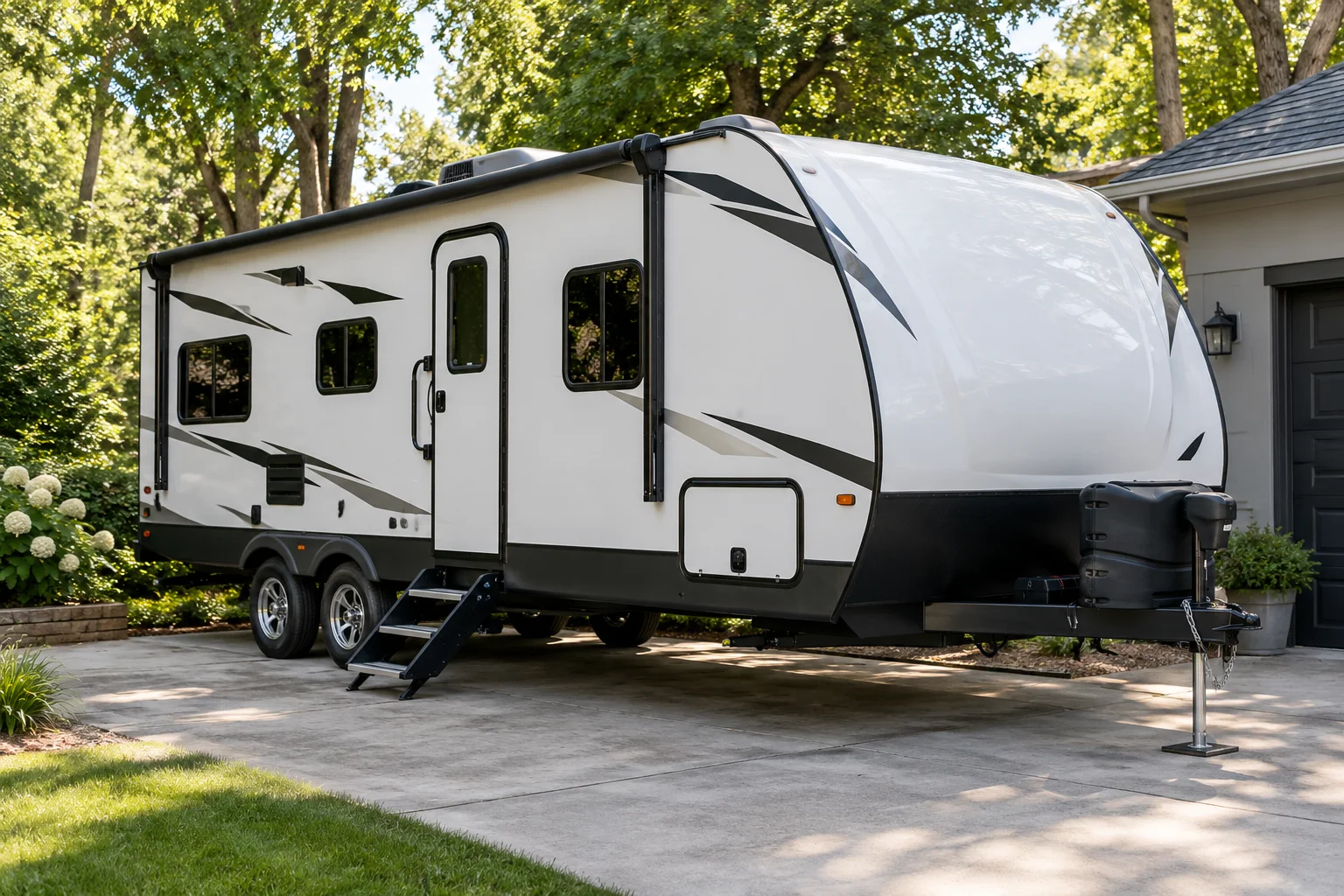
An RV or camper can be both a vehicle and a small home, which makes exterior detailing a different planning exercise from booking a wash for a hatchback. There may be several finishes, large graphics, an awning, roof-mounted equipment and compartments that deserve separate attention. Its size also changes where the work can happen and how access must be arranged.
The best preparation begins before anyone chooses a cleaner or climbs a ladder. Identify the unit, gather the relevant instructions and explain the result you want. A clear brief helps a provider decide whether they offer the work, what can be included and which concerns should go to an RV service specialist instead.
Identify the unit precisely
Share the manufacturer, model, year and type of RV. Include its actual dimensions from reliable documentation, especially if accessories affect overall height or length. A general description such as small camper can mean very different things to different people.
Mention modifications and repairs. A repainted panel, replacement awning or added film may have instructions separate from those for the original unit. If you are unsure about a finish, say so and provide photographs rather than guessing.
Winnebago's owner resources organise manuals by model year, which illustrates the value of starting with the exact unit. Find the equivalent documentation for your RV and have it available for the provider. The manual is a reference for appropriate care, not merely paperwork to be stored until something stops working.
Decide what exterior detailing means in this request
List the areas you want assessed. Body panels, windows, wheels, graphics, an awning and the roof should not be silently bundled under one broad phrase. Ask which areas the provider actually services and which require separate arrangements.
Explain your main objective. You might be preparing for the first trip after storage, refreshing the unit before a sale or addressing an unattractive exterior after a long journey. Those purposes can justify different scopes and levels of finish.
Do not assume that a provider who details passenger vehicles automatically offers RV work. Size, materials and access change the task. Confirm capability and availability before arranging the unit's movement or clearing an entire weekend for the appointment.
Walk around from ground level
Make an initial condition record from a safe, accessible position. Photograph each side and take closer views of concerns you can reach without climbing. Note lifting graphics, damaged trim, unusual staining or areas that have been repaired.
Do not climb onto the roof simply to supply a better quote photograph. Tell the provider what you cannot see and ask how they assess inaccessible areas. Suitable access is part of planning the professional work, not something an owner needs to improvise beforehand.
Describe the age and history of visible marks if you know them. A stain that appeared during the last trip is different context from a patch present when you bought the RV. Even an approximate history helps the provider understand what the initial assessment needs to resolve.
Treat the exterior as a collection of materials
An RV may combine several surfaces that look similar from a distance but have different care requirements. Ask the provider how they will identify the relevant finishes and account for the manufacturer's guidance. One product should not be assumed suitable across the entire unit.
Winnebago's maintenance guidance directs owners to both the vehicle manual and the manuals for installed components. That distinction matters when an awning, window or appliance-related exterior part has its own instructions. The main operator manual may not be the only relevant source.
Gather the documents you already have and identify what is missing. You do not need to become an expert in every material before booking. You do need to avoid presenting the unit as a uniform painted surface when its actual construction calls for a more considered approach.
Discuss graphics and older finishes early
Large graphics can define an RV's appearance, and their condition matters to the cleaning plan. Tell the provider if edges are lifting, sections are cracked or a previous owner applied a replacement graphic. Ask what can be cleaned appropriately without expecting cleaning to restore damaged material.
The same distinction applies to a faded or worn finish. A routine wash, a cosmetic enhancement and a repair are different services. Request an assessment before assuming that more intensive treatment will produce a particular result.
If the provider recommends a test area or a specialist opinion, ask what question that step is intended to answer. A small, well-explained assessment can be more useful than a sweeping promise about bringing the whole unit back to new condition. The goal is an informed choice about the finish that actually exists.
Make roof work an explicit question
Roof cleaning should be discussed separately, including whether it is offered, how access is managed and what preparation is required. Do not assume it is included because the quote says exterior. Ask how the provider handles roof-mounted accessories and any areas that cannot be appropriately reached.
If there is known damage, a leak concern or uncertainty about the roof's condition, disclose it before work is agreed. Cleaning does not replace a roof or seal inspection by an appropriate RV professional. The order of those tasks may matter.
Avoid preparing by walking on surfaces that you have not confirmed are intended to support that use. Let the provider explain the access requirements and consult the unit's instructions. Your role is to supply accurate information and a suitable location, not to create an improvised access system.
Keep awnings and slide-outs in the plan
Tell the provider whether you want awning or slide-out-related surfaces addressed and share the relevant component information. Ask what position the equipment should be in when the appointment begins and who will operate it. Do not assume that every movable part should be extended in advance.
The available working space may change when an awning or slide-out is deployed. Include that in the location discussion so the provider can plan access rather than discover a fence or neighbouring vehicle in the way.
If a component does not operate normally, mention it and arrange suitable service advice. A cleaning appointment should not become an unplanned attempt to force or repair a mechanism. Keeping operation and cleaning responsibilities clear protects both the unit and the agreed schedule.
Choose a location that fits the whole job
Describe the parking surface, available space and access route. The provider needs to know more than whether the RV physically fits through the gate. There must be an appropriate environment for the agreed work around the unit, including any equipment the provider intends to use.
Confirm permission at a storage facility, campground, shared property or commercial lot. Ask about restrictions that may affect the service. Do not assume that permission to store a camper automatically includes permission for every kind of on-site cleaning.
If the location is unsuitable, discuss an alternative before committing to the appointment. Moving a large vehicle can require coordination, and it is better to plan that once than to discover on arrival that the work cannot proceed. Clear photographs of the site can help the provider assess the practical arrangement.
Explain storage history and the next journey
Tell the provider whether the RV has been stored outdoors, under cover or indoors, and approximately how long it has been unused. Include any known concerns discovered when preparing it for the season. This context helps establish the starting condition without assuming all stored units need identical work.
Also give the departure date for the next trip. Ask whether the proposed products or methods have aftercare requirements that affect use, covering or storage. A cleaning appointment immediately before departure may be inconvenient if those requirements have not been considered.
Keep travel readiness on a separate checklist. Exterior detailing can improve appearance and accessibility for viewing, but it is not a complete pre-trip inspection or a substitute for maintenance. The unit may look ready while other essential preparations remain for the appropriate owner or service professional.
Clarify water, power and site responsibilities
Ask the provider what they supply and what the location must provide. Do not assume every mobile service uses the same arrangement. If site access involves a gate, a long driveway or limited hours, include that information while the quote is being prepared.
Discuss the working area's practical restrictions and how the provider handles the requirements of the site. Keep the conversation tied to the actual location rather than borrowing assumptions from a previous passenger-car appointment.
Decide who will be present and available for questions. If the RV must be moved or a compartment opened, the provider should know who can do that. A simple contact plan prevents a large job from stalling while everyone tries to find the person with the keys.
Remove obstacles without dismantling the unit
Clear loose items around the exterior and remove personal belongings from any agreed compartments. Decide where accessories will wait during the work. Keep removable pieces organised so they can be returned correctly once the provider says it is appropriate.
Do not remove fixed trim, covers or equipment unless the manufacturer instructions and the agreed service call for it. The provider should not arrive to find important components dismantled as an enthusiastic attempt to help.
Photograph any existing concern before preparation changes the arrangement. This creates a useful record and gives the provider context when the work starts. A tidy site and accurate information are usually more valuable than extensive owner intervention before the appointment.
Compare quotes by surface and outcome
A large difference between quotes may reflect different work rather than simply different pricing. Ask each provider to identify the surfaces included, the preparation, the intended finish and the exclusions. Confirm whether difficult staining or finish enhancement requires inspection before a firm scope can be given.
Avoid comparing only by a unit's length or by the phrase full exterior. Those descriptions may leave roof work, awnings, wheels and other areas ambiguous. A usable quote makes the boundaries visible enough that you can understand what will be reviewed at handover.
Do not assume a protective product will repair deterioration. Ask what it is intended to do and whether the underlying surface is suitable. The protection guide offers useful purchasing questions, although the actual product must be appropriate for the RV's specific materials.
Agree how the result will be reviewed
Before work begins, ask how you will review areas that are not visible from ground level. The provider may have an appropriate documentation method, but do not assume access or photography is automatically included. Agree on a practical way to understand what was completed.
For accessible areas, compare the result with your initial priorities and condition photographs. Ask about remaining marks, worn graphics and any area intentionally left untreated. A clear explanation helps distinguish a sensible material limit from an overlooked task.
Keep the aftercare instructions and product information with the RV records. This is especially helpful when the unit receives work from different providers over several seasons. The next person can make better choices when the recent treatment history is known.
Leave repairs on a separate follow-up list
If the appointment reveals a damaged seal, component concern or finish issue, record the observation and seek suitable assessment. A cleaner's observation can be useful without becoming a diagnosis or a completed repair.
Ask whether any future work changes the order of cleaning or protection. You may decide to postpone a cosmetic step until a repair is complete rather than paying to prepare the same surface twice. A little sequencing can make the overall project more efficient.
Keep that list separate from routine travel preparation so an unresolved issue does not disappear beneath packing tasks. The RV's size and complexity make clear responsibilities valuable: who cleans, who inspects, who repairs and who confirms the unit is ready for the next journey.
Plan the handover if the unit is stored elsewhere
If the RV lives at a storage property, decide who will unlock the site, meet the provider and review the work. Do not assume a facility employee can approve changes or move your unit. Confirm the arrangement with everyone who has an actual role before the appointment day.
Keep the relevant keys and documents available without leaving personal belongings unnecessarily exposed. If you cannot attend the final review, agree in advance how the scope and condition will be documented and when questions can be raised. A large vehicle in a remote storage space benefits from a more deliberate handover than a car parked beside your front door.
Make a specific availability request
Visit Cody Mobile auto detailing for current services and ask explicitly whether your RV or camper and requested scope can be accommodated. Do not assume RV roof work, awning care or specialised finish treatment is included. Current detailing booking is in Ottawa and the surrounding service area; other areas are on the waitlist.
Include the exact unit, dimensions, condition photographs, location and desired timing. The mobile appointment guide can help with general access questions, while the RV's manuals should guide material and component requirements.
Good preparation turns a broad request to clean the camper into a reviewable job. With the surfaces, access and expected outcome agreed, you can enjoy a refreshed exterior while knowing which concerns remain separate. That clarity is useful whether the next destination is a familiar campground or a long-awaited journey across the country.