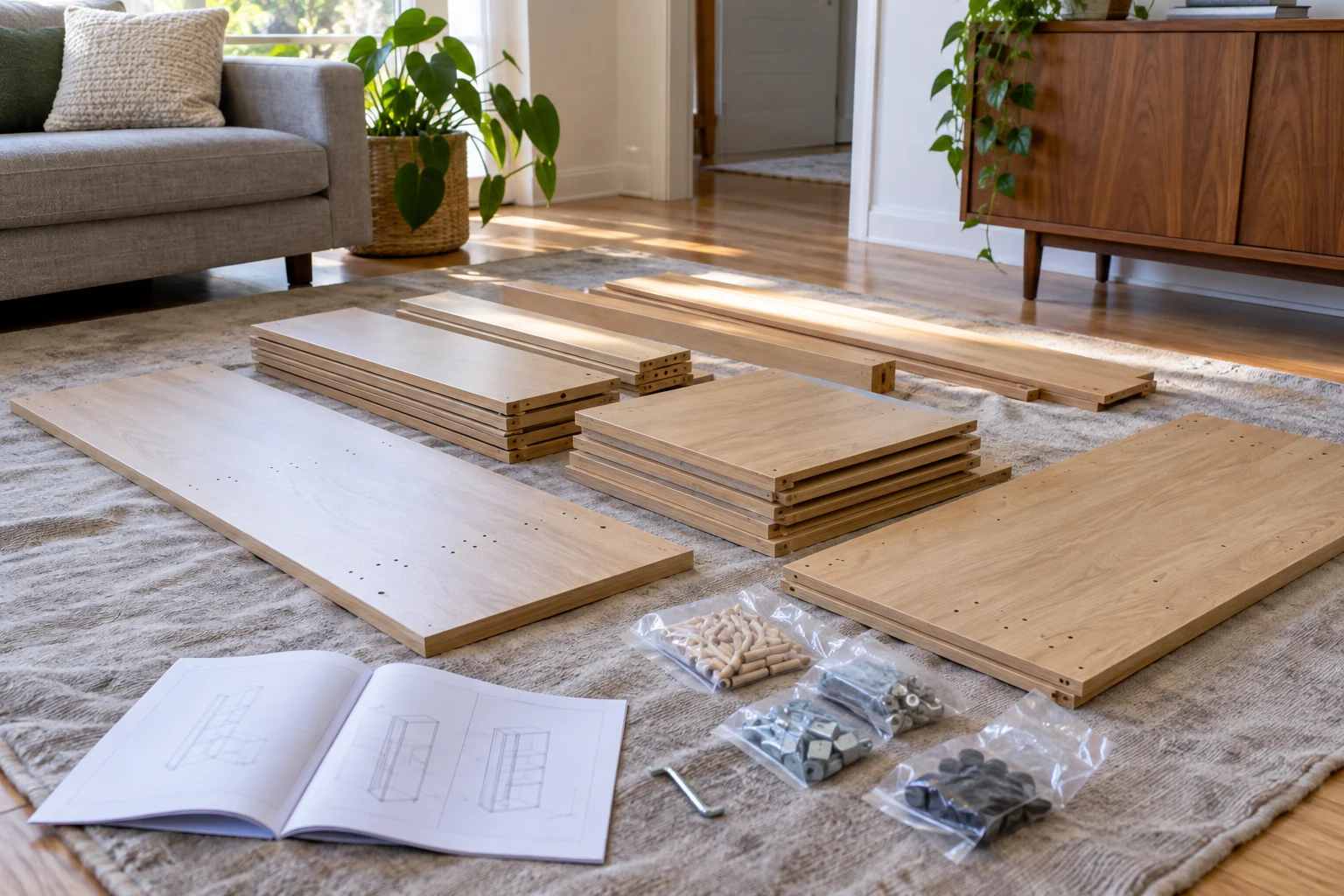
A list of small jobs can look wonderfully efficient on paper. Adjust two doors, assemble a desk, patch a wall and hang curtains while someone is already at the house. The difficulty is that small describes the result, not necessarily the time, preparation or dependencies. One missing bracket can stop an installation; one drying stage can turn a single appointment into a sequence.
Combining work can still be a sensible way to organize household maintenance. The trick is to build a visit around readiness and compatible tasks rather than around the maximum number of lines that fit on a page. A realistic schedule gives the provider a clear order, leaves room for assessment and protects the most important outcomes from last minute additions.
Start with the result that matters most
Choose the task you most want completed and explain why. Perhaps a desk must be ready before a work week, a bedroom door needs to close normally or storage must be installed before boxes can be unpacked. This priority should lead the conversation instead of being hidden among ten equally urgent entries.
Separate urgency from annoyance. A cosmetic mark that has bothered you for months may feel urgent because you are finally arranging help, while a door that cannot secure the home has a different kind of importance. Communicate actual safety or access concerns promptly and seek appropriate available help rather than waiting to bundle them with routine work.
Give each task a desired endpoint. Assembled furniture may still need manufacturer required wall fixing. A patch may be ready for paint but not painted. A mounted rod may not include hanging and adjusting curtains. Scheduling becomes more accurate when each line describes a usable result.
Then identify what can wait. A secondary list is useful, but it should remain secondary. If the main project takes longer after assessment, the provider should know which optional items can be deferred without creating a household problem.
Sort the list by readiness
A ready task has the necessary information, permissions, products and access. An assessment task has an unresolved condition that must be understood before a repair can be agreed. A decision task still needs you to choose a product, position or finish. These categories require different kinds of appointment time.
For example, a delivered desk with complete instructions and a cleared room may be ready for assembly. A shelf with no selected bracket and an unknown wall is not equally ready. Both can belong in the overall plan, but they should not be treated as interchangeable units of installation work.
Write the unresolved question beside each item. It might be whether a hinge is compatible, whether the wall is suitable or which paint boundary you want. This turns uncertainty into a manageable action rather than leaving it to consume time unexpectedly during the visit.
Ask the provider whether an initial assessment would make the later work more efficient. A short preparation stage can sometimes prevent several incomplete tasks. The goal is not to minimize the number of visits at all costs; it is to make each visit capable of achieving its intended result.
Map the dependencies in plain language
A dependency is simply something that must happen first. The wall must be repaired before it is painted; the final desk position must be chosen before required wall fixing; an electrical alteration may need the appropriate contractor before a television reaches its final position. Write those relationships beside the tasks.
Do not assume one provider covers every stage. If another trade is needed, identify who arranges it and who confirms the work is ready for the next step. A gap between responsibilities can delay the whole project even when each individual task is modest.
Manufacturer instructions can create dependencies too. Benjamin Moore's guidance distinguishes paint drying from curing and notes that conditions affect timing. The scheduling lesson is to allow the relevant product interval before normal contact or the next planned stage, rather than treating a finished-looking surface as immediately ready.
For caulking, ask for the actual product's water-ready, paint-ready and curing guidance where relevant. Those milestones can differ. A bathroom visit should not be booked around the assumption that the household can use every fixture as soon as the provider leaves.
Make product readiness visible
Create a product list for each installation, including the exact model and delivery status. A shipping notification is not the same as having the complete product in the room. Schedule installation with enough room to check visible condition and missing components before the appointment.
Keep instructions and hardware packets together. Do not combine similar fasteners from several packages to save space. The provider needs to identify which components belong to which product. A labelled box per task can be more useful than a large pile of tools and miscellaneous hardware.
If you are supplying products, ask the provider to confirm suitability in advance. A rod, mount or handle chosen without compatibility review may stop the work. The cabinet hardware guide illustrates how dimensions and product families affect an apparently simple replacement.
Decide who will handle a missing or incorrect part. A provider may offer supply collection, but that time should be discussed rather than assumed. Sometimes rescheduling a task is more sensible than using the appointment to search several shops for an unverified substitute.
Give estimates room to be estimates
Ask the provider how much work is realistically likely within the proposed visit and what could change that assessment. A time estimate based on photographs is not a promise that every hidden condition will be favourable. Discuss the main uncertainties and which tasks are most predictable.
Avoid dividing an hourly rate into a budget and assuming the resulting hours guarantee a particular list. Time-based work still needs a prioritization plan. Agree how the provider will update you if progress differs from expectations and when another task requires a separate decision.
For a fixed scope, ask whether all stages are included in one appointment or several. A project can have a settled total while its schedule depends on product availability or drying. Keep those concepts separate so a return visit does not automatically feel like an unexpected failure.
Leave transition time in your household calendar. The provider needs to arrive, review the scope, prepare the area and complete a handover. Booking another commitment at the exact moment you imagine the last screw will be fitted makes a normal review feel rushed.
Protect the visit from decision congestion
Make aesthetic decisions before arrival where possible. Agree the shelf position, curtain arrangement and hardware finish with everyone who shares the space. Installation time is easily consumed when two people discover they had different preferences only after the product is unpacked.
If design advice is part of the service, schedule it deliberately. The provider can help you evaluate options, but that is work in its own right. A consultation followed by installation may be more productive than expecting design, shopping and completion within an ordinary repair slot.
Name one person who can authorize routine scope decisions, while respecting any broader approvals needed. Conflicting instructions from different household members can interrupt progress and create uncertainty. Keep the accepted brief accessible so everyone can refer to the same priorities.
Be available at agreed decision points. If you will be in meetings or away, establish how the provider can reach you and which tasks should pause without authorization. Silence should not be treated as permission to choose a different product, enlarge the scope or move an installation.
Plan access as carefully as the task order
Clear the spaces needed for the first tasks before the provider arrives. If every room is still full of belongings, the schedule starts with moving rather than repair. Discuss heavy furniture and do not assume it can be shifted safely by the provider alone.
Preserve a route through the house. Combining work in several rooms can create scattered equipment and open packages. Ask how the active area will be managed and arrange children and pets elsewhere. The household should not need to pass through an assembly zone to reach its only usable room.
Identify facilities that must remain available. A bathroom, entrance or home office may have a limited window of downtime. State those constraints before booking, and be realistic about whether they are compatible with the work. Product requirements cannot always fit a short gap between household commitments.
Building access also matters. Reserve any required elevator or parking arrangement and confirm permitted work hours. A provider's available day and a building's access window need to overlap. Do not finalize one while assuming the other will be easy to arrange later.
Use a main list and a genuine optional list
The main list should contain the agreed work and its order of importance. The optional list can contain additional tasks the provider may review if appropriate time remains. Make it clear that optional does not mean secretly expected. This reduces pressure to rush important work to fit a longer list.
Keep optional tasks ready too. A small additional installation still needs compatible products, permission and a clear position. An unprepared optional task can consume more time than the main work. Ask the provider whether it is suitable to consider during the appointment.
A practical visit brief includes these points:
- The primary outcome and the tasks that can be deferred.
- A ready, assessment or decision status for each item.
- Dependencies, product instructions and delivery confirmation.
- Access arrangements and rooms with limited downtime.
- The charging basis and process for additional work.
- The contact person and the handover time you have reserved.
Send changes before the visit whenever possible. If a new priority replaces an old one, say so explicitly. A provider preparing for furniture assembly may not have the materials or equipment for a different repair added at the door. Early communication protects both the schedule and the result.
Handle discoveries without losing the whole day
If a task cannot proceed as expected, ask the provider to explain the condition and options. It may be possible to move to another ready task while a decision or part is outstanding. That flexibility is one benefit of a thoughtfully prepared list.
Do not insist that every obstacle be solved immediately. A suitable specialist assessment or compatible part may be necessary. An improvised workaround can create more work later. The schedule should support a responsible pause, not reward completion of the maximum number of visible items regardless of suitability.
Record any changed scope and the reason. Canada's Office of Consumer Affairs recommends clearly amending agreements when additional work is introduced. For a small visit, a concise written update can preserve the same clarity: what changed, what it means for the price or time and what you authorized.
At the end of the appointment, separate completed work from assessed work and deferred work. An inspected door awaiting a part is useful progress, but it is not a completed repair. Accurate status makes the next visit easier to plan and prevents household members from assuming everything on the original list is ready to use.
Finish with a realistic next step
Reserve time to review the completed tasks and receive care instructions. Ask when fresh finishes or sealed areas can return to normal use. Keep product details and note any outstanding decisions. A visit that ends with a clear record is easier to build on than one that ends in a rush.
For deferred work, identify the next action and who owns it. You may need to choose a colour, the provider may need to source a part or a specialist may need to assess a condition. A task without an owner tends to return to the household list unchanged.
Use the handyman visit planning guide to build the initial brief and the caulking scope guide when waiting periods affect room use. Cody's handyman page currently remains a waitlist while a partner is recruited. Preparing a realistic list now can still be useful. The most efficient appointment is one that completes the right ready work and leaves the household knowing exactly what happens next.