Cabinet problems tend to arrive one small irritation at a time. Two doors no longer meet neatly. A drawer catches on the way out. A handle turns when you pull it. Because the kitchen still works, the list grows quietly until the whole room feels less pleasant to use. A focused adjustment and hardware project can be worthwhile, provided the scope starts with the actual problems rather than a shopping basket of replacement parts.
The useful distinction is between improving sound cabinetry and trying to compensate for damaged cabinetry. Hinges, slides, doors and cabinet boxes work as a system. Before choosing new handles or asking for every hinge to be tightened, describe what happens during ordinary use and what result would make daily life easier.
Make a cabinet map before making a parts list
Give each problem a location that another person can find. The upper door left of the cooker is clearer than the crooked cupboard. A simple sketch or labelled photograph is enough. Number the affected doors and drawers, then attach one observation to each number. This keeps the conversation manageable when several issues look similar.
Describe the symptom in ordinary language. Say that two doors touch near the top, that a drawer stops before closing or that a handle feels loose. Mention whether the issue is constant or appears only when the cabinet is full. These details help the provider distinguish adjustment questions from loading, obstruction or damage.
Include a wide view of the run of cabinets. An isolated close-up can hide the relationship between adjacent fronts. Uneven gaps may be easier to understand when the whole arrangement is visible. Photograph the inside hardware only where it is accessible without dismantling anything or supporting a heavy door yourself.
Decide which concerns are functional and which are visual. A drawer that will not close deserves a different priority from a slight variation in the spacing between doors. Both can belong in the scope, but naming them honestly helps the provider spend time where it matters most to you.
Check for ordinary obstructions before describing a failure
Without taking anything apart, look for belongings that prevent normal closure. A pan handle, overfilled organizer or tall package can imitate a hardware problem. Remove an obvious loose obstruction safely and note whether the behaviour changes. This is a useful observation, not a request to work on the mechanism.
Pay attention to drawer contents that shift backwards. A drawer may seem to stop unpredictably when the position of its contents is the real variable. Tell the provider what you noticed. If the drawer remains difficult when used normally with clear contents, that helps narrow the discussion without requiring a diagnosis.
Also mention nearby changes. A new bin, appliance or organizer may interfere with a door's path. A thicker replacement handle may contact an adjacent wall or another handle. Photographs should include these surroundings so the repair plan can consider the whole movement, not just the hinge in close-up.
Avoid forcing a drawer or door through resistance to demonstrate the problem. If something appears detached or unstable, stop using it and ask for assessment. Continuing to pull on a failing component can complicate both the repair and the safe handling of the front.
Identify the hardware family where possible
Look for manufacturer markings that are visible without removal and provide a clear photograph. Keep original kitchen paperwork if you have it. A brand and model can help the provider locate the right adjustment instructions or compatible replacements. Similar looking hinges may have different mounting patterns and functions.
Blum's CLIP top BLUMOTION information, for example, describes side, height and depth adjustment for that product family. That supports the idea that some cabinet alignment can be adjusted, but it does not mean every hinge has the same screws or range. Ask the provider to use the instructions for the actual hardware rather than a generic internet diagram.
Replacement parts should match more than the finish. Door overlay, opening angle and the relationship between hinge and mounting plate can matter. You do not need to calculate these yourself. You do need to avoid assuming that a hinge sold as universal will necessarily suit the existing cabinet.
For drawers, include photographs of the visible slide system and any labels. Describe whether the drawer is an ordinary kitchen drawer, a deep pot drawer or an internal pull-out. The weight and use of the assembly matter to the assessment. A change to soft closing operation may require more than adding one small accessory.
Ask whether the supporting material is sound
A hinge attached to damaged material cannot always be made reliable through adjustment alone. Tell the provider about crumbling edges, loose fixings, swelling or previous repairs around attachment points. The condition of the cabinet box and door should inform the recommendation before new hardware is ordered.
Water related damage deserves particular attention around sinks and dishwashers. Describe leaks or dampness and whether the source has been addressed. Replacing a hinge without resolving an active moisture problem may leave the same weakness developing again. A cabinet repair provider may recommend separate plumbing or moisture assessment.
If an entire wall cabinet appears loose or displaced, treat that as an assessment issue rather than routine door alignment. Avoid adding load and seek qualified help. The attachment of the cabinet itself is separate from the adjustment of its doors, and a cosmetic tune-up is not evidence that the wall mounting is sound.
Be open to different recommendations for different cabinets. One may need a modest adjustment, another a compatible replacement part and another a more substantial repair. A single solution across the entire kitchen can sound efficient while overlooking the actual condition of each location.
Plan a handle change as a design and fit project
New knobs and pulls can refresh the room without replacing every front, but fit should lead the purchase. Measure existing hole spacing where it can be done without removal, and label the measurement as preliminary. The provider should verify final compatibility. A handle's overall length is not the same as the distance between its mounting holes.
Think about what old hardware will reveal. A smaller backplate or a different shape may expose faded areas, indentations or marks. Ask whether the new selection will cover them and what finishing options exist if it will not. Filling and refinishing old holes is a different scope from simply exchanging handles.
Order a sample before committing to a large quantity when possible. Hold it in place without altering the cabinet and consider grip, projection and appearance from normal positions. Check whether it will contact an adjacent door, wall or appliance. A pleasing photograph does not show how the hardware behaves in your kitchen.
Count carefully and separate door knobs, drawer pulls and any unusual sizes. Include spares only as an intentional choice. Confirm the supplied fixing lengths are appropriate through the product and installer information rather than assuming the hardware packet suits every front thickness. Keep packaging and receipts until the project is complete.
Consider comfort before choosing the finish
A handle is something you use with wet hands, full hands and sometimes only a fingertip. Think about the grip you prefer and who will use it. A narrow recess, sharp edge or very small knob may be less convenient for some household members even when it looks restrained and elegant.
Describe any difficulty opening current doors or drawers. If improved accessibility is a primary goal, consider appropriate specialist guidance rather than treating a hardware swap as a complete accessibility solution. The opening force, clearance and storage arrangement can matter alongside the handle shape.
Cleaning is another practical question. Deep decorative details and narrow gaps may require more attention than a simpler shape. Compare finish care instructions for the actual products. Do not assume that two metals with the same colour description will have identical maintenance requirements or match under the room's lighting.
Choose consistency deliberately rather than automatically. A kitchen may benefit from different handle sizes on small doors and deep drawers, provided the design and fit are coherent. Make a labelled schedule of which item belongs where. That prevents installation day from becoming a series of rushed aesthetic decisions.
Be precise about soft closing and new accessories
Soft closing is a feature of particular hardware systems, not a generic promise that every existing door can acquire through a quick adjustment. Ask whether the present hinge or slide supports it and what a conversion would involve. The answer may differ between cabinet runs or between doors and drawers.
Describe your desired behaviour. You may want less noise, smoother movement or help with a door that swings too far. Those are different goals. An opening limiter, a compatible hinge or a change in the surrounding arrangement may be relevant, but the appropriate choice should follow product identification and assessment.
Pull-out organizers require their own fit check. Cabinet width alone is not enough; doors, hinges, plumbing and existing shelves can reduce usable space. Provide the exact accessory model and ask the installer to confirm its suitability before purchase. A returnable product is easier to manage than a custom order based on an incomplete measurement.
If a new accessory changes how much weight the cabinet carries, discuss that explicitly. A storage upgrade can encourage heavier use. The provider should assess the product requirements and existing cabinetry, and you should retain any stated limits. More convenient access does not make the supporting structure stronger.
Set a finish standard that fits existing cabinetry
Older cabinets often have small variations that reflect the original installation, wear or changes over time. Ask what can be improved through adjustment and what cannot. The goal might be smooth operation with more consistent gaps, rather than an unsupported promise that every front will match a showroom photograph.
Walk through the visual priorities with the provider. A prominent pair of doors beside the sink may matter more than a minor gap in a utility cupboard. Identify any fronts that are visibly warped or damaged so their limitations are discussed before adjustment work begins. Hardware cannot necessarily correct the shape of a door.
If refinishing is part of the plan, decide whether it happens before or after hardware work and who coordinates the stages. New hole locations, old marks and paint curing can affect the sequence. Treat finishing as a specific service with its own preparation and return-to-use expectations, not an incidental touch-up.
For rented properties or a condominium with supplied cabinetry, obtain the relevant permission before changing hardware or drilling new holes. Keep original components if the owner requires them. A reversible looking design change may still leave marks or different mounting holes that need to be considered.
Request a quote that allows sensible decisions
Send the numbered cabinet map, photographs and product information together. Ask the provider to distinguish inspection and adjustment from replacement parts and repairs. If every cabinet needs a general review, say so; if only three locations are involved, do not leave the scope open to interpretation.
Agree on what happens when a part cannot be identified or is no longer available. The provider may need research time, a supplier enquiry or a return visit. Ask how those stages are priced and approved. A quote that acknowledges this uncertainty can be more useful than a low total based on immediate parts availability.
Include a short checklist in your request:
- Locations and symptoms, with functional priorities clearly marked.
- Photographs of the overall cabinetry and visible hardware markings.
- Known damage, leaks and previous repairs.
- New handles or accessories already selected, with exact product links.
- Expectations for old holes, finish marks and removed components.
- Who supplies parts and authorizes additional work after assessment.
Do not buy a full set of replacement hinges solely to avoid a supplier delay. Confirm the product first. A compatible small repair may be preferable to an unnecessary conversion, while a discontinued system may warrant a broader plan. Those choices deserve a considered recommendation rather than a hurried purchase.
Prepare the cabinets for a useful visit
Ask which cupboards and drawers need emptying. Clear the relevant areas and place contents somewhere that does not block the work route. Protect fragile dishes through your normal careful handling, and avoid leaving them balanced on nearby counters where doors or tools may move.
Leave an example of any organizer or item that affects the complaint available for discussion. If a bin interferes with closure, the provider needs to understand its usual position. You can remove it for access while retaining a photograph of the normal arrangement. This preserves the useful evidence without cluttering the work area.
Keep children and pets out of the active kitchen, and plan meals around any temporary loss of access. A cabinet visit can involve open doors, removed fronts and components that should not be handled casually. Arrange a clear place for removed hardware if you want it retained.
At handover, try ordinary opening and closing with the provider. Review the agreed visual alignment, check new handles and ask about loading or care instructions for accessories. Keep part numbers and product documents for future maintenance. If an issue persists, describe the exact location and movement rather than adjusting unfamiliar hardware yourself.
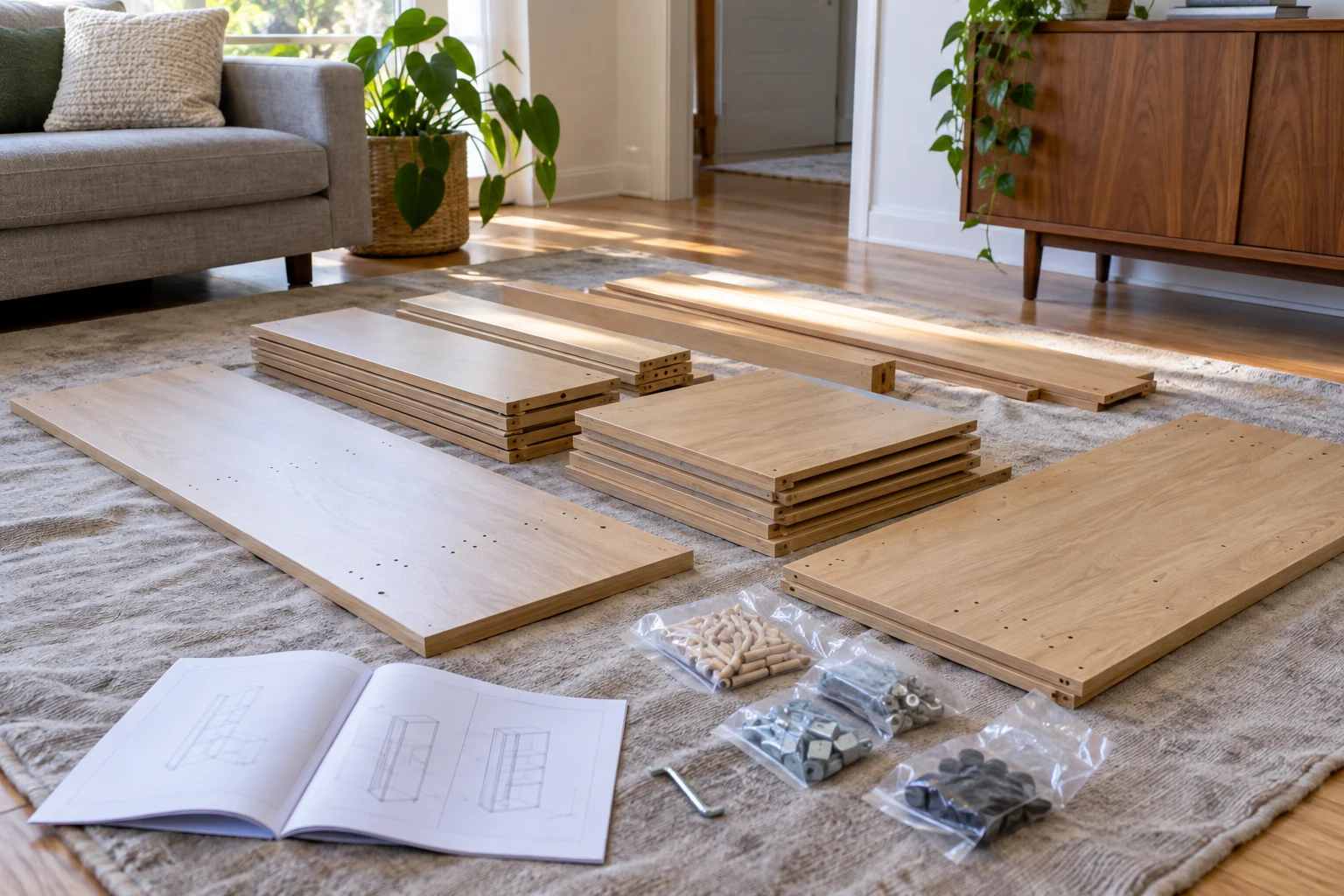
The handyman visit guide can help combine this work with other ready repairs, while the furniture assembly guide covers preparation for new storage units. Cody's handyman service is currently a waitlist while a partner is recruited. A cabinet map and a considered hardware selection will remain useful whether you are registering interest or speaking with an available qualified provider.