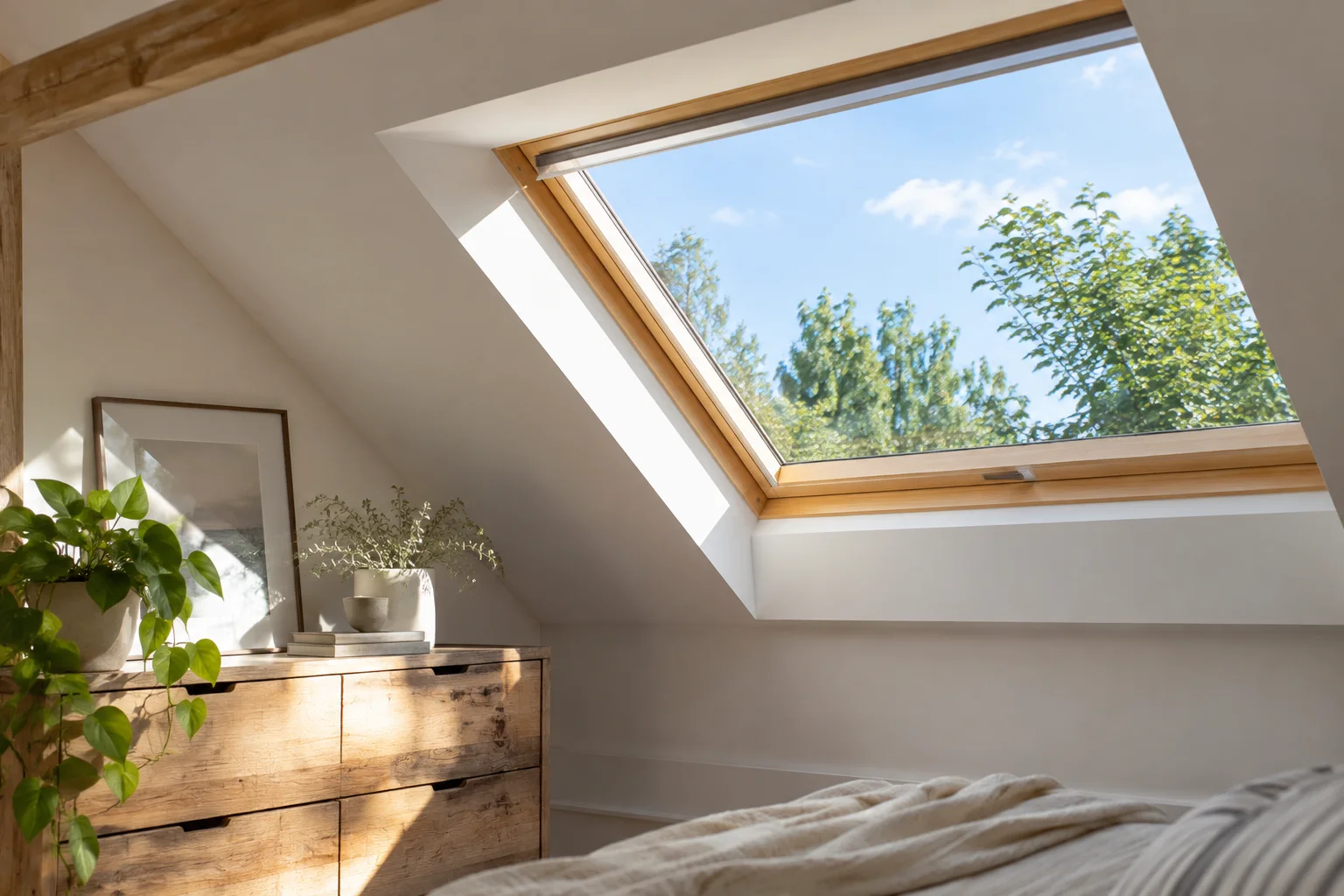
A skylight or high window can be one of the most noticeable sources of daylight in a home and one of the least straightforward areas to arrange cleaning for. Its height is only part of the story. The interior room, exterior roofline, product type and nearby surfaces all affect what a suitable professional needs to assess.
You do not need to reach the glass yourself to request help. A careful description from safe positions, together with any existing product records, is a strong starting point. The goal is to make the access question explicit before a routine window-cleaning appointment is booked on assumptions that do not fit the property.
Explain which opening you mean
Start with the location: above the kitchen, over the stairwell, in the roof of an addition or high on a living-room wall. Include the room and the side of the home. A close photograph of glass alone does not tell a provider whether it sits above a flat floor, a staircase or a fixed cabinet.
Take a wider interior photograph from a stable position on the floor. If an exterior view is available from safe ground, include that too. Do not stand on furniture, lean from another window or climb onto a roof to improve the angle.
Use approximate descriptions where necessary. “Above a two-storey stairwell” is more useful than a guessed height presented as exact. The provider can decide what measurements or an on-site assessment are needed. Your task is to reveal the unusual setting, not to produce a technical access survey.
Separate the sides and components
State whether the concern is on the interior face, the exterior face or uncertain. A mark visible from below can be difficult to locate precisely, and you should not be expected to test it yourself. Say what you see and let the professional assess the relevant surface.
List any shade, screen, frame or other component you want discussed separately. A skylight-glass clean does not automatically include cleaning the shaft, painting surrounding trim or servicing operating parts. Those tasks may require different care information and skills.
For high wall windows, the same distinction applies. The interior versus exterior guide offers a useful framework for sides and components. Add the access details to that framework so the provider understands both what you want cleaned and why reaching it may need special consideration.
Find product information without taking risks
Look for invoices, manuals or installation records already accessible in your household files. A manufacturer and product reference can help the provider locate relevant care instructions. If you know who installed the skylight, that contact may also be useful.
VELUX Canada’s service information explains that its skylights and roof windows have product identification codes. That does not mean you should climb to find one. Ask the provider or manufacturer how identification can be handled safely when the label is inaccessible.
If the product remains unknown, say so clearly. A professional may need an assessment before confirming the method or may refer you to a product specialist. Uncertainty should remain part of the plan until it is resolved, rather than being replaced with a guess based on a similar-looking window online.
Describe the interior working area
Show what lies beneath the opening: stairs, a kitchen island, a bath, furniture or an open room. Mention floor-level changes and any feature that cannot be moved. Access can be complicated even when the glass is not especially high.
Ask the provider what clearance they need and whether the work is within their capabilities. Do not suggest that they stand on furniture or use a household ladder you happen to own. They should select an appropriate professional access arrangement based on the actual site.
If substantial furniture needs moving, agree on who handles it and where it can go. A high window above a heavy desk may require more planning than a ground-floor pane beside an empty sill. Be honest about what you can move safely so the appointment does not depend on a promise you cannot fulfil.
Describe exterior constraints from the ground
Mention roof additions, conservatories, narrow side passages, slopes and nearby structures visible from safe positions. Tell the provider about any area where access is restricted. These details help them decide whether exterior work can be considered under their normal service or needs a specialist.
Do not assess roof strength, propose a walking route or offer to clear elevated debris yourself. A roof surface is not automatically a suitable working platform because it appears close to the glass. The professional must determine the appropriate access and whether the work can proceed responsibly.
If reaching the area involves another property or shared space, settle permission through the appropriate person before booking. A difficult opening should not lead to improvising a route across a neighbour’s roof, balcony or garden when the team arrives and discovers the expected access is unavailable.
Distinguish cleaning from service concerns
Tell the provider about leaking, unusual operation, persistent moisture or visible damage. These observations may require a manufacturer, installer or other qualified professional rather than a cleaner. Do not conceal a known issue because you hope it is only dirt.
VELUX’s maintenance guidance separates pane care from other maintenance and service topics. That distinction is useful in your request: cleaning the visible glass is not the same task as assessing flashing, operation or an unexplained moisture problem.
Ask what the cleaner can report within their service and what they cannot establish. A photograph of a visible concern may help another professional, but it does not turn the visit into a complete roof or skylight inspection. Keep the intended outcome clear so the right person handles any performance question.
Ask about care requirements and limits
Once the product is identified, ask how its care guidance will inform the method. Share any film, coating or accessory information you have. The provider should account for the actual assembly rather than assume a skylight can be treated exactly like an accessible vertical pane.
Avoid authorizing aggressive treatment for a stubborn mark before its nature is understood. Describe the mark’s appearance and history, then ask whether a separate assessment is appropriate. A limitation can be a sensible outcome when removing the mark would require a method whose suitability has not been established.
The guide to marks after washing can help you frame expectations. Some concerns belong to routine cleaning, some to specialist treatment and some to repair. Height does not change those categories, but it makes clear planning more valuable because repeated access may be more involved.
Clarify whether an assessment is needed first
Ask whether photographs are sufficient for a quote or whether the provider needs to inspect the property. If an assessment visit is proposed, find out what it includes and whether it is charged separately. You should understand the purpose before treating it as the cleaning appointment itself.
An assessment may establish that only one face can be included, that another access arrangement is required or that a different professional should handle the work. Those are useful findings even if they do not produce an immediate clean. The goal is an appropriate plan, not a promise made before the setting is understood.
Keep any resulting scope in writing. A short note identifying the opening, included surface and access assumption can prevent later confusion. This is particularly important if the person who assesses the job is not the same person who returns to perform it.
Understand what the quote includes
Ask for difficult-access work to be described separately from ordinary windows where that distinction affects the service. The quote should identify the included openings, faces and components, along with any access-related preparation or exclusions.
Clarify what happens if conditions differ on the day. The provider may need to pause if access is obstructed or an unexpected defect is visible. Agree on who can authorize a change and whether uncertain work should wait if that person is unavailable.
The exterior-cleaning quote checklist offers a broader structure for this discussion. For a skylight or stairwell window, pay special attention to the connection between the quote and the access assessment. A generic per-window description may not communicate the actual work involved.
Prepare the household around the work
Plan where people and pets will be while the area is unavailable. A stairwell may be the route between floors; a kitchen opening may sit over a room used constantly. Explain those needs so the provider can discuss timing and any restrictions before the appointment.
Clear small portable items according to the agreed preparation list. Ask about protecting furnishings or surfaces that remain beneath the work. Do not remove fixed fittings or unfamiliar shades unless the provider has explicitly discussed the appropriate arrangement and who should handle it.
Let everyone in the household know the plan. A person returning home during the visit should not assume the staircase or kitchen is available as usual. Clear communication is especially useful when the work affects a route that people normally use without thinking about it.
Keep weather and timing realistic
Ask how exterior conditions can affect the appointment and when rescheduling decisions are communicated. A difficult-access opening should not become a reason to press ahead merely because the homeowner has taken time off or wants the room ready for guests.
Leave a buffer before an event if the result matters to a particular date. A provider may need more information, a different arrangement or a repair assessment. Planning ahead gives you options, while a last-minute request can narrow the conversation to whatever happens to be possible immediately.
If exterior work must be deferred, ask whether an independently useful interior task can proceed safely and within a revised scope. Do not assume the two sides must always be handled together. A clear partial plan is preferable to describing incomplete work as a complete skylight service.
Review without recreating the access risk
Agree on how completion will be shown from safe positions. You may be able to review the interior view from the floor, while photographs explain other areas. Ask what the images document and whether any part was excluded or could not be assessed.
Look at the window from the places you normally use the room. If a mark remains, describe its location and ask how it relates to the agreed scope. You should not need to climb, borrow equipment or lean out to prove that you can still see something.
Request a clear note about any concern that needs another professional. A location, observation and useful photograph can support the next conversation. Avoid accepting a broad reassurance about the entire roof or installation from a service that only covered glass cleaning.
Keep a record for future access planning
Save product details, safe photographs and the accepted scope. Note any furniture move or household arrangement that worked well. If the home changes, update the record rather than assuming the same approach remains suitable after a renovation or room redesign.
For example, replacing an open room with built-in cabinetry beneath a high window can change the access discussion even though the window itself is unchanged. A future cleaner needs the current setting, not only a record that someone reached the glass several years earlier.
Do not treat previous success as automatic approval for repeating a method. The provider should still assess present conditions and their own capabilities. Your record gives them useful context; it does not replace their responsibility to determine whether the work can be done appropriately now.
Consider whether several openings belong together
If the home has more than one difficult opening, show them all during the initial conversation. The provider can decide whether a shared assessment is useful. A skylight over the kitchen and a high stairwell pane may have entirely different access requirements even though both feel difficult to the homeowner.
Ask for each opening to retain its own description in the proposal. Combining the discussion should not hide a limitation on one area or imply that reaching the first proves the second can be handled in the same way.
This can also help you prioritize. You may choose to proceed with one clearly defined task while gathering product details for another. A deliberate partial scope is easier to understand than a promise to address every high window without an individual assessment.
Send a clear, bounded request
A useful request includes the opening’s location, the side or concern you want assessed, safe photographs, known product information and access restrictions. Add any performance issue separately. This gives the provider enough context to explain their next step without asking you to investigate at height.
Cody’s window and exterior division is not yet operating while a local partner is recruited. The window-cleaning service page offers the waitlist and current context. Difficult-access or skylight capability must be confirmed with the actual provider; it should not be inferred from a general window-cleaning description.
The right outcome begins with an honest access conversation. It may lead to a cleaning appointment, a specialist assessment or a smaller scope. In each case, you can make progress while keeping elevated inspection and work with the people equipped to assess and perform it.