You notice a dull patch on the living-room window, wipe the inside, and discover that the view still looks hazy. The mark may be outside. It may be on the screen. It may be something cleaning cannot remove. That small experience captures why “window cleaning” needs a little more definition before you book it.
Interior and exterior cleaning are separate parts of a useful service plan. Some homes need both at the same visit; others have a clear reason to prioritize one side. The right decision depends on what is affecting the view, which windows matter most, and what access the cleaner will need. This guide helps you describe the work, compare like-for-like quotes and avoid paying for a visit that solves only half the problem you had in mind.
Think in surfaces rather than window numbers
A window count is helpful, but it does not describe the whole job. A wide picture window, a group of small panes and a sliding patio door may each be counted differently by different providers. The phrase “twenty windows” can therefore lead to very different assumptions about size, layout and the amount of glass involved.
Start with a simple room-by-room list. Record what you can see: a large fixed pane, two opening sections, a screen or a door with glass. Photographs of each elevation can help an exterior cleaner understand the layout without you inventing a technical description. For the inside, note furniture, blinds and anything that limits access.
Then specify the surfaces you want cleaned. “Both accessible faces of the glass, plus the screens” is much clearer than “the windows.” Frames, tracks, sills and other components should be named separately if they matter to you. You are not creating an architectural survey. You are creating enough shared understanding for the provider to explain what the price includes and what would be additional work.
When exterior cleaning is the logical priority
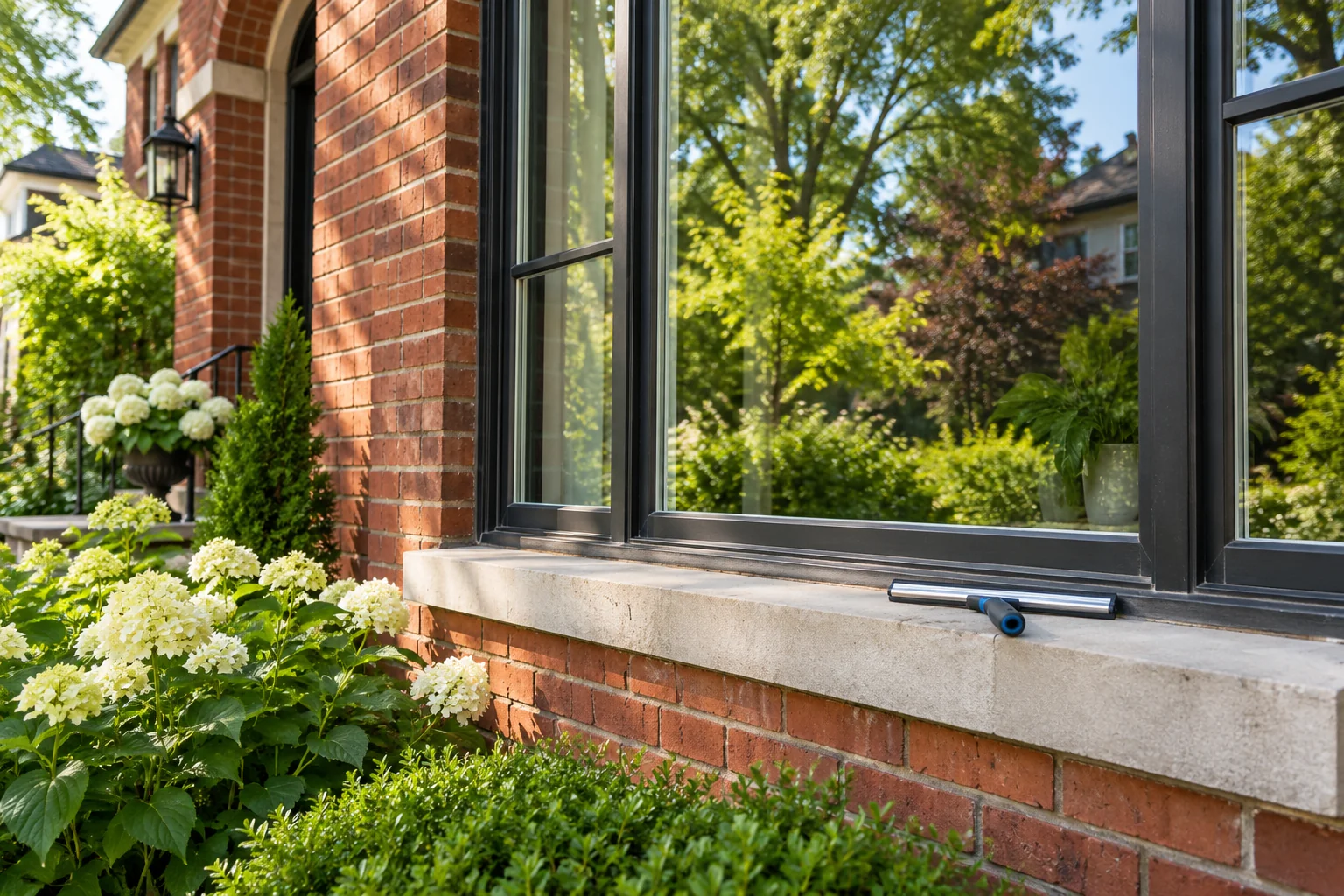
Exterior cleaning may be your priority when the visible problem is outdoor dirt on the exposed face of the glass and the inside remains reasonably clean. Perhaps the view from a frequently used room has become dull, or you want the front of the house refreshed before guests arrive. Describe the result you want rather than assuming the entire property needs the same treatment.
A useful check is to look through the window at different angles in ordinary daylight. If you can safely reach the interior surface from the floor, a gentle inspection may help you establish whether fingerprints or an indoor film are part of the issue. Do not lean out or climb onto furniture to investigate the outside. The cleaner can assess inaccessible areas using an appropriate method.
Exterior-only work still needs a clear access plan. Gates, side passages, garden beds and parked vehicles can affect how the job is organized. Ask whether the quoted method requires anyone to enter the home and whether screens need to be removed from inside. “Exterior” describes the surface being cleaned; it does not automatically mean there will be no indoor coordination.
When the inside deserves attention first
Interior glass can show fingerprints, smudges and ordinary household dust that are especially noticeable in strong light. A patio door used by children or pets may need attention even when the upstairs windows look fine. A home office window may matter more to your daily comfort than a less-used room at the back of the house.
Walk through the rooms you actually use and rank the views that bother you. This can be a helpful way to plan a smaller initial scope if time or budget is limited. Tell the provider which rooms are included so a quote for selected interior windows is not mistaken for a whole-home package.
Indoor work also involves the space around the glass. A cleaner should know about delicate flooring, built-in seating, deep sills, large furniture and window coverings. Ask what protection and preparation are included. Marvin's window-care guidance notes the potential for runoff to affect interior trim, a useful reminder that the surrounding materials matter as well as the pane being cleaned. The method should suit your windows and the room around them.
When cleaning both sides makes the most sense
If you are unsure which side is causing the dull view, cleaning only one side may leave you disappointed even when that part of the work is done well. Both-side cleaning can provide a clearer result when indoor smudges and outdoor dirt are present together, or when the windows have not received a coordinated clean for some time.
That does not mean every window must always receive both treatments. A mixed scope can be sensible: all exterior glass, plus the inside of the patio doors and main living spaces. The key is to write the exceptions down. A verbal “just the usual ones inside” is difficult to price and easy to misunderstand, particularly if someone else will be at home during the visit.
Consider the practical value of combining the work. Will one coordinated appointment be easier than arranging access twice? Are you preparing for an event or a move and want the main views finished together? Ask the provider how the combined scope affects the quote. Do not assume that an advertised exterior price automatically includes the other side or that the additional work is negligible.
Screens can be a separate reason the view looks dull
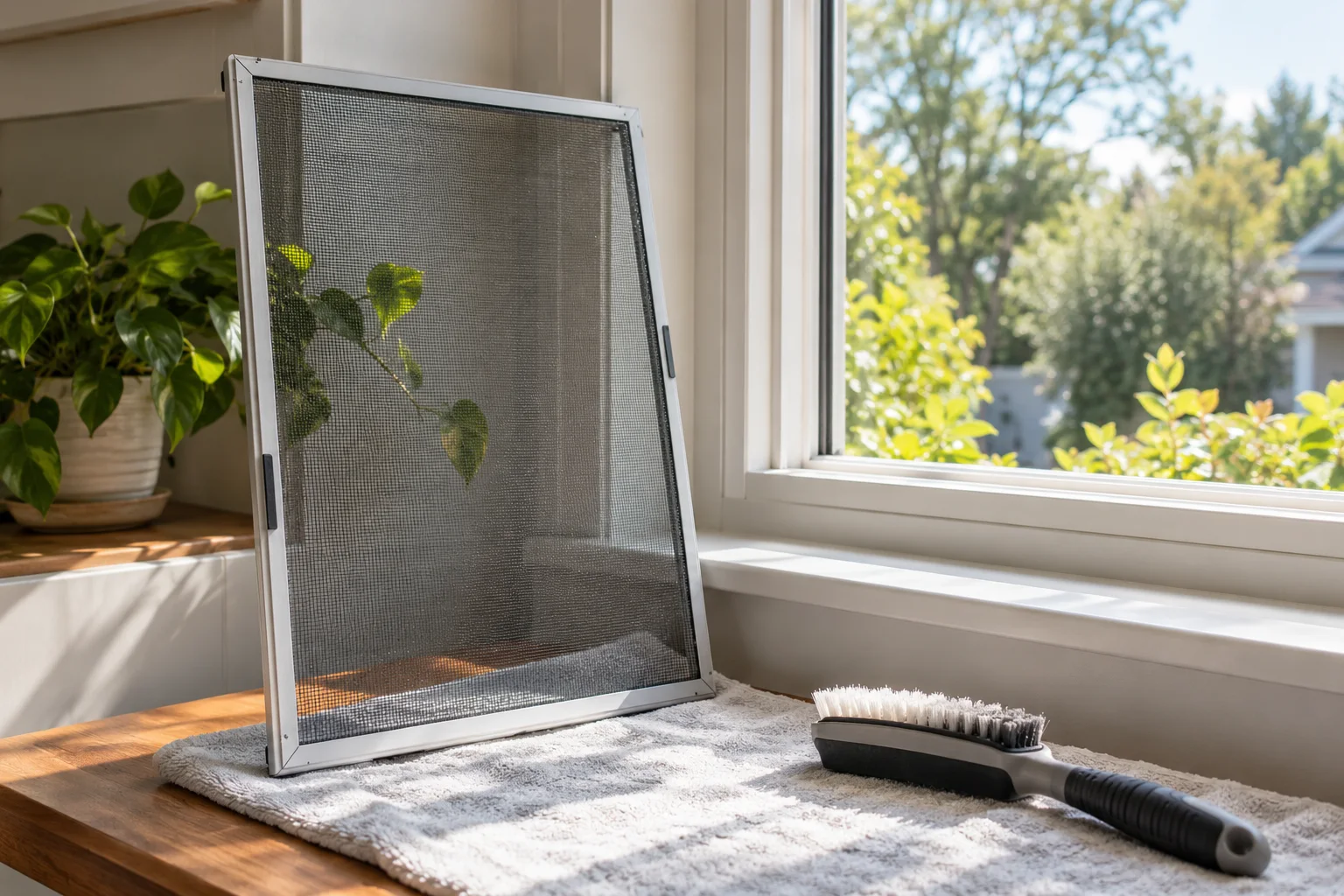
A clean pane behind a dusty screen may still leave a view looking less clear than you expected. Screens deserve their own line in the discussion, including whether they are simply removed and replaced or actually cleaned. These are different tasks, and the condition of the frame and mesh can also affect handling.
Tell the cleaner if any screens are difficult to remove, damaged or fitted with unfamiliar hardware. Photograph the arrangement if you are uncertain. Do not force a stubborn screen out to make the appointment seem easier. A broken clip or bent frame creates a repair problem that was not part of the original cleaning request.
Marvin's guidance treats screen cleaning separately from glass cleaning and recommends gentle handling and drying before reinstallation. Use the guidance for your own product when available. For the quote, ask who removes the screens, where they will be cleaned and whether reinstallation is included. If some will be stored seasonally instead, explain that plan rather than leaving the crew to guess which openings should be refitted.
Frames, tracks and sills need their own scope
The words frame, track and sill are sometimes used loosely in service descriptions. One provider may include a light wipe of an exposed sill; another may offer more detailed track cleaning as a separate task. Neither description tells you enough until you connect it to the actual condition of your windows.
A photograph of the area you want cleaned is often the simplest solution. Show the accumulated debris or marks and ask what level of cleaning the proposed visit includes. If the window has operating problems, describe those too. Removing dirt is not the same as repairing a mechanism, a damaged seal or a component that no longer fits correctly.
It is also useful to discuss what will not be disturbed. Painted surfaces, aged finishes and delicate materials may need specific care. The cleaner should be able to explain the intended approach and flag concerns before proceeding. A good result is not measured by how aggressively every recess has been scrubbed. It is measured against an agreed scope that respects the condition and care requirements of the whole assembly.
Separate surface dirt from a window problem
Some marks remain after ordinary cleaning because they are not ordinary surface dirt. A scratch, damaged coating or moisture between sealed panes calls for a different conversation. If you have already tried cleaning an accessible surface and the same feature remains, mention that history before requesting repeated treatment.
Avoid presenting your own diagnosis as a certainty. “This cloudy patch seems to be between the panes” is useful information; “the seal has definitely failed” may be a conclusion that needs a window professional. Take pictures that show the concern and explain whether it changes with conditions or remains in the same place.
Ask the cleaner what can be assessed during the visit and what would require a specialist. If a mark needs a separate process outside routine washing, obtain an explanation and agreement before it is attempted. The purpose of the first conversation is to establish a realistic cleaning result, not to pressure the provider into guaranteeing perfect glass. Understanding the limitation early can save you from purchasing a larger package that cannot solve it.
Plan indoor access without rearranging the whole house
Ask the cleaner how much clear space is needed around the included windows. Then focus on that space rather than trying to make the entire home immaculate. Remove fragile items from sills, put away personal belongings and identify furniture that you cannot safely move yourself.
Discuss window coverings before the appointment. Some can be opened easily; others have delicate fittings or awkward access. Cleaning the glass does not necessarily include removing, cleaning or reinstalling curtains and blinds. If a covering prevents access, agree on who will handle it and what is within the provider's service.
Make a plan for pets, children and anyone working from home. Explain which rooms will be occupied and whether a particular order would make the visit easier. If privacy is important in a room, mention it before the team begins moving through the house. These details are small, but they turn an appointment from a series of interruptions into a more predictable part of the day. Keep a contact person available for decisions that cannot be settled in advance.
Make the exterior approach clear and realistic
For outdoor access, think about the route to the windows as well as the windows themselves. Tell the provider about a locked gate, narrow side passage, sloping ground, fragile planting or a deck that changes the approach. Photographs are particularly helpful for upper-storey or unusual glazing because the access method cannot be chosen from the pane count alone.
Keep vehicles and movable obstacles away from agreed work areas when practical. Identify items that cannot be moved, and ask how they will be protected. Do not prune plants or dismantle garden features simply to prepare unless that has been specifically discussed. The cleaner should assess whether the available access is suitable.
Agree on a weather communication plan and how a postponed visit will be handled. The question is not whether a particular day is guaranteed to remain dry; it is how the provider decides whether the work can be completed appropriately and keeps you informed. If you need the cleaning before an event, leave room for adjustment instead of treating the final available afternoon as the only workable appointment.
Compare the final brief, not the headline price
A useful window-cleaning brief can be short: the address and building type, the windows or elevations included, interior or exterior surfaces, screens and tracks, access concerns and your preferred timing. Add photographs where they answer a real question. Send the same brief to each provider if you are comparing options.
Look for a quote that reflects those details. Check whether there is a minimum visit charge, whether unusual access changes the price and whether taxes are included or additional. Ask how extra work is approved. A low starting price is not especially useful if the included scope is unclear or differs from the work you actually want.
At the end of the visit, review the main views and any specific concern you identified beforehand. Ask about marks that remain and confirm that screens and openings have been left as agreed. Cody Mobile's window and exterior service page explains the planned offering and lets you join the waitlist where a local partner is not yet available. A well-defined request now helps make the eventual service discussion clearer, whatever combination of inside and outside work your home needs.