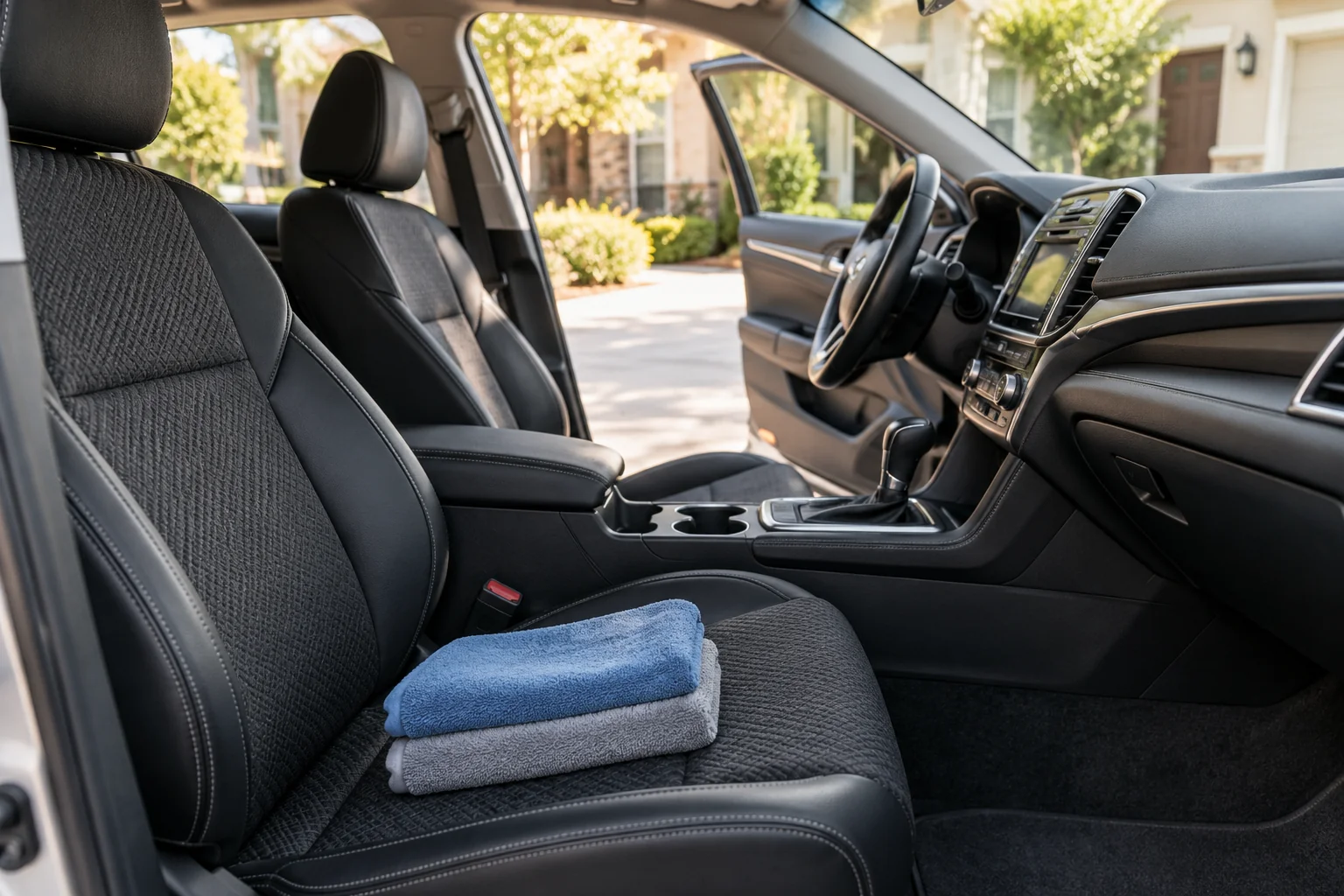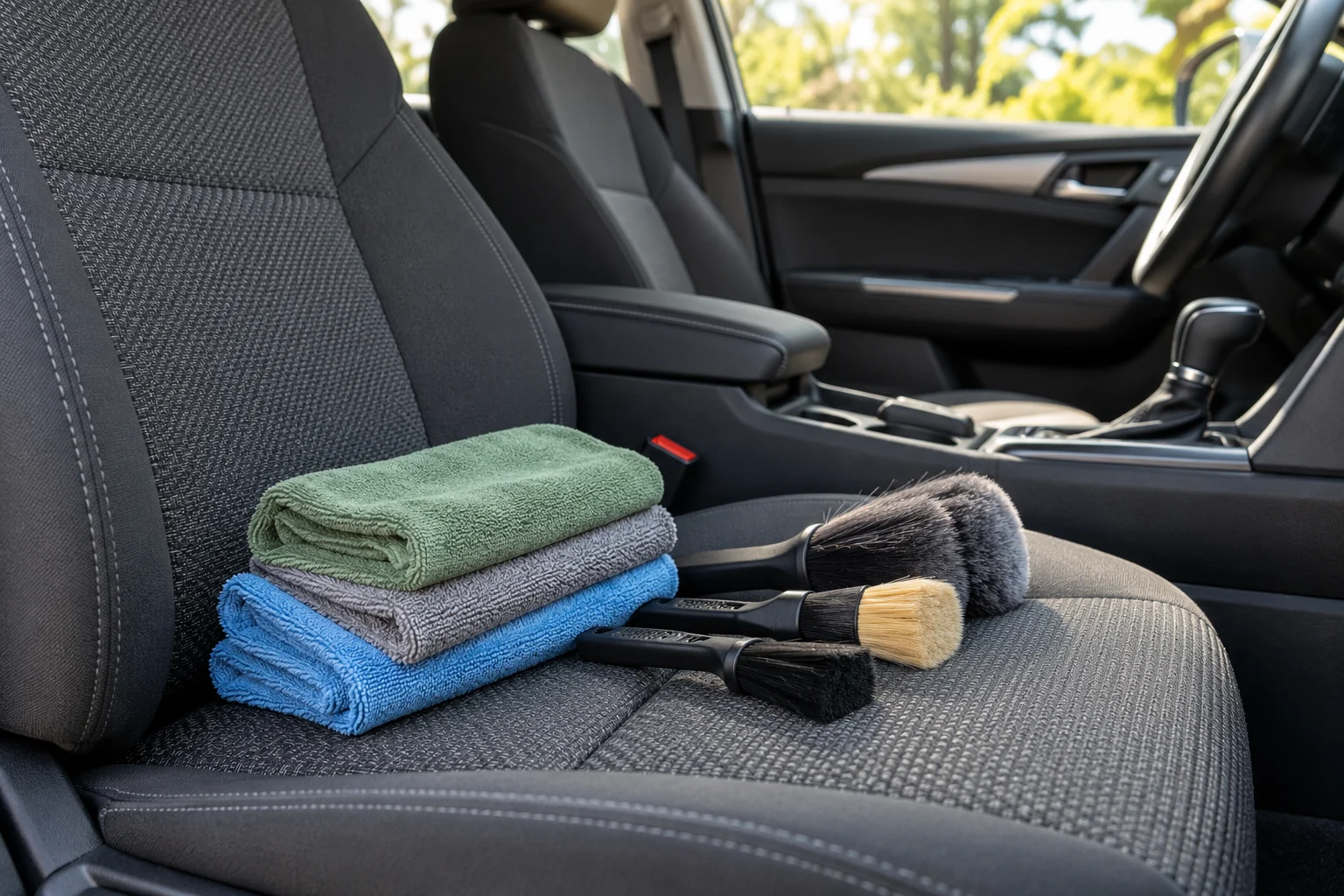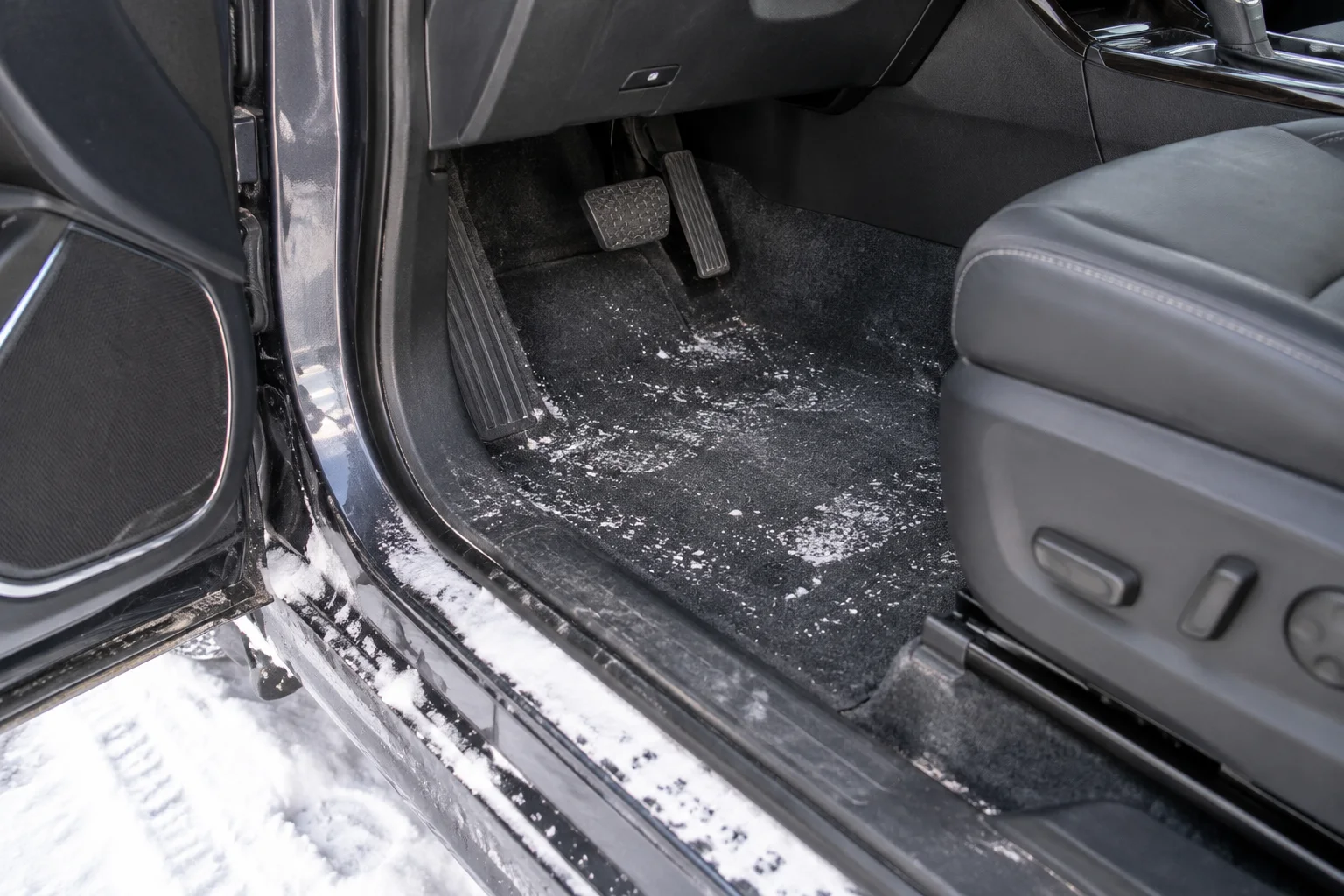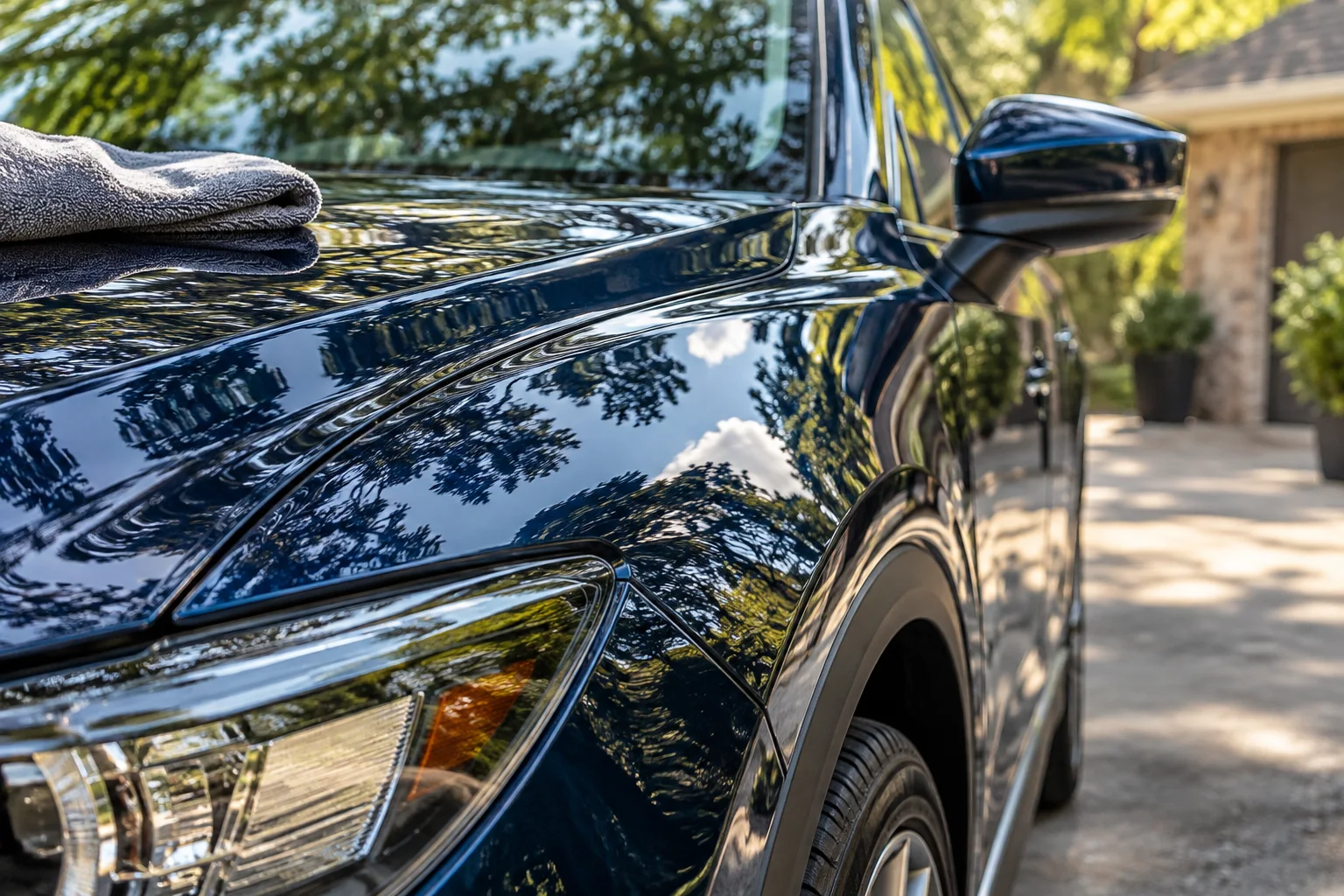
A vehicle that lives outside has a parking story as well as a driving story. It may spend weekdays beneath a tree, evenings beside a busy road and weekends in an open driveway. Those surroundings help explain why one owner's car collects leaves, another sees persistent surface debris and a third rarely feels that a wash lasts very long.
Outdoor parking does not require an elaborate response to every change in the weather. It calls for a routine based on the actual location, suitable care for the vehicle's finish and a clear understanding of what detailing can do. A little observation helps you choose useful work without buying products for problems you do not have.
Map the places the vehicle waits
Think about where the car spends most of its parked time, not only where it sleeps overnight. A shaded workplace lot may contribute more to its condition than the driveway at home. If the vehicle is shared, compare the different places it regularly waits.
Notice the recurring pattern. Do leaves collect around certain areas? Is one side often exposed to splashes? Does a particular parking space repeatedly leave material on the roof? You do not need to establish a scientific cause to recognise that a location affects the cleaning routine.
Give the detailer that context when discussing maintenance. Saying the car lives outdoors under trees is more informative than saying it gets dirty quickly. It helps the provider understand why you want a particular service and what kind of aftercare arrangement is likely to be practical.
Look regularly without making every look a project
Choose an ordinary moment to walk around the parked vehicle. The purpose is to notice new contamination, obvious damage or an unusual condition before it becomes background scenery. It need not lead to a full wash every time.
Volvo's exterior-care guidance advises prompt attention to bird droppings and tree sap or resin. Follow the instructions for your own vehicle and finish when dealing with such material. If removal is uncertain or stubborn, seek suitable help instead of scraping or experimenting with an aggressive household product.
A short, repeatable check is more useful than an ambitious routine abandoned after a week. Look at the roof, bonnet, glass and accessible edges, then act on what actually needs attention. This gives you a practical relationship with outdoor parking rather than a sense that the vehicle is constantly failing to stay perfect.
Identify the finish before choosing protection
Tell the provider about paint-protection film, a wrap, a coating or a recent repair. If you do not know what is on the vehicle, say so. The appearance of the surface does not always reveal its history or the appropriate products.
3M provides separate care guidance for its films and wraps, illustrating why an added surface deserves its own instructions. A method suitable for the original painted panel should not automatically be transferred to every aftermarket finish or graphic.
Keep any installer paperwork or product information with the vehicle records. When requesting detailing, share the exact name if available. This small step helps the provider assess compatibility and prevents an outdoor-care plan from being based on the vague assumption that the car simply has normal paint everywhere.
Decide what a wash should achieve
An outdoor vehicle can become dirty again soon after cleaning. That does not make the work pointless, but it changes how to judge the result. Ask what the agreed service is intended to remove and which marks may remain because they are staining, wear or damage.
Think about the benefit you want. You may value a clean cabin and clear glass more than an exterior that stays pristine for days. Or you may want a regular exterior reset because the parking environment leaves the body visibly unpleasant. Both are reasonable priorities.
Avoid choosing the most extensive service solely because you are frustrated that the car is outdoors. A suitable routine wash, targeted attention or a broader detail may each make sense at different times. The vehicle's actual condition should guide the choice more than the emotional wish to defeat the next rain shower.
Separate protective products from maintenance promises
If a wax, sealant or coating is proposed, ask about the exact product, preparation and aftercare. Outdoor parking is useful context, but it does not automatically establish which treatment is appropriate. The provider should explain how the recommendation fits your finish and habits.
Do not interpret a protection service as a promise that the car no longer needs cleaning. Ask what changes you can reasonably expect and what routine remains necessary. The protection buying guide helps turn broad product language into practical questions.
Include your washing arrangements in the conversation. If you rely on a commercial facility or have no suitable place to wash at home, that affects what you can maintain. An attractive treatment with an impractical care routine may be a poorer fit than a simpler service you can support consistently.
Give glass its own attention
Glass can make an outdoor vehicle feel untidy even when the body is acceptable. Note whether the concern is on the outside, the inside or unclear. Tell the provider about any film or coating and avoid assuming every mark is ordinary dirt.
A glass-cleaning service is different from applying a water-repellent or anti-fog treatment. Ask which, if either, is proposed and check suitability against the vehicle and product instructions. A product category should not be treated as universally appropriate for all glass, mirrors and films.
When reviewing the result, sit in the driver's position while parked and look through the areas that bothered you. Different light can reveal a smear that was difficult to see from outside. If the concern remains, ask whether it is removable material or something needing another assessment rather than repeatedly applying more product.
Notice the cabin as well as the exterior
A car parked outdoors may still have its most important cleaning concerns inside. Wet footwear, bags and daily belongings can make the cabin unpleasant regardless of where the vehicle is stored. Keep the interior on its own practical routine.
Remove damp textiles and food-related items when the journey ends. Inspect the mats and accessible carpet occasionally. If an area repeatedly becomes wet without an obvious explanation, record when it happens and seek appropriate assessment instead of treating every occurrence as a routine detailing task.
The interior cleaning guide can help you choose a scope based on materials and concerns. Exterior exposure should not distract from the part of the vehicle you actually occupy. A balanced plan considers both the outside finish and everyday cabin comfort.
Be thoughtful about covers
A vehicle cover may seem like an obvious answer to outdoor parking, but it is a product with its own suitability, fit and use requirements. Before buying or using one, consult the vehicle and cover manufacturer's guidance. Do not assume any cover that reaches the bumpers is appropriate.
Consider the practical routine. Where will the cover be stored when removed? Can you handle it without dragging it across the ground? Will you follow the required preparation and care? If the arrangement is inconvenient, the cover may become another neglected item rather than a useful part of vehicle care.
Discuss existing covers with the detailer, especially if you plan to replace one immediately after a treatment. Ask about any product-specific aftercare that affects covering the vehicle. Keeping the sequence clear is better than undoing a carefully planned appointment through an assumption at the final step.
Plan mobile work around the location
Outdoor parking can provide convenient access, but not every space is suitable for mobile detailing. Explain whether the vehicle is in a private driveway, shared lot, street space or workplace parking area. Confirm permission and any restrictions before scheduling.
The provider should advise on the environment required for the proposed scope. Some work may be sensitive to conditions or require another arrangement. Give an accurate description of access, surrounding space and the options available if the weather changes.
Avoid moving the vehicle into an unsuitable location simply to make the appointment happen on a particular date. A workable site and clear plan make the service easier for everyone. Our mobile detailing guide covers the initial questions that help establish that plan.
Use the seasons as review points
A seasonal review can be useful without becoming a rigid schedule. In spring, look for winter debris and reconsider what remains in the car. In summer, notice the actual effects of your regular parking places. In autumn, pay attention to accumulated leaves and changes in use.
These are opportunities to inspect, not instructions to apply a different product every few months. The correct work depends on the vehicle and its condition. A car that has spent a quiet season under cover has a different history from one parked outdoors and used daily.
Keep a short note of what repeatedly needs attention. Over time, that record helps you choose a service interval and scope based on experience. It is more useful than copying a schedule from an owner with different mileage, parking conditions and expectations.
Treat low use as a different planning situation
A vehicle that sits outside for long periods still deserves attention, but detailing is only one part of caring for an infrequently used car. Follow the manufacturer's storage and maintenance guidance and arrange appropriate help for operational questions.
Toyota Canada's advice for vehicles driven less often includes periodic cleaning for cars exposed to outdoor hazards. The limited point is that sitting still does not automatically keep the exterior clean. It does not turn a detailing appointment into a complete storage-maintenance service.
If the car will remain unused after cleaning, tell the provider. Ask what the recommended aftercare means for that period and what should be checked before normal use resumes. Keep those instructions separate from any mechanical or storage tasks so neither is accidentally assumed to cover the other.
Avoid chasing every mark with a new product
Outdoor use can tempt owners to build a collection of cleaners for every small concern. Before adding another, identify the surface and the problem. Check the relevant instructions and ask for advice when the mark's nature is uncertain.
A persistent spot may not be removable soil. A finish can show staining or damage that ordinary washing does not reverse. The scratch and defect guide explains why assessment should come before increasingly aggressive attempts.
If you have already tried a product, keep its name and tell the detailer. That history can matter when choosing the next step. A clear record is more useful than applying several different products and then asking someone to infer what happened from the final appearance.
Build a realistic standard for the vehicle
Decide what acceptable condition looks like for you between appointments. It might mean a pleasant cabin, glass free of distracting smears and exterior contamination addressed appropriately, even if the body is not spotless every day. That is a coherent standard for a working vehicle that lives outside.
Share that standard with the provider. It helps distinguish a maintenance service from preparation for a special event or sale. It also makes the result easier to evaluate because both people understand what improvement matters most.
An outdoor vehicle can be cared for well without consuming every free weekend. The most useful routine is one that notices important changes, uses suitable methods and reserves more involved work for the occasions when the condition justifies it.
Improve the parking choice where you reasonably can
Sometimes you have a choice between two otherwise suitable spaces. Use what you have observed to make that choice, while keeping access, permissions and ordinary parking requirements first. You might avoid a location that repeatedly leaves the roof covered in debris when another convenient space is available.
Do not make vehicle appearance the only consideration. A spot that is awkward to use, obstructs someone else or conflicts with the property's rules is not a sensible improvement. The aim is a small practical adjustment, not a daily search for a theoretically perfect place to leave the car.
When you have no choice, accept that constraint and plan care around it. The provider can still recommend an appropriate routine for a car that must remain in a particular location. Useful advice starts with the options you actually have, rather than assuming that every owner can simply park indoors or move away from the source of the mess.
Choose the next appointment from the actual condition
Before booking, send the vehicle details, parking context, photographs and any known finish history. Describe your priorities and ask which available service addresses them. Include practical constraints such as shared parking or a strict need for the car later that day.
Visit Cody Mobile auto detailing for current options. Detailing is bookable in Ottawa and the surrounding service area, with a waitlist for other areas. Confirm the scope and aftercare rather than assuming a particular protection treatment is included.
A car that lives outside will continue to experience the outdoors. The aim is a sensible response to that reality: observe the recurring concerns, care for the actual materials and choose work that fits your life. That approach makes the vehicle easier to enjoy without demanding that a driveway behave like a garage.