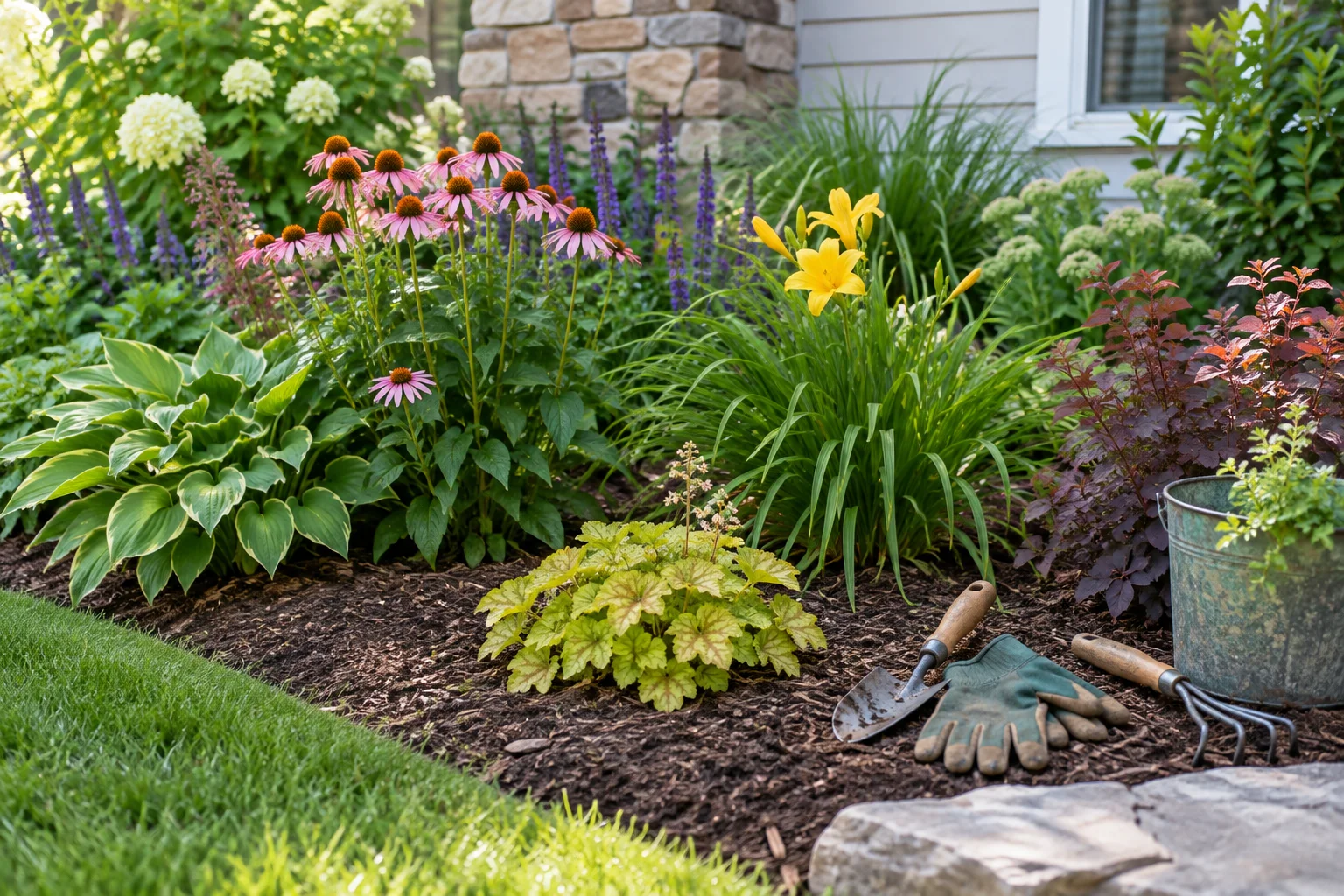
Mulch can make a garden look finished, but choosing it only by colour misses most of the useful questions. The material must suit the planting, the existing surface and the way the bed will be maintained. Installation also includes preparation, delivery, access and cleanup, all of which can affect the scope more than the photograph of the finished bed suggests.
A good mulch plan begins with the condition of the garden. It asks what is already there, what problem you want to solve and how the material will be managed over time. Use this guide to discuss options clearly and avoid paying for a fresh layer that simply conceals unfinished work.
Define what you want mulch to accomplish
Your priority might be reducing exposed soil, making weeding more manageable, moderating changes in soil moisture or creating a consistent appearance around established plants. These goals can overlap, but one material or application will not solve every garden problem. Write down the main reason for the project before selecting a product.
University of Minnesota Extension describes mulch as a tool for moisture regulation, weed suppression and moderating soil temperature. Organic materials also change as they decompose. Those benefits depend on suitable use; mulch is not a replacement for identifying plants, addressing persistent weeds or understanding why water collects in a particular area.
If the main concern is appearance before an event, say so. The plan may involve tidying and a modest surface refresh rather than a major installation. If the concern is a recurring maintenance problem, allow time to investigate it. A dark, even surface can hide unresolved issues without making them disappear.
Inspect the existing layer
Look beneath the surface in several parts of the bed. Is the material loose, matted, mixed with soil or sitting above a hidden layer of fabric? Is there a deep accumulation beside trunks or stems? Record what you find before assuming that every area needs more material.
Ask the provider to assess existing depth and condition before ordering. A bed receiving a small top-up is a different job from one that needs old material removed or redistributed. Measurements should account for what is already present. Repeating the same delivery quantity every year can create an unnecessary buildup.
Different sections may need different treatment. The exposed front edge may have lost material while the sheltered back remains well covered. An even appearance does not require blindly adding the same amount everywhere. Discuss whether redistribution can form part of the work and how the final result will be checked.
Compare materials by their future behaviour
Wood chips and shredded bark are common choices around ornamental plantings, while other materials suit different uses. Ask how the proposed mulch behaves when wet, when dry and when leaves fall onto it. Consider whether you expect to move plants, divide perennials or change the bed’s outline later.
A coarse material may have a different appearance and handling feel from a finely shredded one. Samples can help, especially beside existing paving or siding. Look at a sample in natural light rather than relying entirely on a small online photograph. Product names and colours are not always consistent between suppliers.
Avoid choosing a material because it is described simply as premium. Ask what that description means: source, particle size, colour, cleanliness or something else. A useful answer explains a property relevant to your garden. A marketing adjective alone does not establish that the material is appropriate for your plants or site.
Distinguish organic mulch from stone
Organic surface materials gradually change and may need reassessment or replenishment. Stone creates a different long-term arrangement. It can be moved, but the process of removing leaves, relocating plants or changing the bed may be quite different. Think through those tasks before treating the two options as interchangeable finishes.
Imagine a shrub needing replacement several years after installation. How would the surface be opened? Where would the material be stored while work happens? Would soil mix into it? These practical questions are particularly useful when someone proposes a permanent-looking treatment for a garden that is still evolving.
You may prefer different treatments in separate areas, but give transitions a clear purpose. A decorative strip next to a path and a planted bed behind it do not necessarily need identical materials. The important point is that maintenance remains understandable and that the layout does not create awkward pockets nobody can reach.
Ask about material origin and consistency
Request the supplier and the exact product description when appearance or sourcing matters to you. Ask whether the delivery will match the sample and whether a later top-up is likely to look similar. Natural materials vary, so an honest explanation of variation is more useful than a promise of perfect uniformity.
If recycled wood or coloured material is proposed, ask for product information rather than assuming its composition. You can then decide whether it fits your intended use. Keep food-growing areas and ornamental beds distinct in the discussion, because a material suitable for one application may not be your preferred choice for another.
Also discuss unexpected debris. What will happen if a delivery contains visible litter or unsuitable pieces? Who checks the load before spreading begins? Establishing that responsibility prevents the homeowner from discovering a problem only after it has been distributed across every bed on the property.
Prepare the bed before covering it
Identify wanted plants and unwanted growth first. A mulch installation should not begin with an instruction to cover everything that looks untidy. Small perennials, emerging bulbs and self-seeded plants you wish to retain can be easy to overlook. Mark them and explain any uncertainty before the preparation stage.
Persistent weeds deserve their own plan. Surface cover may help suppress new seedlings, but it should not be presented as a guarantee that established unwanted plants will never return. Ask what will be removed, what requires follow-up and which areas should be assessed before material is placed.
If the bed edge needs reshaping, do that planning in advance. It affects area, quantity and the relationship with the lawn. Fresh mulch spread to an unclear boundary can simply make the next edging task harder. A clear sequence reduces the chance that new material will be moved repeatedly during the same project.
Discuss application around plants
The installer should account for plant stems, trunks and crowns rather than making the whole bed one uninterrupted mound. Ask how the material will be kept appropriately clear of plant bases and how the final depth will be selected. The answer should reflect the planting and existing layer, not just a standard visual finish.
Do not use a mulch installation to disguise an uncertain planting depth or a buried root flare. If a tree or shrub appears to sit in an unusual mound, request assessment before adding more. A fresh surface can make the problem less visible while leaving the underlying condition unchanged.
For a mixed perennial bed, walk through the plants that are small or dormant. Show photographs if necessary. It is reasonable to leave a marked area for later review rather than risk covering something whose location is uncertain. Preserving the plants is more important than finishing every square centimetre on one date.
Calculate quantity from a measured plan
Measure the bed areas and subtract large unmulched features where appropriate. Irregular beds can be divided into simpler shapes for an estimate. Make clear whether dimensions are in metres or feet and whether the supplier sells by volume, bag or another unit. Unit confusion can create a substantial ordering error.
For a simple illustration, an area of ten square metres covered to an additional depth of two centimetres represents two tenths of a cubic metre before allowing for the actual site and material. This is arithmetic, not a recommended application depth. The correct added depth must follow the assessment of the existing bed.
Ask who is responsible for the quantity calculation and what happens to surplus material. A small difference may be manageable; a large pile can block a driveway or require removal. Do not assume that an unopened bag and a loose bulk pile have the same return options or handling costs.
Plan delivery and movement through the property
Choose a delivery location that can be used without blocking essential access. Consider parked vehicles, garage doors, pedestrian routes and the time the material will remain there. Tell the supplier about restrictions before scheduling. A driver should not arrive expecting a large clear driveway when only a narrow shared space is available.
The route from delivery point to bed affects labour. Stairs, slopes, narrow gates and long carries should be visible in photographs or discussed during inspection. A quote based only on bed area may miss the work required to move the material. Be specific about whether access crosses a neighbour’s property.
Protecting surfaces is also part of planning. Ask how the provider will manage loose material on paving and how delivery residue will be cleaned up. If a particular surface is fragile or newly installed, disclose that early. Do not wait until the load arrives to explain that it cannot be used as a staging area.
Compare quotes on the same scope
Separate material, preparation, installation and removal when reviewing proposals. One quote may include weeding and edging while another assumes a fully prepared bed. A large difference in total price can reflect different jobs rather than different rates for the same work. Ask each provider to describe its assumptions.
Useful questions include:
- What material and approximate quantity are included?
- How will existing mulch be assessed and handled?
- Which preparation tasks happen before spreading?
- Who arranges delivery and deals with surplus material?
- What cleanup and follow-up information will be provided?
If you want a fixed budget, explain which outcome matters most. The provider may suggest completing the most visible beds first or reducing the area while preserving proper preparation. Skipping necessary preparation to spread material everywhere can leave you with a larger but less satisfactory result.
Keep the product name with your garden notes. If you later extend a bed, that record will help you ask for a compatible material without relying on a photograph whose colour may look different in changing light.
Think through the first few weeks
After installation, observe how the surface behaves during normal weather and use. Note material moving onto paths, exposed patches or places where irrigation is difficult to check. Take photographs rather than immediately adding more. The pattern may help the provider explain whether an adjustment is needed.
Continue checking plants according to the agreed care plan. A newly mulched bed still requires observation. The surface appearance alone does not tell you everything about moisture below it or the condition of a plant’s roots. Ask for a practical demonstration of whatever checks are appropriate for your planting.
Keep pets, children and regular garden activities in the discussion when choosing and maintaining the material. If something is likely to be dug, scattered or carried onto a patio, plan for that reality. A beautiful finish that conflicts with daily use will be difficult to sustain, regardless of how carefully it was installed.
Make replenishment a decision, not a reflex
At the next seasonal review, inspect before ordering. The bed may need spot attention, redistribution or weeding more than another full layer. Record when the material was installed and where any adjustments were made. This provides a useful reference when appearance changes gradually and memory becomes unreliable.
You can also reassess whether the original material still suits the garden. Plants may have filled in, the bed may have expanded or your maintenance preferences may have changed. A surface choice does not have to be permanent, but changing it can involve work. Consider that work before adding another layer of something you no longer want.
The best mulch arrangement is one you understand well enough to maintain. You should know what was supplied, why it was chosen, how it was applied and what to watch for next. Those details matter more than a generic promise that the garden will now take care of itself.
Keep an unobstructed photograph of the finished edges and plant bases. It can help you notice gradual movement or accumulation that is difficult to see from memory. Use that comparison during the next assessment rather than assuming a change in colour alone means the whole bed needs fresh material.
Connect mulch with the rest of your garden plan
A mulch project is a useful moment to review the bed as a whole. Confirm which plants are staying, whether paths remain comfortable and which recurring tasks deserve attention. If a makeover is likely soon, discuss whether a smaller refresh makes more sense than a full installation that will be disturbed again.
The lawn and garden planning guide can help you organise seasonal priorities, while choosing a mowing schedule covers the neighbouring lawn. Coordinating those plans helps keep bed edges, clippings and access from becoming separate problems handled by different people without shared instructions.
Cody Mobile’s lawn and garden care division is planned and is not yet operating. You can join the waitlist while local partners are recruited. Meanwhile, measurements, photographs and a clear material brief will make future conversations with any provider more productive.